Your Guide to Personalization at Scale in 2026

"Personalization at scale." It’s one of those phrases that sounds amazing in a marketing meeting but feels like a unicorn in the wild—mythical, beautiful, and probably impossible to catch. So, what is it, really? It’s the art and science of sending a truly unique, relevant message to every single prospect, but doing it automatically for hundreds or thousands of people at once.
The dream is to finally ditch generic templates and use real-time signals to start one-to-one conversations. It's about blending the thoughtful touch of manual outreach with the sheer power of automation.
Table of Contents
The Unsolvable Problem of Scaling Personalization
Ever feel like your sales team is stuck between a rock and a hard place? You're ordered to personalize every single message, yet your prospect list is longer than a CVS receipt. How can anyone possibly do deep research on a thousand people without cloning themselves?
Welcome to the "personalization paradox."
This is the classic clash between the very human need for connection and the relentless corporate pressure to scale outreach. The old "spray and pray" playbook is officially dead, buried, and has a very unflattering tombstone. Why? Because today's B2B buyers can spot a generic, mail-merged template from a mile away, and their delete key is getting a serious workout.
The Widening Gap
There’s a massive chasm between what your buyers expect and what most sales teams can actually deliver with their current tools. Buyers crave communication that proves you’ve done your homework. They want to feel like you get their problem, not like they're just another number in your sequence.
This creates a frustrating, repetitive cycle for your reps:
They spend hours manually digging through LinkedIn profiles, feeling more like a private investigator than a sales pro.
They struggle to find a single, non-generic reason to start a conversation.
They give up, send an impersonal message that falls completely flat, and end up burning a perfectly good lead.
The real issue? Most sales tools were never built for this. They’re great for managing contacts, but they fail to surface the context you need for genuine personalization. If you're looking to fix this, understanding what a modern sales engagement platform can do is the right first step.
The result is a system where sales teams work incredibly hard to produce outreach that, unfortunately, feels incredibly lazy to the person receiving it. It's a lose-lose that tanks reply rates and crushes team morale.
This whole challenge sets the stage for a much smarter way of working. What if you could finally close that gap and give buyers what they expect, without burning out your team? The answer isn’t about working harder; it’s about working smarter with the right technology.
What Personalization at Scale Actually Means
Let's cut through the jargon. Personalization at scale isn't just another buzzword to throw around in your next meeting. It's definitely not about dropping a [First Name] tag into a mass email and calling it a day. That's a mail merge, and your prospects are not impressed.
True personalization at scale is the difference between the hotel concierge who remembers you prefer sparkling water and the front desk clerk who just grunts for your last name. It’s a system—an engine—that listens for real-time behaviors and intent signals, then helps you show up at the perfect moment with the right message.
Beyond Basic Personalization
This is where you graduate from static, profile-based targeting (like job titles) and move into dynamic, behavior-based engagement. Stop guessing what a prospect cares about based on their industry. Start acting on what they're actually doing right now. This means tapping into fresh data points to inform your outreach. You can dive deeper into how this works in our guide on what intent data is.
The gap between what customers expect and what most brands deliver is massive. While 71% of consumers expect personalized interactions, barely 34% of companies are actually pulling it off. This isn't just a missed opportunity—it's a costly one. Getting it right means you’re tapping into the 80% of consumers who are more likely to buy from brands that do.
The numbers below don't lie. Customers are practically begging for a more relevant approach.
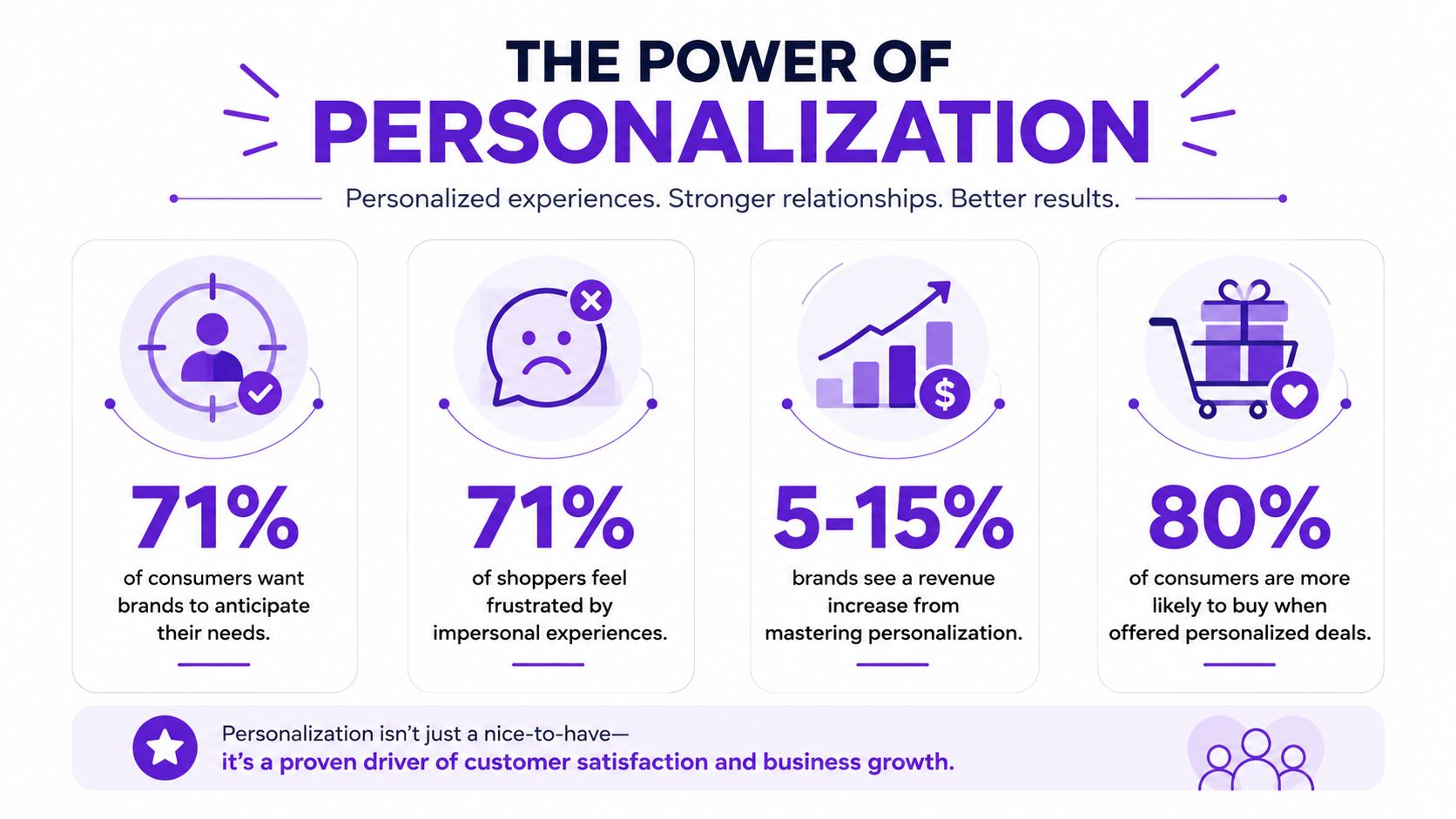
The data tells a simple story: getting this right directly fuels customer satisfaction and, more importantly, your revenue.
In the end, personalization at scale isn’t about sending more messages. It's about making every single message count by grounding it in real-time context, relevance, and perfect timing.
From the Manual Grind to Automated Intelligence
Remember the old way of prospecting? It probably looks a lot like your Tuesday afternoon.
You’re endlessly scrolling through LinkedIn Sales Navigator, building static lists based on job titles and company size. Then comes the soul-crushing part—trying to find a non-generic reason to reach out. It’s a manual, tedious grind that almost never pays off the way you'd hoped.
You burn hours on "research" only to send a message that still lands cold. That’s because static data—a job title, a company—tells you who someone is, but not what they need right now. You’re throwing darts in the dark and hoping one eventually hits the board.
That entire process is fundamentally broken. It forces smart salespeople to act like research assistants, wasting precious time they should be spending on actual conversations.
The Shift to Automated Intelligence
Now, picture a different workflow. Instead of you hunting for leads, the most relevant leads find their way to you. This isn't some sales fantasy; it's what happens when you swap the manual grind for automated intelligence. AI-powered tools become your autonomous research team, scanning your market for buying signals around the clock.
These systems don't care about static job titles. They monitor real-time behavioral signals—the digital breadcrumbs your prospects leave behind every day.
A key decision-maker comments on a competitor’s frustrated post.
A target account’s team starts engaging with content about a problem you solve.
A prospect asks a question in a community that your product directly answers.
This is the leap from manual work to intelligent automation. You’re no longer guessing who might be interested; you’re engaging people who are actively showing you they are. The result is a massive jump in efficiency, relevance, and most importantly, positive reply rates. The engine behind this is complex, but understanding what context engineering is gives you a serious leg up.
The core idea is simple: Stop interrupting strangers based on their job title. Start conversations with interested buyers based on their real-time actions.
The difference between these two approaches isn't just a small improvement; it's a complete flip of the old sales model. This table breaks down just how different the game becomes.
The Old Way vs. The New Way of Prospecting
Metric | The Old Way (Manual Sales Navigator) | The New Way (AI & Behavior-Driven) |
|---|---|---|
Data Source | Static company and title data | Dynamic, real-time behavioral signals |
Lead Quality | Low-intent, based on assumptions | High-intent, based on recent actions |
Time Spent | 8-10 hours/week on manual research | <1 hour/week reviewing curated leads |
Relevance | Generic and often mistimed | Timely and highly contextual |
Outreach | “Just checking in” | “I saw your comment about…” |
Typical Result | Low reply rates, high burnout | 2-3x higher positive reply rates |
One path leads to burnout and diminishing returns. The other leads to a smarter, more sustainable pipeline where you’re always talking to the right people at the right time.

Alright, let's move from theory to practice.
You know you need to personalize your outreach on LinkedIn. But doing it without losing your entire week to scrolling is a whole other beast. This is where a smart, AI-backed playbook makes all the difference, turning the idea of "personalization at scale" into something you can actually do.
The goal is simple: stop guessing and start engaging with people who are already showing interest. Here’s the step-by-step breakdown of how to make this work on LinkedIn.
Step 1: Find Your Intent Signals
Forget the static Ideal Customer Profile (ICP). A job title tells you almost nothing about a person's immediate problems or buying intent. What you really need are intent signals—the digital breadcrumbs a prospect leaves that show they’re actively thinking about a problem you can solve.
You can find these by watching three specific areas on LinkedIn:
Competitors: Keep an eye on who's engaging with your competitors' content. A comment from a prospect like, "This looks good, but what about the pricing?" is a wide-open door for you.
Creators: Follow the influencers and experts your ideal customers listen to. When a prospect comments on a post about a specific pain point, you have a perfect, timely reason to connect.
Topics: Track the keywords and hashtags related to the problems your product solves. This drops you right into the middle of relevant conversations you can join authentically.
Step 2: Put Your AI Agents to Work
Once you know what signals to look for, it's time to let your AI do the heavy lifting. With a tool like RoverLead AI, you don't need a team of data scientists to get started. You can deploy what we call Signal Agents in just a few minutes.
Think of these as more than just keyword alerts. They’re autonomous agents that start monitoring the competitors, creators, and topics you’ve identified. They learn from your activity, getting progressively smarter about what a high-value lead looks for in your specific business. This automates the most soul-crushing part of prospecting—the endless manual scrolling—so you can focus on the only thing that matters: the conversation.
For a deeper look at this, check out our guide on advanced LinkedIn lead generation.
Step 3: Engage with Perfect Context
This is where it all clicks. Instead of a messy spreadsheet or a list of cold names, your AI gives you a clean, curated feed of high-intent moments ready for your attention.
Let’s walk through a real-world example. Say you sell a martech tool to VPs of Marketing. Your Signal Agent is watching one of your main competitors. It suddenly flags a comment from a VP of Marketing on their latest post: "Looks interesting, but the onboarding seems really complex."
That’s your moment. You have a name, a role, a pain point, and perfect timing.
This is exactly what that opportunity looks like when it lands in your feed.
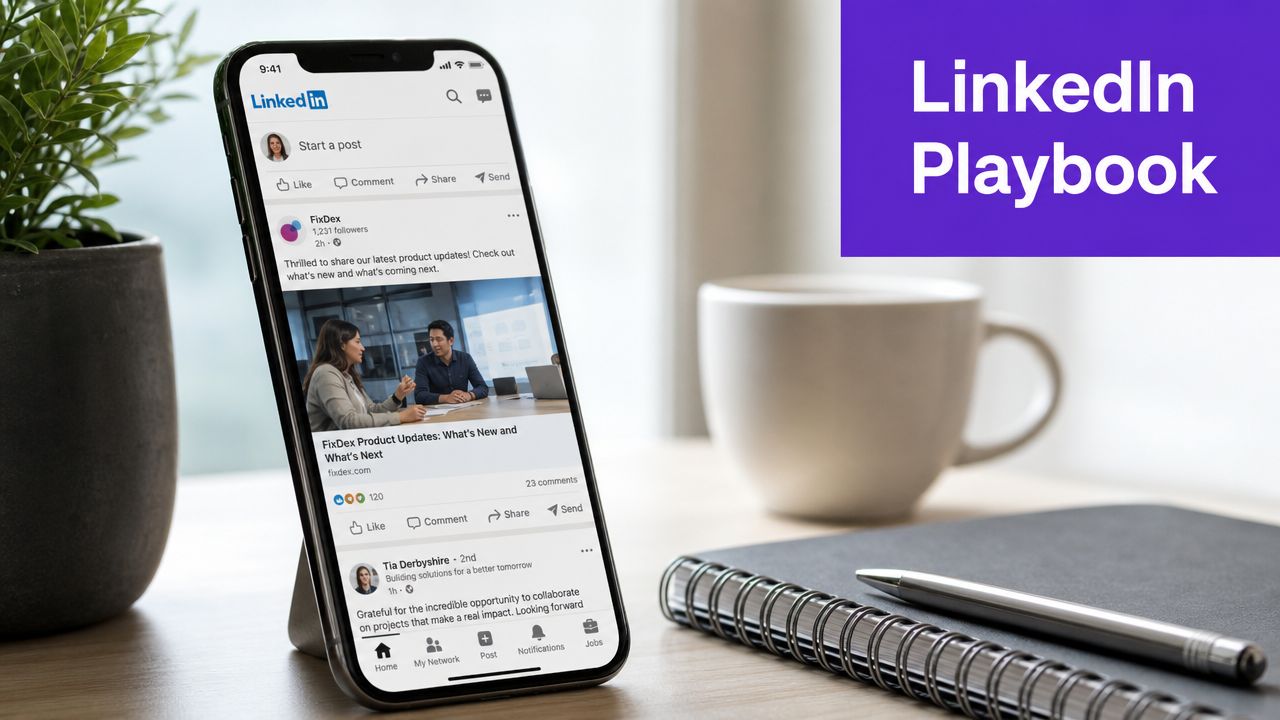
The AI doesn’t just show you the comment; it tees up a contextual icebreaker. Instead of a generic "I sell a martech tool," you can now lead with, "Saw your comment about complex onboarding. We actually built ours to be a 5-minute setup for that exact reason."
This is personalization at scale in action. It's timely, relevant, and wildly more effective than shouting into the void.
Measuring Success with the Right Metrics
If you can’t measure it, you’re not doing business—you’re just having a hobby. When it comes to personalization at scale, most teams are measuring the wrong things.
Forget vanity numbers like connection requests sent or profiles viewed. Those metrics tell you how busy you are, not how effective you are. To understand if a behavior-driven strategy is actually working, you need to track KPIs that signal real connection and progress.
It’s time to shift from measuring activity to measuring outcomes.
Ditching Vanity for Velocity
The metrics that matter prove your personalized approach is not only working but also making your entire sales process faster and more efficient.
These are the new pillars of measurement:
Positive Reply Rate: This is the new gold standard. It’s not about getting any reply; it’s about getting an affirmative one that opens a real conversation. A high positive reply rate is the clearest sign that your message was timely and helpful, not just another interruption. Engaging prospects at the right moment consistently leads to a 2-3x higher positive reply rate.
Meeting Booked Rate: This is where the rubber meets the road. How many of these high-intent conversations are turning into actual meetings on the calendar? This metric ties your personalization efforts directly to pipeline, proving its business value in a way no one can argue with.
Research Time Saved: Don't ignore the efficiency gain. By automating the hunt for buying signals, your team spends less time scrolling through feeds and more time having valuable conversations. Tracking the hours saved per rep makes the ROI of this approach undeniable.
A high positive reply rate is direct feedback that you’ve successfully shifted from interrupting strangers to engaging interested buyers. It’s the clearest sign that your personalization strategy is hitting the mark.
The North Star Metric for Modern Sales
Beyond those core KPIs, there's one metric that ties it all together: Intent-to-Meeting Velocity.
This measures how quickly you can convert a detected buying signal—like a specific comment on a LinkedIn post—into a qualified meeting. Think of it as your team’s top speed.
A faster velocity means you’re capitalizing on opportunities before your competitors even know they exist. This isn't just about being quick; it's about being strategically fast.
By optimizing for Intent-to-Meeting Velocity, you turn your sales process from a slow, manual grind into a responsive, high-speed engine. This metric should be the North Star for any modern sales team because it translates your entire strategy into tangible, business-centric ROI.
Why Timing and Relevance Are Your New Superpowers
Think about the last time a salesperson cold-called you about a product you’d never heard of. It was an interruption, right? Annoying.
Now, imagine getting a message about a solution right after you complained on LinkedIn about a specific business problem. That’s not an interruption. That’s an opportunity.
This is the entire game of personalization at scale. It’s not just about what you say. It’s about when you say it. The line between an unwanted pitch and a welcome solution is simply context, and that context is built on timing and relevance.
From Sales Rep to Superhero
Let’s be clear: AI-driven personalization doesn’t make salespeople obsolete. It gives them superpowers.
Right now, your reps are probably spending 60% of their time on mind-numbing manual research. With the right tools, that wasted effort can be funneled back into what they actually do best—building relationships and closing deals.
The AI becomes their 24/7 research assistant, handling the three hardest parts of prospecting:
Finding the right person.
Knowing the right moment to reach out.
Understanding the right context to start the conversation.
This shifts your team from being list-builders to strategic consultants.
By automating the discovery of buying signals, you equip your team to stop interrupting strangers and start having intelligent conversations with interested buyers. This is how you sell with intelligence, not just volume.

The future of sales isn’t about shouting louder. It’s about listening smarter.
FAQ: Your Top 10 Questions on Personalization at Scale
Got a few questions buzzing around about how AI-driven personalization actually works? You're not alone. We get these all the time from sales leaders and reps who are ready to make the switch but want to know what they're getting into.
Here are the straight answers.
1. How is this different from basic LinkedIn automation?
Most LinkedIn automation is just spam at scale. It’s built for volume—blasting out mass connection requests and templated messages to cold lists. It’s a numbers game where everyone, especially your brand, loses. AI-driven personalization is the opposite. It’s about timing and relevance. Instead of guessing, you identify high-intent moments (like a prospect engaging with a competitor's post) and reach out with perfect context. It’s quality over quantity.
2. Is this kind of AI tool compliant with LinkedIn's policies?
Yes, as long as it's designed correctly. A platform like RoverLead AI is built to be compliant because it’s not an automation tool; it doesn't send messages or connection requests for you. Think of it as an incredibly smart research assistant. It surfaces public buying signals and helps you craft the perfect message. You stay in the driver's seat, controlling your account and all communication, which keeps you well within LinkedIn's terms of service.
3. How long does it take to set up?
Getting started is faster than brewing a pot of coffee. You can be up and running in as little as five minutes. You just define your Ideal Customer Profile (ICP) and tell the AI what signals matter—key competitors, industry influencers, and important topics. The system starts monitoring those sources for you immediately.
4. What kind of results can I realistically expect?
The math is pretty clear. Teams that switch to behavior-driven outreach consistently see a 2-3x jump in positive reply rates. Why? Because you're no longer interrupting strangers; you're joining conversations that are already happening. This naturally leads to booking 30-50% more qualified meetings, simply because you're focusing all your effort on prospects who are already showing their hand.
5. Will AI replace my sales team?
Not a chance. It’ll make them better. Right now, your reps are likely wasting hours every day on mind-numbing manual research. AI automates that part, freeing them up to do what humans do best: build real relationships, have strategic conversations, and actually close deals. It's augmentation, not replacement.
6. Can this integrate with my existing CRM?
Absolutely. Modern personalization platforms are designed to slide right into your existing workflow. They connect with CRMs like HubSpot and Salesforce, letting you push high-intent contacts and their context directly into your main sales tools. No more messy spreadsheets or lost notes.
7. What is the learning curve like for my team?
Minimal. If your team can use LinkedIn, they can use an AI personalization tool. The whole point of these platforms is to simplify your day, not add another complex process. Opportunities show up in a simple, curated feed. You see the signal, get the context, and act on it in seconds.
8. Does it only work for LinkedIn?
LinkedIn is the main event for B2B sales—it’s where the highest concentration of professional buying signals lives today. However, the principles of behavior-driven selling work anywhere public buying signals appear, like industry communities (think Reddit or specialized forums) and other social platforms where your buyers are active.
9. How do I measure the ROI of personalization at scale?
You stop tracking vanity metrics and focus on what actually moves the needle. The big three are: Positive Reply Rate (are people happy to hear from you?), Meeting Booked Rate (are conversations turning into pipeline?), and Intent-to-Meeting Velocity (how fast does a signal become a meeting?). Don't forget to calculate the hours of research saved per rep; the impact on both efficiency and pipeline becomes crystal clear.
10. Isn't this just for large enterprise teams?
Absolutely not. In fact, it’s a massive advantage for smaller teams. This approach is incredibly effective for everyone from solo founders to large enterprise orgs. Because it automates research and points you to the highest-probability shots, it lets smaller teams punch way above their weight. For larger teams, it drives a level of efficiency and precision they couldn't achieve otherwise.
Ready to stop interrupting strangers and start selling with intelligence? RoverLead AI turns LinkedIn engagement into a predictable pipeline of high-intent leads. See how it works.