Master Social Selling on LinkedIn: Your 2026 Playbook
Most LinkedIn advice is backwards. It tells you to post more, comment more, connect more, message more. More, more, more. Then reps wonder why they're busy on LinkedIn and still begging their CRM for mercy.
Activity isn't strategy. It's cardio.
Social selling on LinkedIn works when you stop treating the platform like a personal brand stage and start treating it like a live intent feed. Buyers leave clues in comments, follows, profile views, hiring posts, and content engagement. Good sellers notice them. Great teams operationalize them. Everyone else keeps writing “3 lessons from my sales career” posts and calling it pipeline generation.
If your current routine produces likes, polite applause, and very few meetings, the fix is simple. Prioritize timing and relevance over volume. Build a system that tells you who matters now, why they matter now, and what to say next.
Table of Contents
Your LinkedIn Activity Is a Full-Time Job with Part-Time Results
A lot of reps are doing LinkedIn wrong in a very modern, very polished way.
They're publishing thoughtful posts. They're leaving comments. They're sending connection requests. Their profile looks respectable. And yet their calendar is emptier than it should be. That's not a motivation problem. It's an operating model problem.
The bad model says visibility creates pipeline. Sometimes it does. Usually it creates visibility.
The better model says buyer signals create pipeline. Social selling on LinkedIn isn't about being “active.” It's about showing up when a relevant prospect gives you a reason to show up. That reason might be a comment on a competitor's post, a question about a painful workflow, or engagement around a hiring push that suggests change is underway.
Practical rule: If your LinkedIn habit can't answer “why this prospect, why now, why this message,” it's not a sales system. It's social media with a quota attached.
That's why so many teams get stuck. They copy creator tactics instead of building rep workflows. They optimize for impressions, not conversations. They reward rep effort, not buying-context accuracy.
Here's the blunt truth. You do not need more LinkedIn activity. You need fewer, better-timed moves. The reps who win on LinkedIn don't act like broadcasters. They act like sharp account executives with excellent timing.
Cold Outreach vs Social Selling
Cold outreach still has a place. But if your entire plan is “build list, write sequence, spray and pray,” you're choosing interruption over relevance.
That's not noble. It's lazy.
One industry roundup reports that LinkedIn generates 80% of all B2B social media leads, and the same source says social outreach sees a 42% response rate versus 23% for cold calls and 26% for email in the cited summary of social selling data, according to this social selling statistics roundup. That gap exists for an obvious reason. Social selling starts warmer.
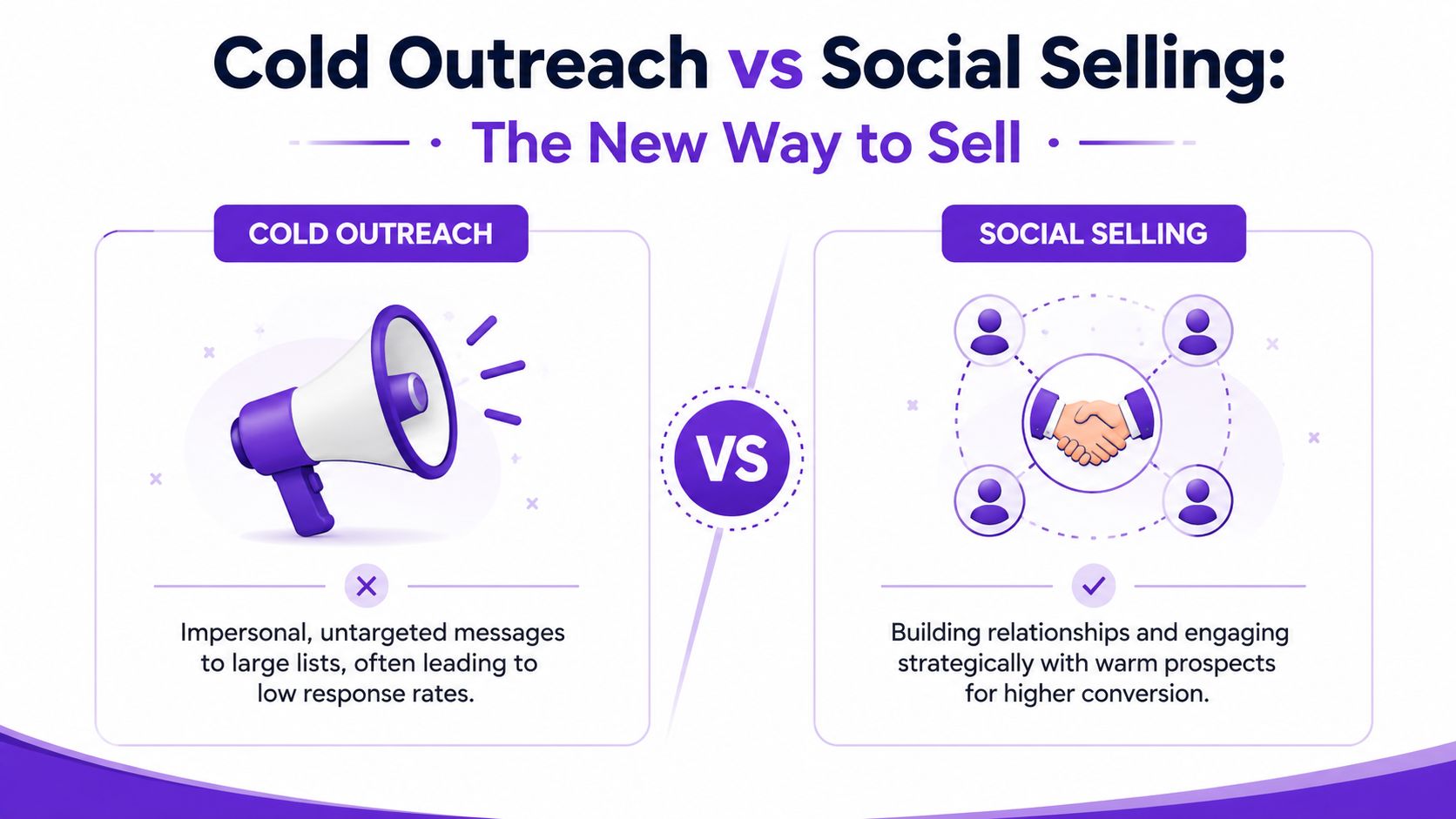
Cold Outreach vs Social Selling At a Glance
Dimension | Cold Outreach | Social Selling |
|---|---|---|
Mindset | Interruption | Invitation |
Starting point | Static list | Live buyer signal |
Timing | Seller's schedule | Buyer's moment |
Personalization | Often surface-level | Context-led |
Trust level | Low at first touch | Built before the ask |
Main metric | Volume sent | Positive conversations |
Rep behavior | Sequence first | Engage first |
Typical result | More noise to sort through | Fewer, warmer openings |
What actually changes
In cold outreach, the rep decides when the conversation starts. In social selling on LinkedIn, the buyer often signals that the conversation should start. That single difference changes the tone of everything.
A cold email says, “Can I borrow your attention?”
A strong social touch says, “I noticed something relevant, and I'm responding intelligently.”
Social selling wins because it feels earned. Cold outreach often feels assigned.
That doesn't mean you stop outbound. It means you stop pretending all prospects deserve the same first message. They don't.
Turn Your Profile from a Resume into a Resource
Your LinkedIn profile is not there to impress recruiters with your trophy shelf. Prospects do not care about your President's Club photo nearly as much as salespeople think they do.
They care about one thing. Can you help someone like them?
Rewrite the obvious parts
Start with the headline. Don't write a job title and company name and call it a day. Use the space to state who you help and what problem you solve. Clear beats clever every time.
Your About section should read like a useful introduction, not a corporate autobiography. Keep it tight. Explain the type of companies you work with, the problems you help solve, and the outcomes buyers care about. Then make it easy to contact you.
For a broader breakdown of turning LinkedIn into a pipeline channel, see this guide on LinkedIn lead generation.
Fix the sections sellers usually waste
Use the Featured section like a mini proof library. Add useful assets such as:
A practical guide: Something a buyer can learn from quickly.
A customer story: Focus on the problem and solution, not chest-thumping.
A sharp point of view post: Show how you think, not just what you sell.
Then clean up your experience section. Write it for buyers. That means fewer internal responsibilities and more customer-facing relevance. “Managed strategic accounts” says nothing. “Helped operations leaders reduce reporting friction” says a lot more.
Here's the test. When a prospect clicks your profile after seeing your comment or message, do they think, “seller,” or do they think, “useful person”? You want the second one.
Become an Intent Signal Hunter
The feed is noisy if you scroll it casually. It gets very clear when you know what you're hunting for.
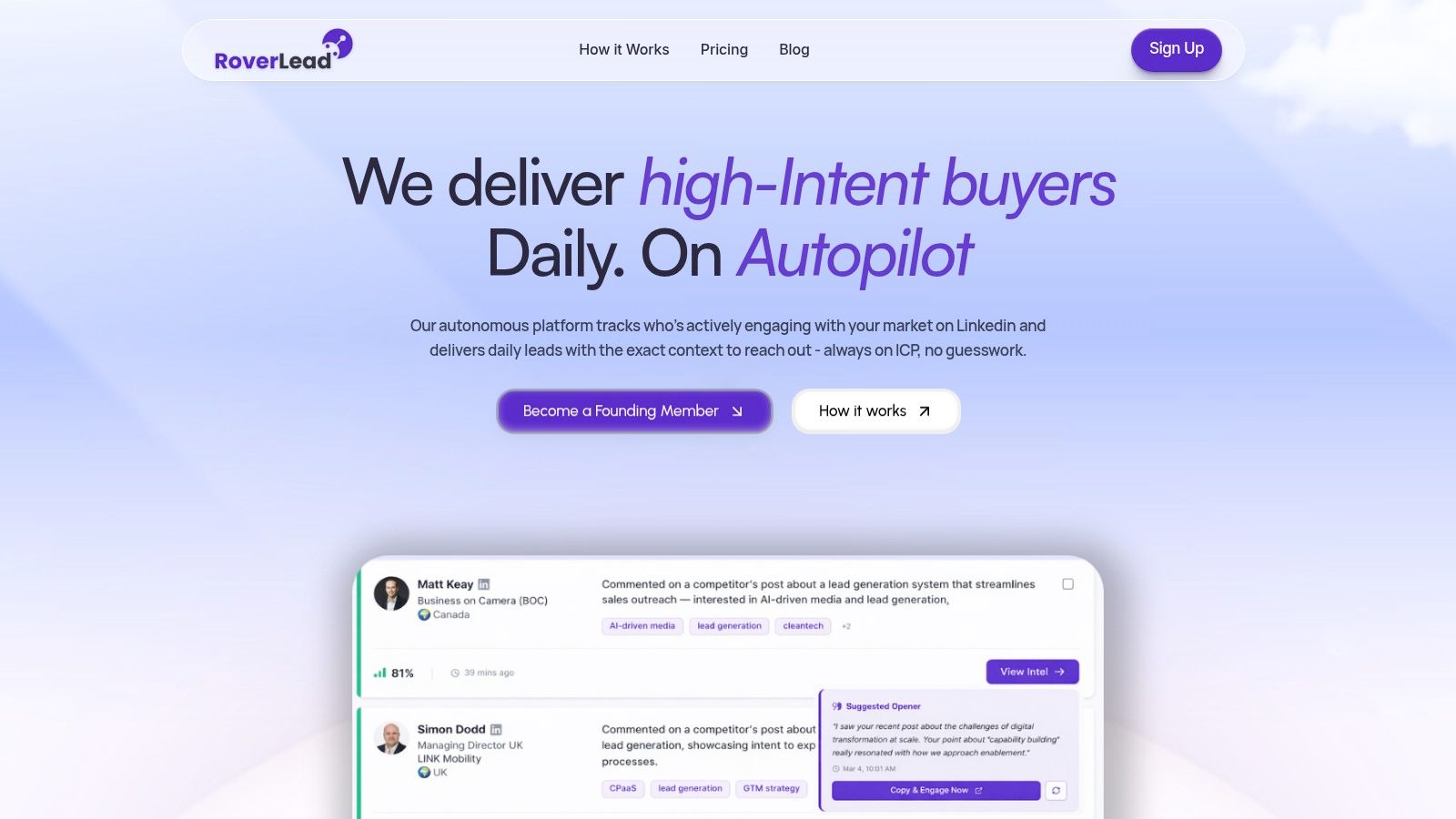
What counts as a real signal
Not every like matters. Some do.
Watch for behavior that suggests a problem, a shift, or active curiosity:
Competitor engagement: A prospect comments on or reacts to competitor content.
Problem-aware comments: They ask questions, push back, or describe a pain point in public.
Hiring activity: Target accounts post hiring updates tied to growth, systems, or team change.
Thought leader engagement: They interact with creators in your niche around the exact issue you solve.
Profile movement: They view your profile after seeing your comment or content.
Those are openings. Treat them like openings, not permission to pitch immediately.
For teams that want signal monitoring built into the workflow, RoverLead AI tracks LinkedIn engagement signals against your ICP and surfaces contextual openers inside its prospecting flow. If intent-based prospecting is your model, its approach is close to the workflow described in this article. For more on signal-based targeting, read this piece on high-intent leads.
A cadence that doesn't feel creepy
The usual mistake is speed. Rep sees signal, rep sends pitch, prospect disappears.
Expert guidance recommends 2 to 3 engagement touches over a couple of weeks, with outreach spaced 2 to 3 days apart, according to this LinkedIn social selling guide. That pacing works because familiarity beats surprise.
A simple sequence looks like this:
Touch one. Like the post and leave a real comment.
Touch two. Reply again later on a different post, or engage with another relevant thread.
Touch three. Send a personalized connection request tied to the signal.
After acceptance. Start a conversation based on context, not a meeting ask.
If your comment could be pasted under any post on LinkedIn, it's not engagement. It's litter.
A useful comment adds perspective, asks a sharp question, or extends the discussion. It does not say “Great post” like a malfunctioning intern.
A quick walkthrough helps if you want to see the workflow in action.
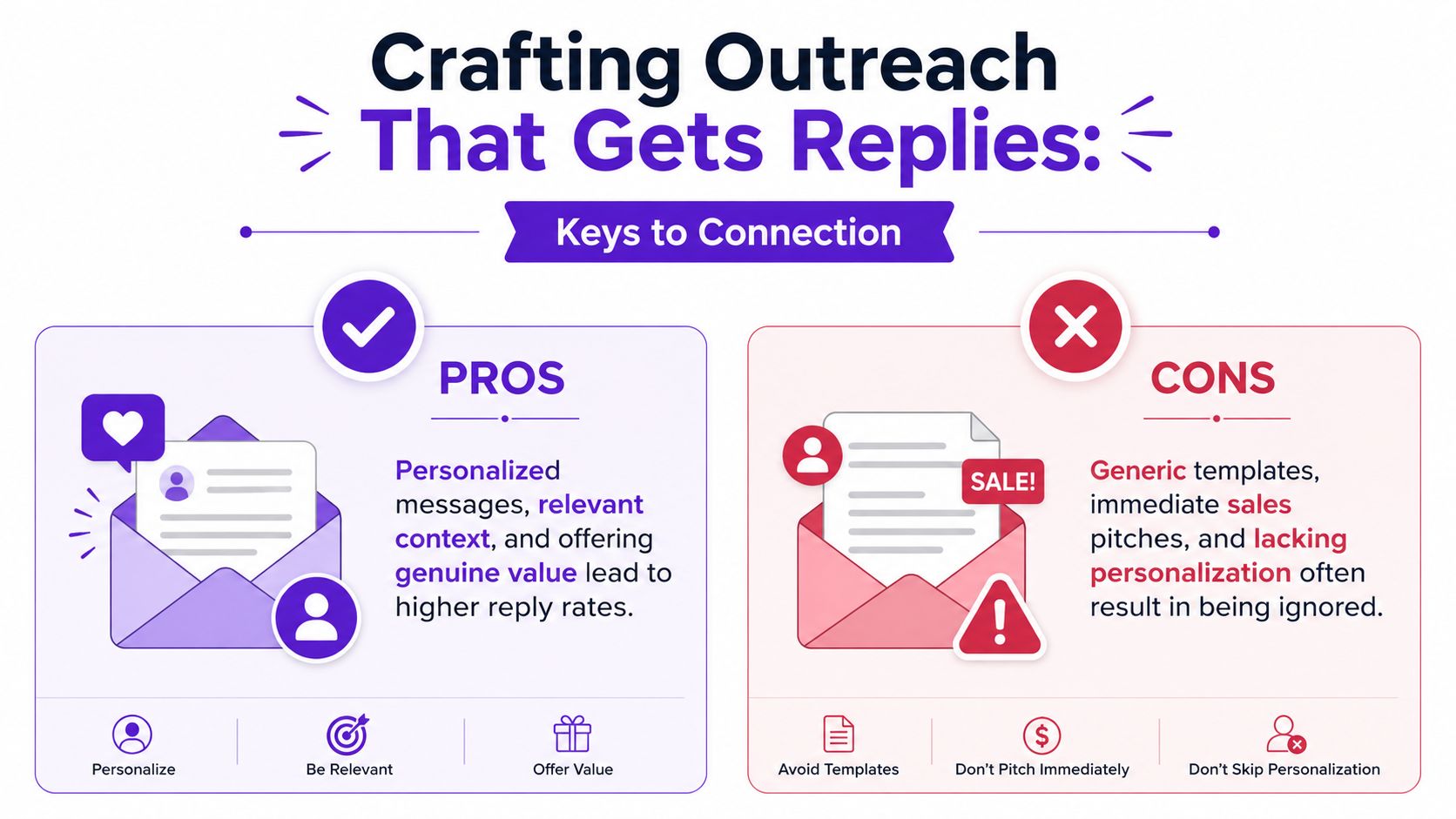
Crafting Outreach That Actually Gets Replies
Most LinkedIn messages fail for a simple reason. They arrive with no context and ask for too much, too soon.
You're not starting from zero if you've engaged properly. Use that.
Connection request frameworks
Use short notes. Earn curiosity. Don't write a tiny sales letter.
Try frameworks like these:
Comment reference: “Saw your comment on [topic]. Sharp point about [specific detail]. Thought it made sense to connect.”
Shared trigger: “Noticed your team is hiring around [function]. I work with teams dealing with that shift a lot. Worth connecting.”
Mutual context: “We follow a lot of the same voices in [space]. Your take on [topic] stood out. Happy to connect.”
After they accept, send a message that continues the thread:
Saw your point on [post/topic] about [detail]. Curious how you're handling that internally today. A lot of teams I speak with are reworking that process right now.
That works because it sounds like a person, not a sequence builder.
For messaging ideas that don't sound recycled, this guide on conversation starters is useful.
Do this and stop doing that
One expert routine recommends spending 45 minutes a day connecting with 5 leads, publishing 1 post, commenting on 2 posts, and sending 5 personalized InMail messages, with each note tied to a specific trigger, according to this LinkedIn social selling routine. That's a sane benchmark because it forces focus.
Use these rules:
Do anchor to a trigger: Mention the exact post, event, comment, or change you noticed.
Do ask easy questions: Questions that can be answered quickly tend to start conversations.
Do keep the first ask light: Curiosity first. Calendar second.
Don't paste your pitch deck into a DM: Nobody asked.
Don't fake familiarity: Prospects can smell synthetic personalization.
Don't send a meeting link in message one: That move should be illegal.
Your Social Selling Scorecard
LinkedIn's Social Selling Index, or SSI, is fine for what it is. It scores reps from 0 to 100 across four buckets, each worth 25 points: professional brand, finding the right people, engaging with insights, and building relationships, as explained in this SSI breakdown. The same source also notes that stronger SSI performance correlates with 45% more opportunities and a 51% higher likelihood of hitting quota.
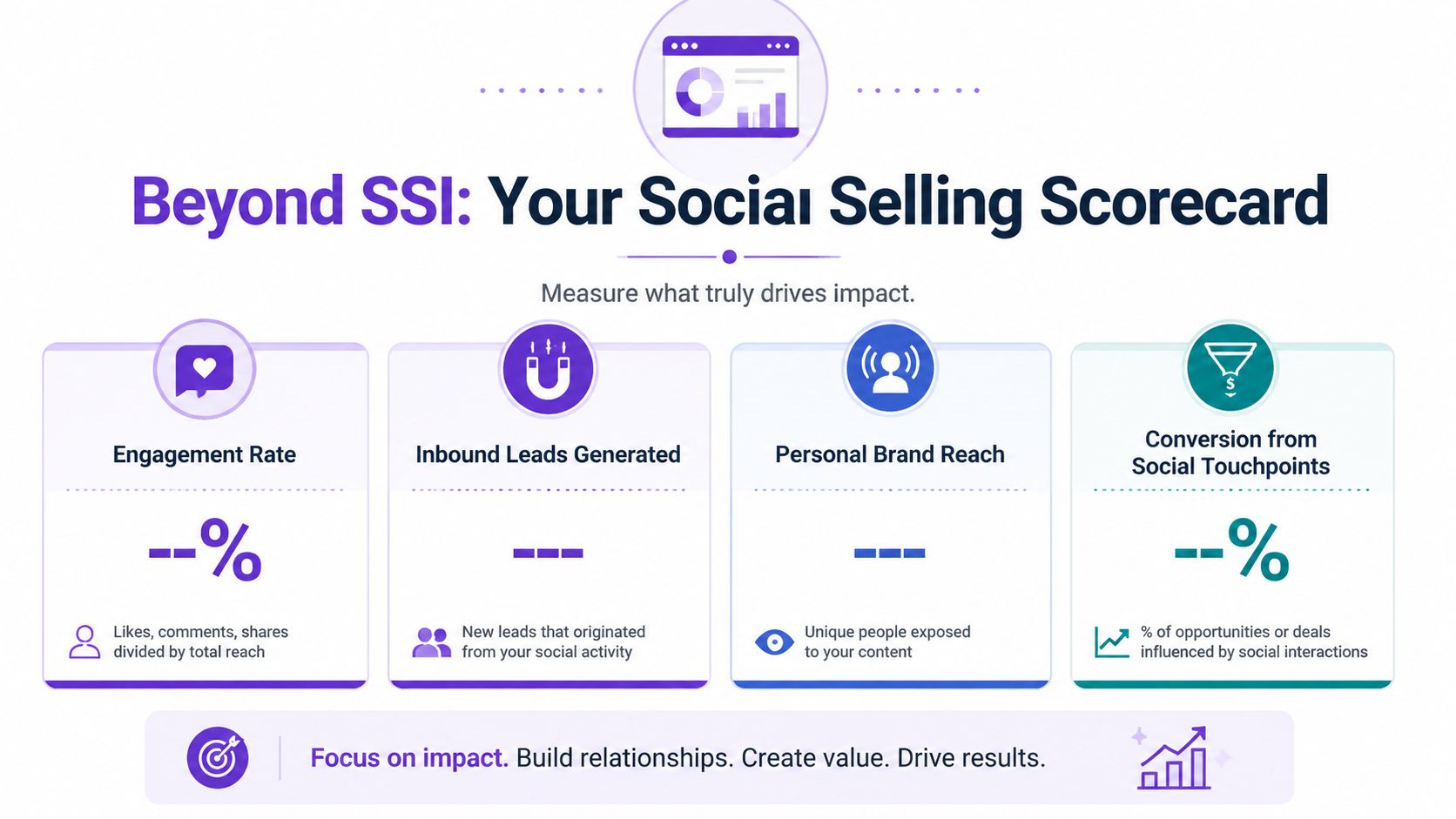
A sales leader cannot coach to SSI alone.
SSI rewards activity. Sales teams need a scorecard that measures whether LinkedIn signals are turning into conversations, meetings, and pipeline. Those are not the same thing. A rep can post every day, comment on half the feed, and still produce nothing but applause from other reps.
Use a scorecard that tracks outcomes and timing:
Metric | What it tells you |
|---|---|
Positive reply rate | Whether your timing and message relevance are strong |
Signal-to-meeting conversion | Whether reps are acting on signals that actually matter |
Meetings from social touches | Whether LinkedIn effort is creating pipeline, not just engagement |
Pipeline influenced by social selling | Whether social activity is tied to commercial results |
Rep consistency | Whether the system works across the team, not just for one natural |
That last metric gets ignored too often.
If one rep crushes it because they have great instincts, you do not have a strategy. You have a hero story. A real social selling program runs on shared signal definitions, clear rules for what deserves outreach, and regular reviews of which signals produced meetings. That is how you turn LinkedIn from a personality contest into a repeatable pipeline channel.
High SSI looks good in a dashboard. A strong scorecard shows whether the team can create revenue on purpose.
Social Selling on LinkedIn FAQ
1. How much time should reps spend on LinkedIn each day?
Enough to be consistent, not enough to become content interns. A focused daily block works better than random checking all day.
2. Is Sales Navigator mandatory?
No. It's useful for filtering and list building, but signal awareness matters more than list size.
3. What's the biggest mistake reps make?
They pitch right after the connection request gets accepted. That's not social selling. That's a cold email wearing a blazer.
4. Should every rep post content?
Not necessarily. Every rep should engage intelligently. Posting helps, but comments and message timing often create faster conversations.
5. How personalized should connection requests be?
Specific enough to prove you noticed something real. Short enough that it still feels natural.
6. Can this be automated?
Parts of the workflow can. Detection, prioritization, and reminders are fair game. Your judgment and message quality still matter.
7. When should you move from comments to DMs?
After you've built a bit of recognition. If the prospect has seen your name more than once in a relevant context, the DM lands better.
8. How do you scale this across a team?
You standardize signal definitions, outreach rules, and review metrics. That's the big gap in the market. As HubSpot's discussion of LinkedIn social selling notes, a key unanswered question is whether social selling on LinkedIn scales for teams, because most advice stays stuck at individual tactics.
9. What should leaders inspect weekly?
Positive replies, meetings created from social touches, and examples of messages that worked. Don't just inspect activity counts.
10. How long before this starts working?
Faster if reps target live signals. Slower if they treat LinkedIn like a publishing hobby. The platform rewards relevance, not random effort.
If you want a cleaner way to turn LinkedIn engagement into real prospecting opportunities, RoverLead AI is worth a look. It helps teams monitor buying signals, match them to ICPs, and give reps context for outreach so LinkedIn becomes a pipeline channel instead of another place to be “active.”