10 Competitor Monitoring Tools to Win More Deals in 2026

Your Competitors Are Closing Deals You Never Saw Coming.
You check a competitor's website. Nothing changed. You skim their press page. Still nothing. Meanwhile, one of their reps is already in a live conversation with a prospect who liked the right LinkedIn post, commented on the right pain point, and practically raised a hand in public.
That's the shift.
Old-school competitor monitoring was passive. You watched what companies published and hoped you'd spot something useful before the quarter ended. Modern competitor monitoring tools still do that job, and many do it well. But the better question is whether they help your team act while buyers are still in motion.
That matters because competitor monitoring is no longer a niche side project for product marketing. It's a real software category now. One recent roundup describes Hexowatch with 13 distinct monitoring types, SpyFu with 18+ years of competitive data, and Contify collecting from over 1 million public sources, which tells you how far this category has moved beyond simple alerts and one-off research (HubSpot's competitor monitoring roundup).
So yes, website alerts, pricing pages, reviews, and search visibility still matter. But if you only track what competitors announce, you're watching the scoreboard. You're not watching the game.
Here are the competitor monitoring tools worth your attention in 2026, with one blunt filter: which ones help you win, not just observe.
Table of Contents
1. RoverLead AI
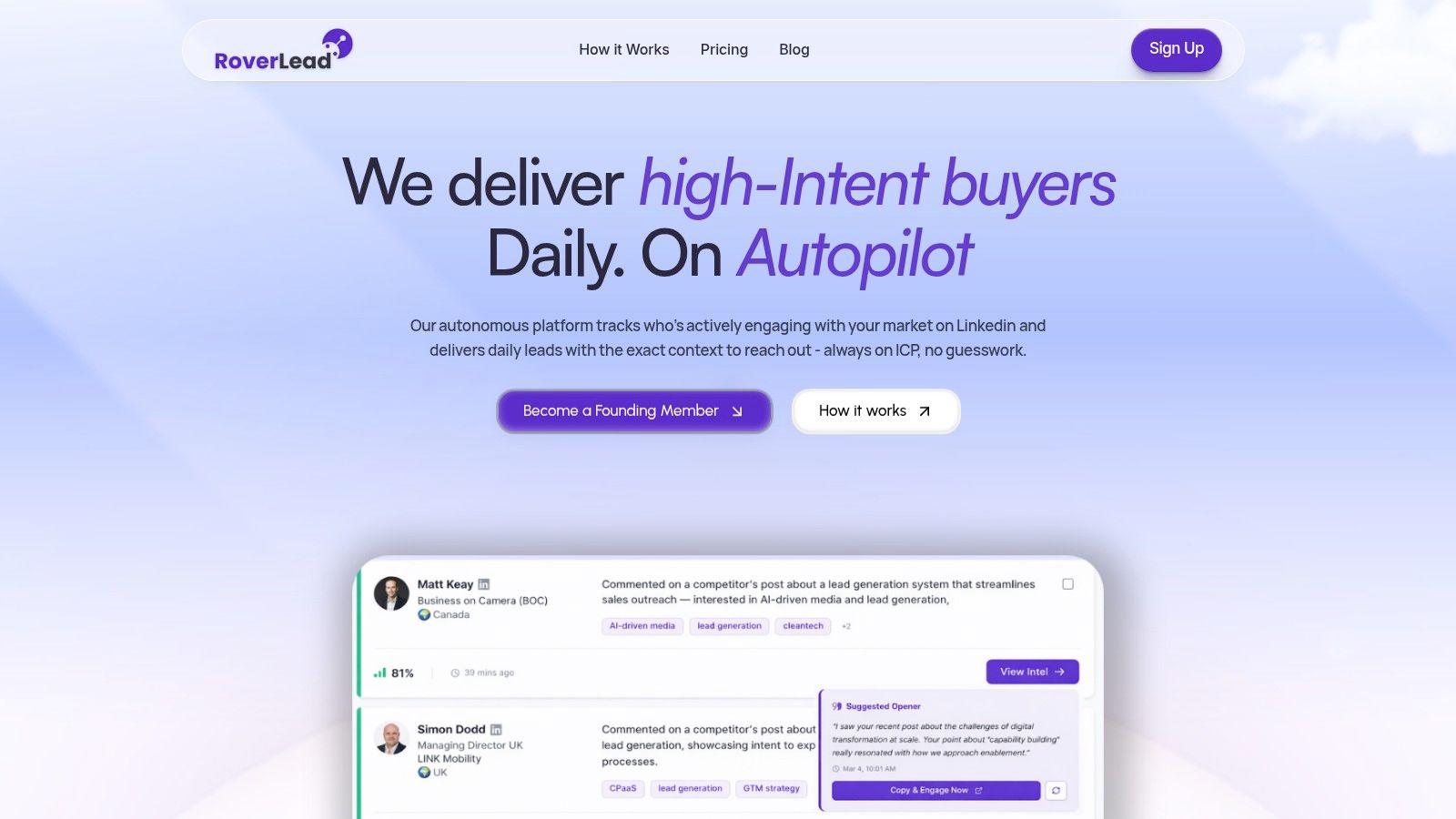
Most competitor monitoring tools tell you what companies changed. RoverLead AI tells you who's reacting, engaging, and showing intent on LinkedIn. That's a different game entirely.
If your team sells on LinkedIn, RoverLead AI is the sharpest tool on this list because it focuses on active buying signals instead of passive company updates. Its Signal Agents watch engagement around creators, competitors, keywords, and niche topics, then surface ICP-matched leads with context and an AI-written opener. That means your reps don't start from a cold list. They start from visible behavior.
Why it wins
The setup is simple. You define your ICP, competitors, keywords, and experts. Then the system starts monitoring public engagement patterns and curating prospects your team can reach with relevant timing. That beats the usual ritual of pulling another static Sales Navigator list and pretending timing doesn't matter.
RoverLead AI is also built for teams who are tired of “competitive intelligence” living in a slide deck no rep reads.
Practical rule: If your reps are still guessing who might be in market, you don't have a targeting problem. You have a signal problem.
A few reasons founders and sales leaders will like it:
Behavior over brochures: RoverLead AI prioritizes what prospects do on LinkedIn, not just what companies publish on their site.
Context baked in: Reps get a daily curated feed and an opener tied to the actual signal, which cuts pointless research.
Warm outreach, not spam: The workflow leans into social selling and network-aware prospecting instead of brute-force interruption.
Fast adoption: It doesn't ask your team to become part-time analysts.
Best fit
This is the best pick for B2B founders, SDR teams, agencies, and heads of sales who need pipeline from LinkedIn now, not six months from now. The trade-off is straightforward. It's an early product, access is limited, and public pricing isn't posted.
That said, if your market buys in public and talks on LinkedIn, RoverLead AI is the most practical answer to the question, “How do we catch demand before our competitors do?”
2. Crayon
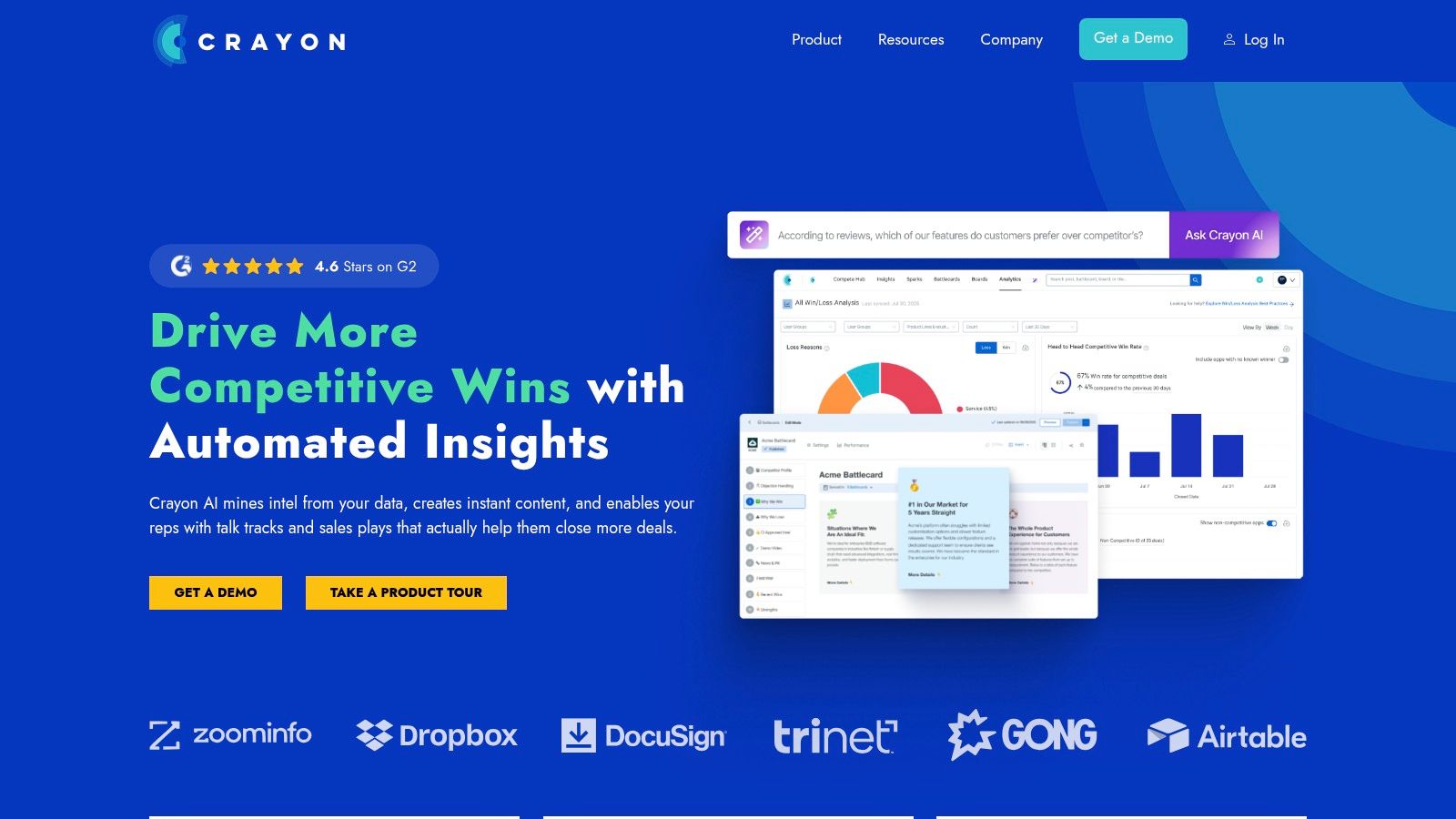
Crayon is what you buy when your problem isn't “we need more signals,” but “we need one place to manage competitive chaos.” It centralizes competitor changes across websites, pricing, messaging, product pages, reviews, and news, then turns that stream into battlecards and alerts.
That's useful because most companies don't fail at collecting competitor info. They fail at distributing it to sales in a way anyone uses.
Where Crayon earns its keep
Crayon is strongest when product marketing owns competitive intelligence and wants sales, leadership, and revenue teams working from the same facts. The platform's real value is operational. It helps a PMM team stop being a help desk for every “Hey, what's competitor X doing now?” message.
You'll want Crayon if your team needs:
Centralized tracking: One place for website updates, pricing shifts, product messaging, and market chatter.
Enablement output: Battlecards and alerts that are easier for reps to use than a giant competitive wiki.
Workflow integrations: Connections into systems like Salesforce, Slack, Teams, and enablement tools.
Crayon is not magic. Someone still has to own the program, decide what matters, and keep the narrative clean.
The platform can surface a lot. Your team still has to decide what deserves action and what belongs in the trash.
If you're a startup with a tiny sales team, Crayon can feel heavy. If you're a larger sales org with recurring competitive pressure, it's a solid fit.
3. Klue
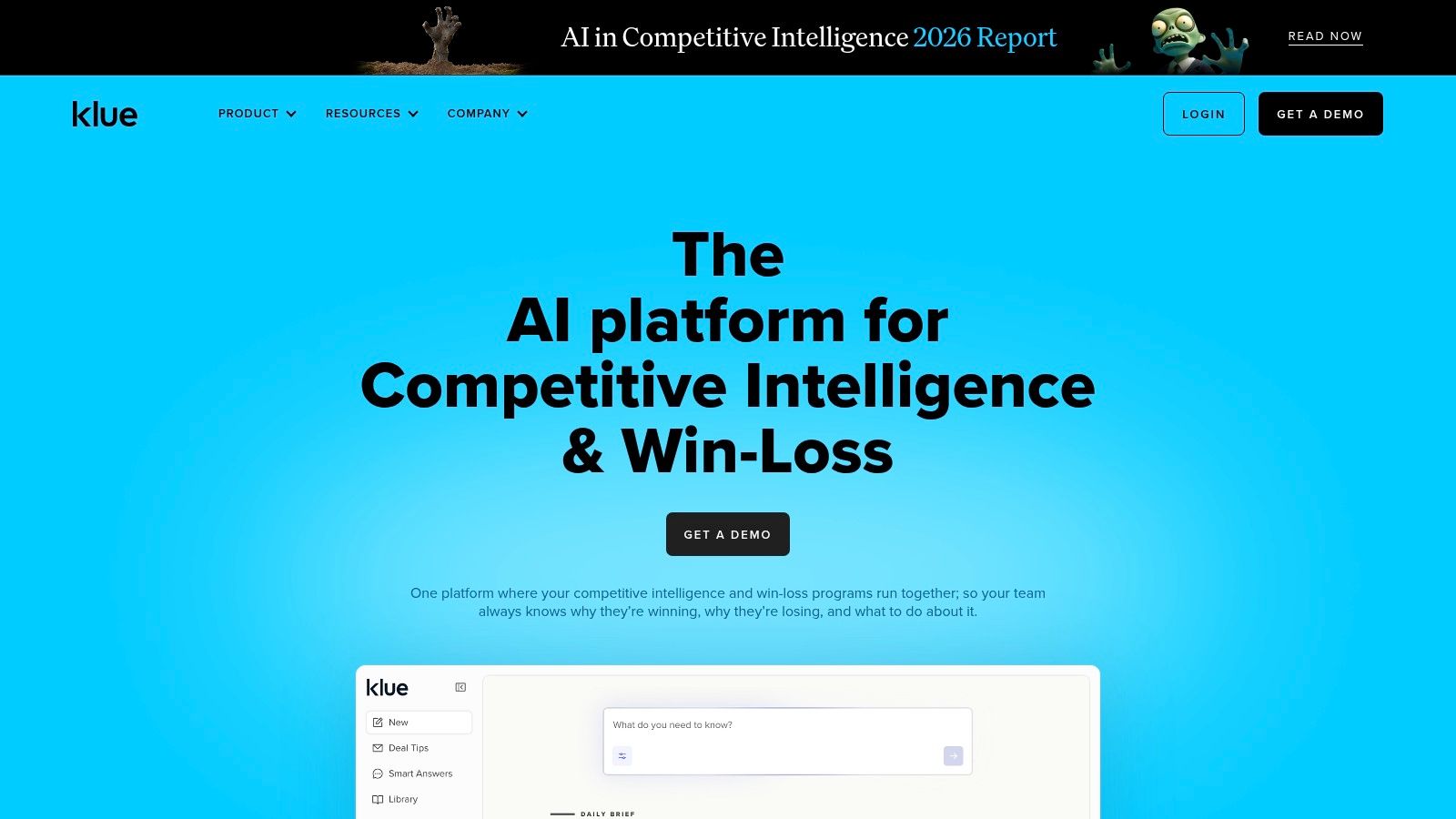
Klue is built for companies that want competitive intelligence to show up in actual deals, not just in strategy meetings. It's sales-first, battlecard-heavy, and designed to live where reps already work.
That focus matters. A 2026 Klue roundup says users have seen up to a 28% increase in competitive win rates, and some tools in the category save PMMs 5+ hours weekly by automating open-web data collection and summarization (Klue's competitor monitoring roundup). That's the commercial case in one sentence. Better intel should help you win more and waste less time.
Why sales teams like it
Klue monitors competitor sites, pricing, product changes, reviews, and news, then turns that into battlecards and competitor profiles with strong distribution into systems like Salesforce, Highspot, Gong, Slack, and Teams. It's one of the cleaner choices for companies formalizing a compete program across PMM, RevOps, and frontline sales.
The reason teams adopt Klue is simple:
It meets reps where they are: Good CI dies when reps have to go hunting for it.
It supports enablement: The platform is designed around objections, differentiators, and live-deal usage.
It's mature: This isn't a duct-tape setup.
The downside is equally simple. Klue usually means process change. If your org doesn't have buy-in, the tool won't fix that for you.
For sales-led companies that compete head-to-head often, Klue is one of the strongest traditional competitor monitoring tools on the market.
4. Kompyte by Semrush
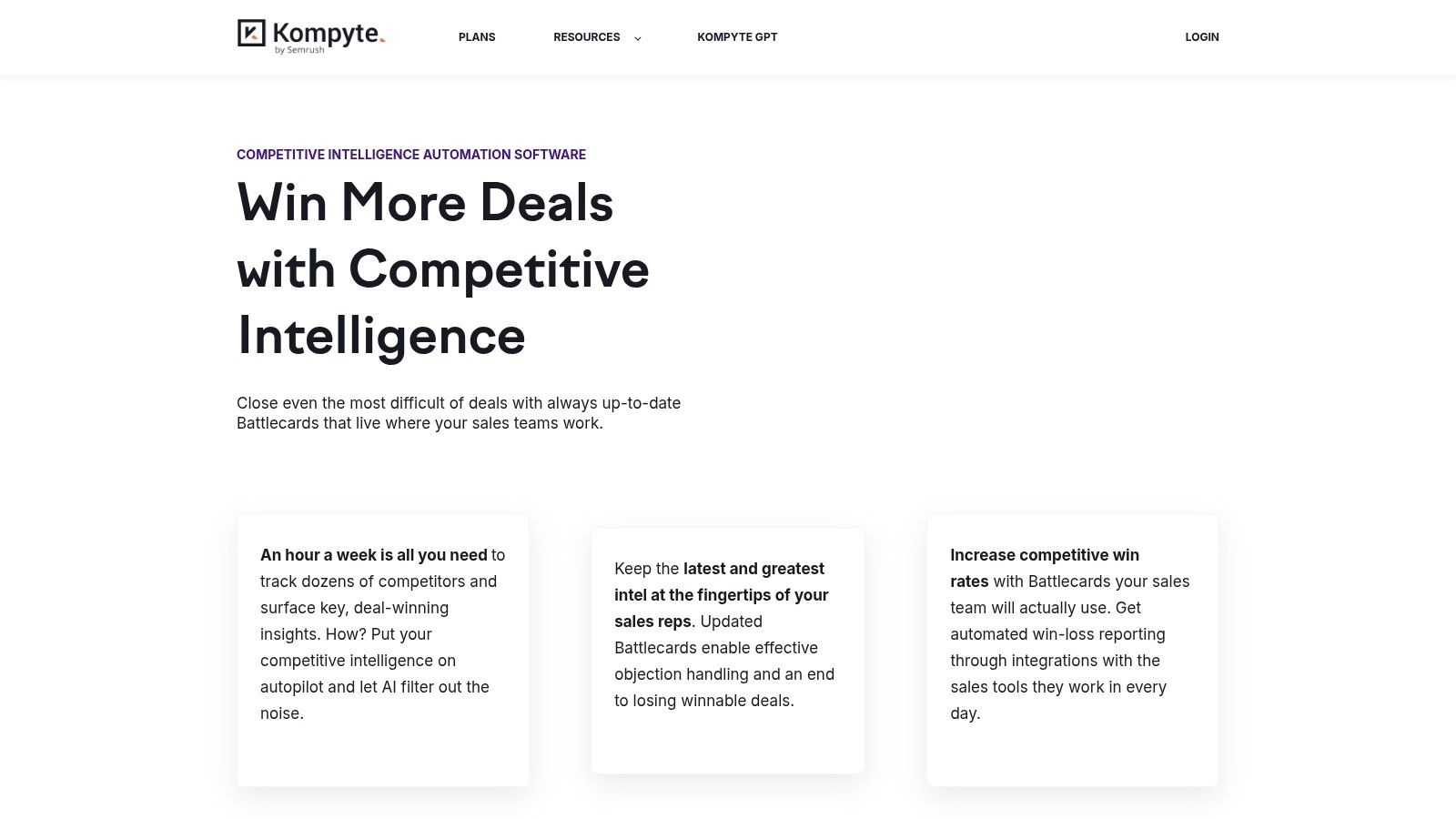
Kompyte by Semrush is the practical middle ground between pure monitoring and sales enablement. It tracks competitor web properties and digital signals, then turns those updates into live battlecards and win-loss context.
If your team already trusts Semrush as a vendor, Kompyte gets extra points for fitting into that footprint without feeling like a separate science project.
Who should buy it
Kompyte makes sense for GTM teams that want automated tracking and battlecards without building a full intelligence operation from scratch. It watches for changes across competitor properties, pushes alerts, and gives sales a more current view of positioning.
Why people choose it:
Less rollout friction: Included integrations make deployment easier.
Useful battlecards: Sales can access current talking points tied to changes in the market.
Natural fit for Semrush users: Vendor consolidation is boring until procurement shows up. Then it becomes very interesting.
Kompyte is less compelling if your needs go far beyond public digital signals. It's not the platform for deep strategic research or high-level market analysis. It's the one for “tell us what changed and help reps use it.”
That's a perfectly respectable job.
5. Similarweb
Similarweb is for the moment when your competitor starts showing up everywhere and your team needs to know why. You are not looking for polished messaging updates or another pricing-page alert. You want a fast read on where their traffic is coming from, which markets are heating up, and whether they are gaining share through search, paid, referrals, or partnerships.
That makes Similarweb useful for market-facing teams that need directional answers fast.
What it tells you
Similarweb is strongest at passive competitive intelligence. It estimates traffic sources, audience behavior, and channel mix across sites, markets, and regions. If you want to compare digital momentum across several competitors without waiting for someone to build a research deck, it does the job.
Use it for questions like these:
Which channels seem to be driving a competitor's growth?
Are they gaining traction in a region you plan to enter?
Is their traffic mix shifting toward paid, search, or referral?
That is valuable. It is also incomplete.
Similarweb shows what appears to be happening at the market level. It does not show active buying signals, meaning the people engaging, changing jobs, posting pain points, or entering a purchase window. That is the dividing line between passive monitoring and pipeline creation. If your sales team lives on LinkedIn and needs accounts that are warming up now, tools like RoverLead AI are built closer to revenue.
Use Similarweb carefully because the data is modeled. Treat it as directional input for strategy, demand gen, and market sizing. Do not treat it like audited first-party analytics.
If your question is, "Where is this competitor getting digital traction?" Similarweb is a smart pick. If your question is, "Which accounts should reps contact this week?" look elsewhere.
Best fit: marketing leaders, growth teams, and GTM operators who care more about market movement than rep workflows.
6. Brandwatch
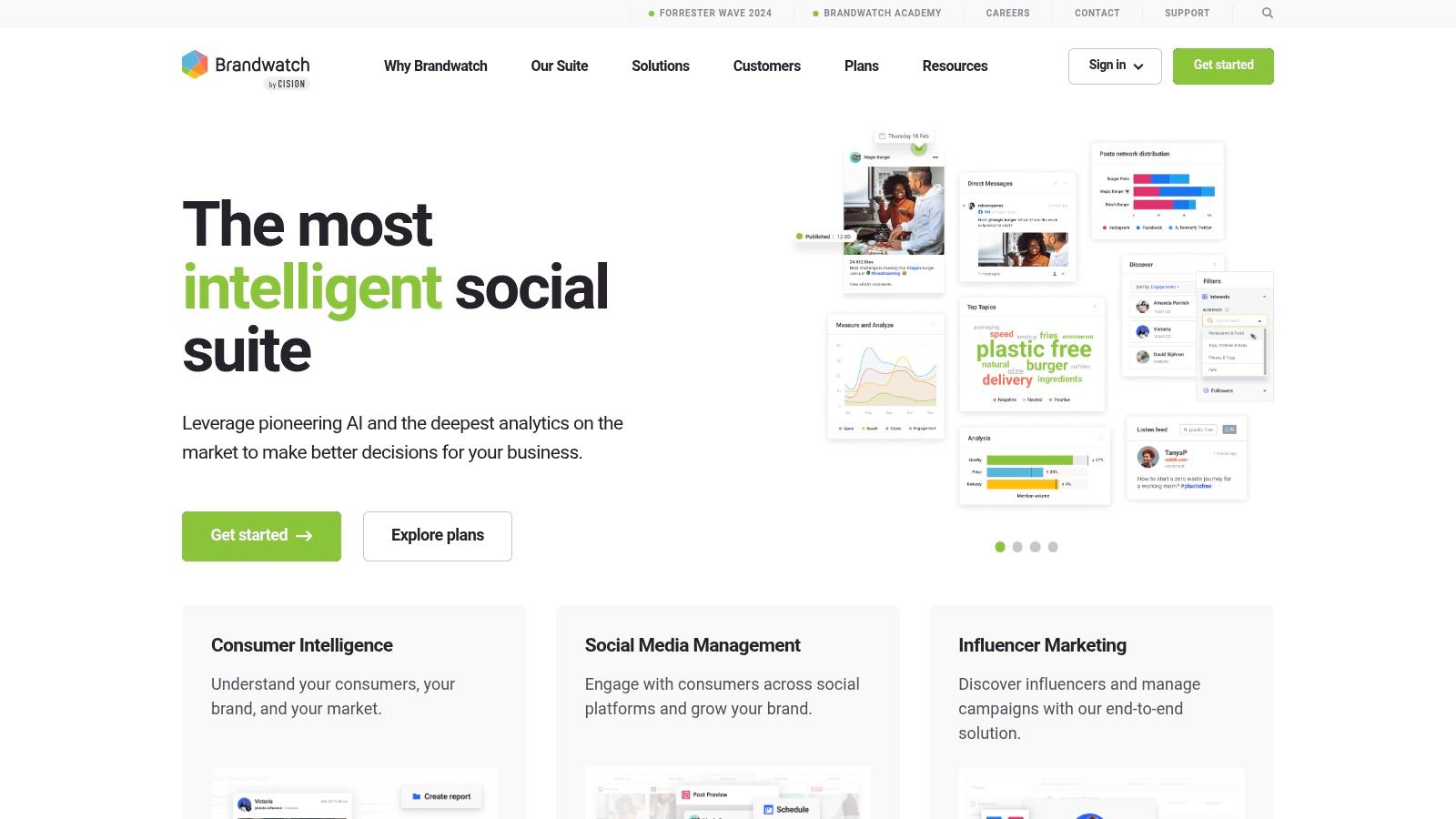
Brandwatch is for teams that know competitor monitoring doesn't stop at websites and pricing pages. Buyers talk in public. Customers complain in public. Influencers pile on in public. Brandwatch listens across social platforms, forums, news, and the web.
That makes it valuable when the competitive story is being written in conversation, not in a product release note.
When social chatter matters more than web copy
Brandwatch is particularly useful for GTM, communications, and brand teams that want to track competitor share of voice, campaign reaction, complaint spikes, and topic shifts. If a competitor changes positioning and the market hates it, Brandwatch can help you spot that before their homepage catches up.
Its strongest use cases include:
Social benchmarking: Compare how brands are landing in public discussion.
Trend detection: Catch emerging themes and sentiment shifts.
Creator and influencer analysis: Useful if your category runs on social proof.
The catch is obvious. This is enterprise-grade software, and it can be overkill if all you need is a basic alert every time a pricing page changes.
If your market moves through social conversation, though, Brandwatch gives you a much fuller picture than passive web monitoring alone.
7. Visualping
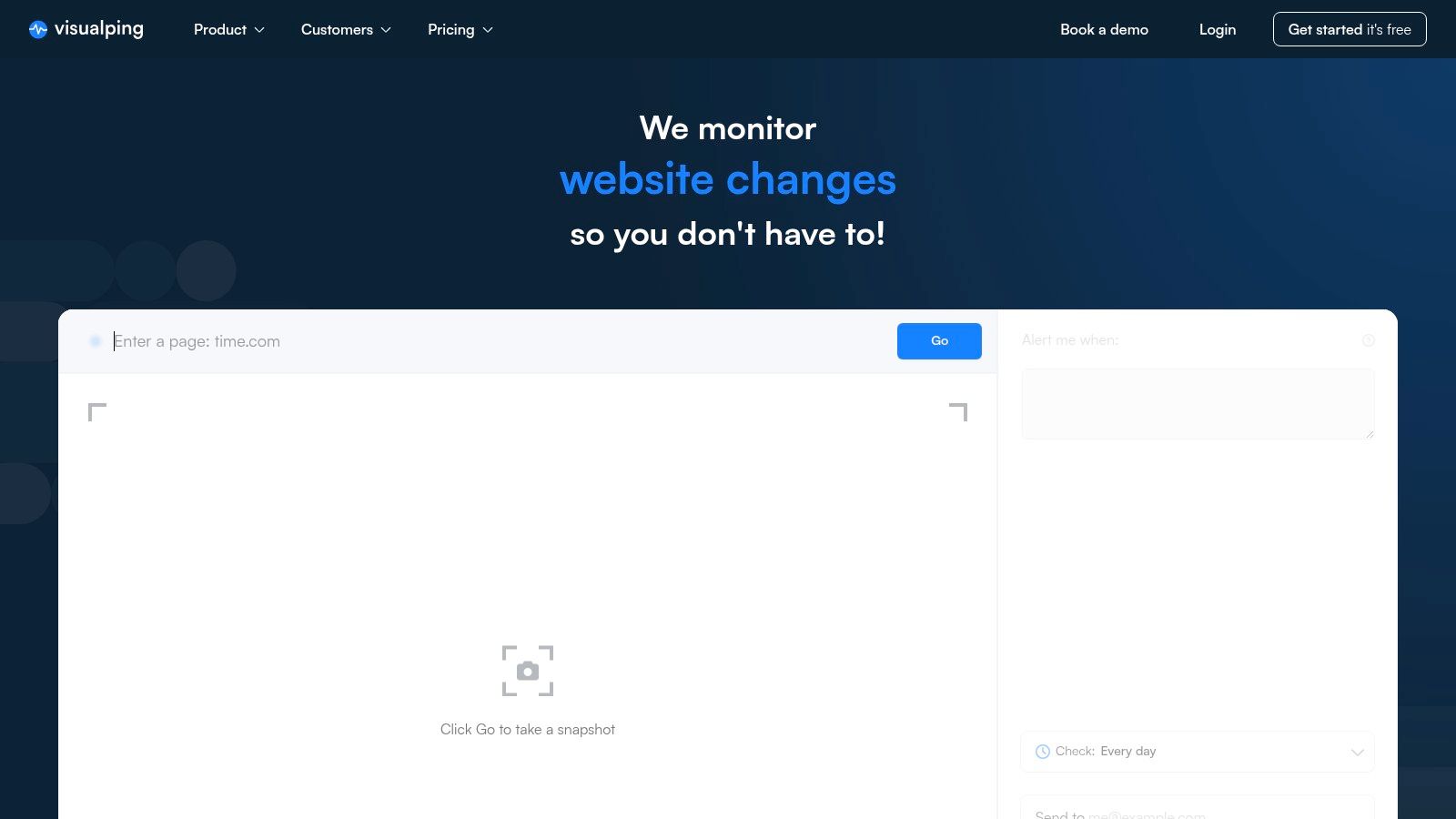
Visualping does one thing well. It watches pages and tells you when they change. That sounds almost too simple until you remember how much useful competitive intel hides in pricing pages, feature grids, legal pages, docs, partner listings, and careers pages.
Sometimes the best tool is the one that doesn't pretend to be a strategy platform.
Best use case
Visualping is excellent for precise monitoring of important URLs. You can watch visual changes, text changes, or specific elements and route alerts into email, Slack, Teams, Sheets, or a webhook. That makes it easy to wire into an existing process without buying a whole CI suite.
Buy Visualping if you need:
Fast deployment: You can set up monitoring quickly and start catching changes right away.
Precise alerts: Great for pricing, feature pages, documentation, and compliance text.
Lean workflows: Ideal for teams that want signal capture without a giant rollout.
This is not where you go for battlecards, strategic analysis, or buyer intent. It's where you go when you're tired of manually checking the same competitor pages like it's 2014.
For many teams, that alone is a good enough reason.
8. BuiltWith
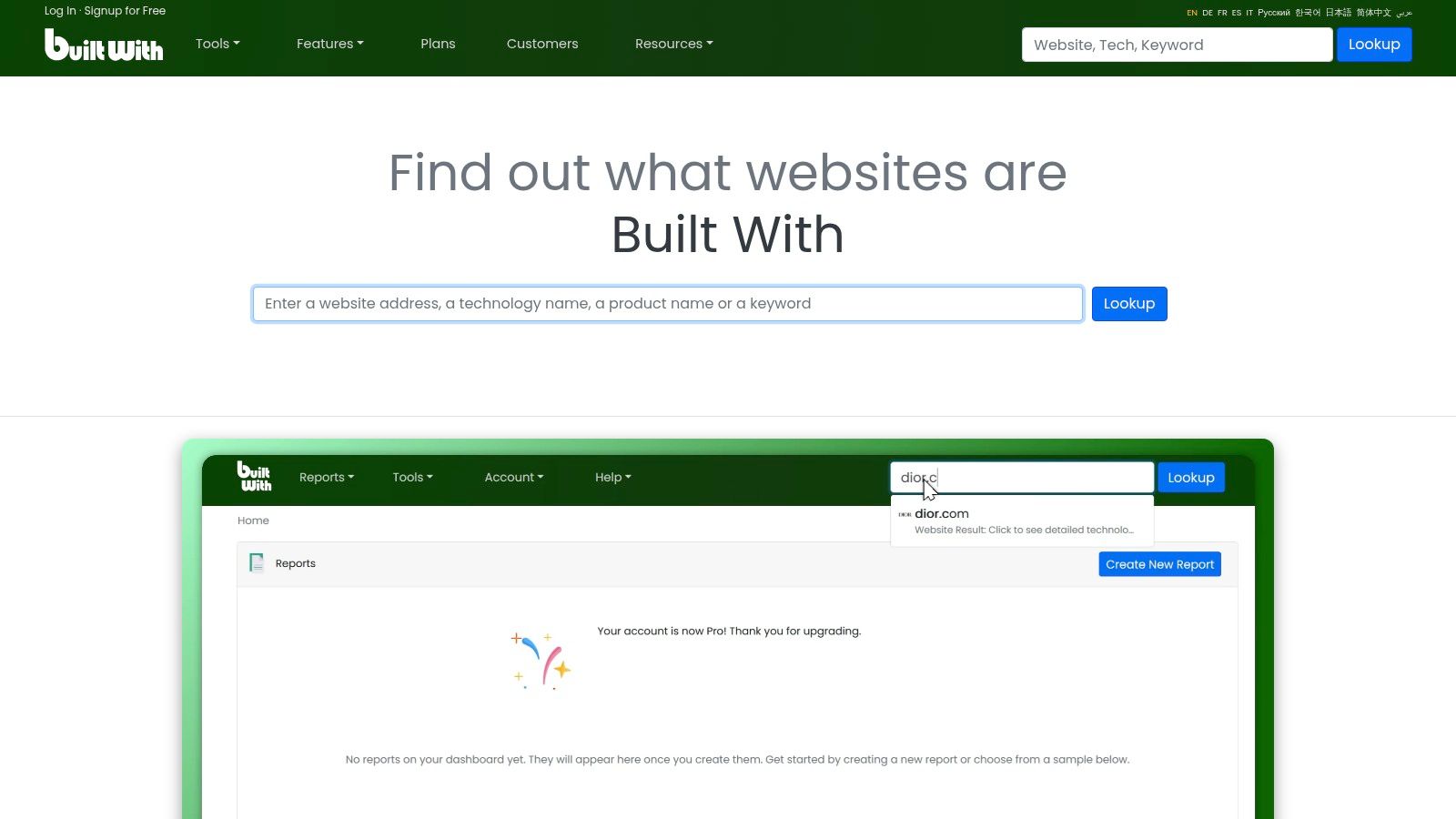
BuiltWith monitors a competitor's technology footprint. That means you can see what tools they appear to be using across analytics, ecommerce, marketing, and infrastructure categories, and track when that stack changes.
That's not just nerd candy for ops people. Tech stack changes often reveal strategic shifts before the press release arrives.
What to watch for
If a competitor adds a new analytics platform, customer data layer, chat system, ad tech tool, or ecommerce component, that can signal a change in motion. Maybe they're gearing up for a bigger PLG push. Maybe they're investing in lifecycle marketing. Maybe they're trying to fix a mess. Either way, it's useful.
BuiltWith is strongest when used by:
Sales teams prospecting into installed-base logic
RevOps and growth teams inferring go-to-market changes
Founders doing lightweight competitive reconnaissance
The nice thing here is transparency. BuiltWith is self-serve and straightforward. The less nice thing is that it doesn't interpret business impact for you. It tells you what changed in the stack. Your team still has to connect the dots.
That's fine. Good operators should be doing that anyway.
9. Owler
Owler is the simple, digestible option for keeping tabs on company news and major market moves. It gives you daily snapshots, real-time feeds, event tracking, and competitor graphs.
This is the tool executives and sellers often keep around because it's easy to consume and doesn't require a full intelligence program.
Why leaders keep it around
Owler is useful for tracking launches, leadership changes, funding news, and other company-level updates that help teams stay generally informed. It's less about deep analysis and more about never being the person surprised by something everyone else saw yesterday.
It works well for:
Daily awareness: Lightweight updates that don't drown the team.
Executive briefings: Good for staying current without deep platform training.
Basic sales prep: Helpful context before calls and account reviews.
The downside is that some elements rely on community-sourced inputs, so you shouldn't treat every data point like audited truth. Still, for a lightweight layer of market awareness, Owler is handy.
Not every tool needs to be profound. Some just need to keep your team from looking asleep.
10. AlphaSense
AlphaSense sits at the heavyweight end of this market. It's built for deep research across filings, earnings calls, news, expert perspectives, and strategic analysis. This is not a lightweight sales tool. It's a serious platform for strategy, research, and leadership teams.
If your competitor monitoring needs extend into market structure, executive commentary, regulatory context, and long-range strategic moves, AlphaSense is the grown-up option.
Where it shines
A useful benchmark for modern platforms is source coverage and signal quality. One 2026 buyer's guide points to Contify processing over 1 million public sources and notes that Klue's crawler pulls from social posts, reviews, press briefings, newsletters, and internal research. The implication is clear. Tool quality now depends heavily on source breadth, noise filtering, and AI-assisted relevance ranking (AlphaSense buyer's guide to competitor monitoring tools).
That's where AlphaSense stands out conceptually. It's built for organizations that need to search broad, complex information sets and turn them into usable strategic insight.
Advisor's take: AlphaSense is excellent for C-level, strategy, and market intelligence work. It's usually more platform than an SDR team needs.
Choose AlphaSense when you need depth, not just alerts. Skip it if your real need is frontline prospecting or lightweight website monitoring.
Top 10 Competitor Monitoring Tools, Feature Comparison
Solution | Core focus & key features | UX & effectiveness ★ | Value & pricing 💰 | Target audience 👥 | Unique selling point ✨ |
|---|---|---|---|---|---|
🏆 RoverLead AI | Autonomous LinkedIn prospecting; Signal Agents track 10+ engagement signals, daily curated feed + AI openers | 5★, fast setup, reported 2–3x replies & 30–50% more meetings | 💰 Founding program (locked lifetime rate, invite-only) | 👥 B2B sales leaders, SDR/BDR, founders, GTM teams | ✨ Behavioral intent from LinkedIn + contextual AI openers |
Crayon | Enterprise competitive intelligence; monitoring, synthesis, battlecards & integrations | 4★, broad CI coverage, strong synthesis | 💰 Enterprise / quote-based | 👥 PMM, sales enablement, product teams | ✨ Automated insight synthesis into battlecards |
Klue | Competitive enablement + battlecards with sales-first UX & deep integrations | 4★, high adoption for sales-led teams | 💰 Enterprise / quote-based | 👥 Sales teams, RevOps, PMM | ✨ Sales-centric battlecards & impact analysis |
Kompyte by Semrush | Competitor tracking with live battlecards & win/loss dashboards | 3★, useful for teams in Semrush ecosystem | 💰 Sales-led pricing; often bundled | 👥 Marketing/CI teams using Semrush | ✨ Seamless Semrush integration & included integrations |
Similarweb | Digital market intelligence: traffic, channel mix, ads & audience segments | 4★, broad channel benchmarking, directional accuracy | 💰 Free trial; detailed packages quote-based | 👥 Growth, strategy, digital marketing | ✨ Cross-channel traffic and ad intelligence |
Brandwatch | Enterprise social listening & consumer intelligence across platforms | 4★, strong social coverage & alerts | 💰 Custom enterprise pricing | 👥 Comms, GTM, social teams | ✨ Deep social + influencer trend detection |
Visualping | Website change monitoring (visual/text/XPath) with AI summarization | 3★, fast deploy, precise URL monitoring | 💰 Freemium → business plans sales-led | 👥 Competitive & product ops tracking pages | ✨ Visual diff + low-noise alerts for pages |
BuiltWith | Tech-stack intelligence, historical adoption & usage alerts | 3★, concrete tech signals; self-serve pricing | 💰 Published pricing; self-serve | 👥 Sales, RevOps, product intelligence | ✨ Large tech catalog + actionable install alerts |
Owler | Company news & event digests with competitive graphs | 3★, quick digests and event tagging | 💰 Free community plan; premium tiers | 👥 Execs, sales leaders, market watchers | ✨ Fast, digestible competitor event alerts |
AlphaSense | AI research platform: filings, transcripts, earnings & expert calls | 5★, deep primary-source depth for strategy teams | 💰 Enterprise / quote-based | 👥 C-suite, strategy, investor teams | ✨ Generative search across premium financial & transcript sources |
Stop Watching, Start Winning
Your rep opens Slack on Monday morning. A competitor just launched a new pricing page, your enablement lead dropped a battlecard update, and marketing flagged a spike in competitor search traffic. Useful? Sure. Timely enough to win a deal? Usually not.
That is the core split in competitor monitoring.
One side is passive intelligence. It tracks what companies publish or what the market can observe after the fact. Website edits, feature launches, review volume, funding news, executive hires, ad activity, traffic estimates, social mentions, earnings calls. Crayon, Klue, Kompyte, Similarweb, Brandwatch, Visualping, BuiltWith, Owler, and AlphaSense all sit somewhere in that camp, and many of them do it well.
The other side is active buying signals. It tracks what prospects and buyers are doing before they raise a hand. They follow a competitor's founder on LinkedIn. They comment on a category post. They engage with a partner, react to rollout news, or start interacting with the same voices your team should already know. That behavior matters more than another tidy alert about a homepage change because it gives sales a shot to act while the buying window is still open.
Competitive intelligence software keeps growing as companies try to make faster calls with less guesswork, but growth in software spend is not the point. The point is operational usefulness. If a tool gives your team a steady stream of updates and no clear path to action, you bought research, not advantage.
So pick based on the job.
Product marketing and enablement teams should favor platforms built for collection, synthesis, and distribution. Demand gen teams usually get more value from audience, traffic, and share-of-voice tools. Strategy leaders need deeper market and financial context. Teams watching a handful of key pages should use a page-monitoring tool and move on.
Sales teams need something else.
They need a way to spot buyer movement early, tie it to the right accounts, and turn that signal into outreach before the opportunity goes cold. That is why RoverLead AI earns a different label from the rest of this list. It is not another system for watching competitor announcements. It focuses on active signals from LinkedIn behavior, which is where a lot of B2B buying intent shows up long before a demo request.
That difference sounds small on a vendor grid. It is not. Passive intelligence helps you understand the field. Active signals help reps book meetings.
Use both if you can. If you have to choose, choose the tool that helps your team act today. A dashboard full of competitor updates looks smart. Pipeline is smarter.
FAQ
What are competitor monitoring tools
Competitor monitoring tools track changes related to rival companies across channels like websites, social media, pricing pages, reviews, search results, news, and market data. Some focus on alerts and research. Others push that intelligence into battlecards, workflows, or prospecting motions.
What's the difference between passive and active competitor monitoring
Passive monitoring tracks what companies publish or change. Think websites, product pages, press releases, reviews, and rankings. Active monitoring tracks buyer behavior and real engagement signals, such as public conversations and interactions that suggest intent.
Which competitor monitoring tool is best for sales teams
For direct sales action, RoverLead AI is the strongest pick in this list because it turns LinkedIn engagement into outreach-ready opportunities. For battlecards and formal compete programs, Klue is a strong choice.
Which tool is best for product marketing teams
Crayon and Klue are the best fits for product marketing teams that need centralized intelligence, battlecards, and cross-functional distribution. AlphaSense fits strategy-heavy PMM work better than day-to-day sales enablement.
Which tool is best for website change tracking
Visualping is the cleanest answer if your main job is catching page-level changes across pricing, features, docs, or terms. It's fast, focused, and easy to operationalize.
Which tool is best for SEO and traffic benchmarking
Similarweb is useful for traffic and channel benchmarking. Teams that care more about search strategy and keyword movement often also use Semrush-related tooling, and Kompyte can be attractive if they want CI workflows in that ecosystem.
Are competitor monitoring tools worth it for startups
Yes, if the tool matches the problem. Early-stage teams usually don't need an enterprise intelligence suite. They need either focused page monitoring, quick market awareness, or signal-driven prospecting that helps them create pipeline.
What should enterprise buyers watch out for
Integration friction, privacy and security requirements, and the challenge of handling large data volumes are real issues in enterprise deployments. Buyers should also make sure someone owns the process internally, because software alone won't create adoption.
Do these tools replace win-loss analysis
No. They support win-loss analysis, but they don't replace direct customer and deal feedback. The best teams combine monitoring, rep feedback, and actual deal review instead of pretending one dashboard explains everything.
How should a team choose the right tool
Start with the job. If you need deal support, choose battlecard-driven platforms. If you need traffic benchmarks, use a digital intelligence tool. If you need strategic research, choose a deeper market platform. If you need to turn public engagement into pipeline, pick a tool built for active signals, not passive archives.
If your team is still building outbound from static lists, RoverLead AI is the upgrade worth making. It helps you spot real LinkedIn buying signals, match them to your ICP, and reach out with timing that doesn't feel random. For founders, SDR leaders, and B2B teams that want more relevant conversations instead of more busywork, RoverLead AI is the clearest path from competitive noise to pipeline.