Request for an Appointment: Get More Meetings

You've done it. You found the right title, wrote a respectable message, even trimmed the fluff so it didn't sound like it came from a desperate SDR template library. Then you sent your request for an appointment and got silence.
That silence usually isn't because your writing was terrible. It's because your timing was.
Most appointment requests fail for one simple reason. They arrive before the prospect cares. You're asking for calendar time when the buyer hasn't yet felt enough urgency, curiosity, or pain to give it to you. That's why the edge isn't “better personalization” in the usual lazy sense. It's intent. What people are already clicking, commenting on, downloading, discussing, and revisiting tells you when your message shifts from interruption to relevance.
Send the same note too early and it's spam. Send it right after a visible buying signal and it feels helpful. That's the game.
Table of Contents
Why Your Perfect Appointment Request Was Ignored
You probably blamed the copy, a common reaction that involves tweaking the subject line, rewriting the opener, swapping “quick chat” for “brief conversation,” and pretending the problem is wording.
Usually, it isn't.
The old outreach mindset says volume fixes everything. Just send more. Dial more. Push harder. That advice belongs in a museum. Cold calling averages have gotten uglier, with Cognism's 2025 analysis reporting 2.3% and broader B2B ranges often landing around 1% to 3%, while projections cited by SalesHive put the average cold call success rate at 2.7% in 2026 and around 40 dials for one qualified meeting for average SDRs, according to SalesHive's cold calling success rate analysis.
That's not a reason to quit outreach. It's a reason to stop pretending a random message to a random person is strategy.
Practical rule: A request for an appointment works best when it feels like the next logical step in a conversation the buyer is already having in their head.
The best meeting requests don't start with “I help companies like yours.” They start with evidence. The prospect engaged with a topic you own. They asked a question. They revisited a problem. They reacted to something adjacent to your solution. In other words, they raised their hand, even if only slightly.
If you miss that part, your “personalized” request is still cold spam wearing a blazer.
Timing Is Everything Reading the Digital Tea Leaves
Timing isn't mystical. It's observable. Buyers leave clues all over the place, but teams frequently disregard them, continuing to build lists off static job titles and company headcount.
That's backwards.
Stop guessing and watch behavior
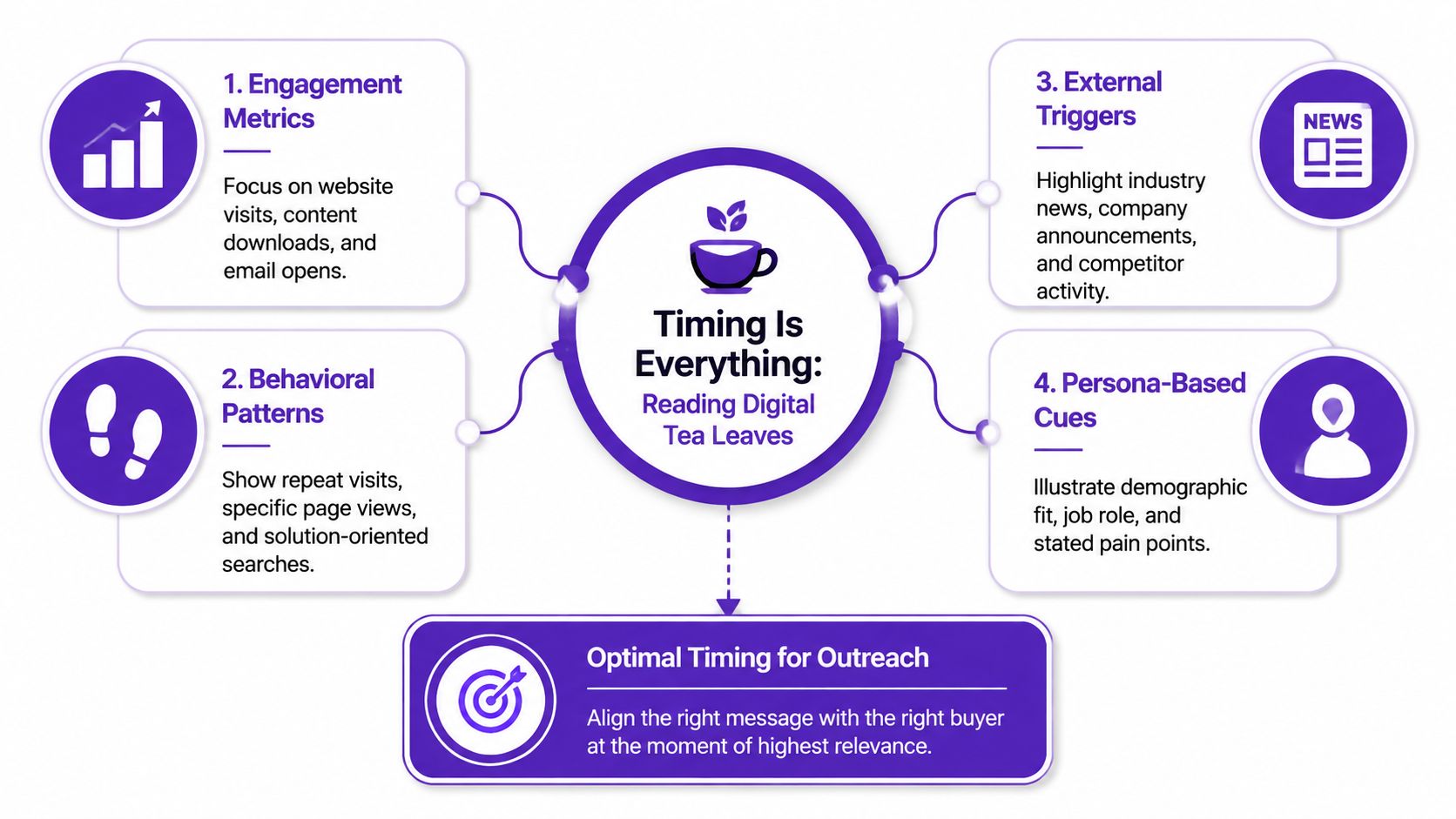
Start with LinkedIn. It's one of the clearest places to spot early commercial intent without begging for a reply. A person commenting “how are teams handling this?” on a post about your category is more useful than a list of 500 “ideal” prospects who haven't shown a pulse. The same goes for someone asking about pricing in a competitor thread, joining a niche discussion, or consistently engaging with creators who teach the problem you solve.
Content performance matters here too. A post engagement rate of 2.77% on LinkedIn is considered very good for B2B lead generation, and content that hits that mark is a goldmine for identifying prospects who are actively interested in the problems you solve, based on Genroe's LinkedIn B2B lead generation benchmark.
Website behavior is the second bucket. Repeat visits to pricing pages, demo pages, implementation pages, or bottom-of-funnel assets usually mean the prospect isn't browsing for sport. They're doing homework. If your team also tracks opens and engagement, using tools and workflows like those discussed in this guide on how to see if an email was read, you get sharper timing without relying on guesswork.
What a real signal looks like
A useful signal has two qualities:
It's recent. Last week matters more than last quarter.
It's specific. “Viewed content” is weak. “Commented on a post about outbound attribution” is useful.
Watch for clusters like these:
Social engagement with intent: Comments, repeated reactions, direct questions, or follows around a narrow topic.
Research behavior on your site: Pricing revisits, case study downloads, comparison-page visits, or demo-page traffic.
External triggers: Hiring, new product launches, category shifts, leadership changes, or public complaints about the exact mess you solve.
Persona cues: The right role saying the right thing at the right time.
Don't ask for a meeting because the person matches your ICP. Ask because their behavior says the problem is active right now.
That shift changes everything. Your request for an appointment stops sounding like a generic reach-out and starts sounding like good timing.
Choosing Your Outreach Channel Wisely
Once you've got a valid signal, don't immediately fire off the same message everywhere like a caffeinated maniac. Channel choice matters. Seniority matters. Signal strength matters.
A CEO who lives in email may ignore LinkedIn. A manager who comments daily on LinkedIn may respond there faster than they ever will to a formal email. A phone call can cut through noise, but only when you've earned the right to make it.
Match the channel to the signal
If the signal happened on LinkedIn, reply there first. That's where the context lives. If the buyer visited your site and already knows your brand, email often works better because it gives you more room to frame the insight without sounding cramped. If the account is high-value, the pain is obvious, and you have a concrete reason to call, the phone can still do damage in the good way.
Use cold calls sparingly. The average cold call success rate hovers around 2.7%, with average SDRs needing 40 dials to book one meeting, according to SalesHive's review of cold calling success rates. That's why calling should be selective, not your default move for every name on a spreadsheet.
For better first-touch phrasing, it helps to sharpen the opener before you worry about the whole script. These B2B conversation starters are useful if your current outreach sounds like it was approved by legal.
Outreach Channel Comparison for Appointment Requests
Channel | Best For | Pros | Cons | Pro Tip |
|---|---|---|---|---|
Website intent, known brand awareness, senior buyers | More room for context, easy to reference observations, easier to forward internally | Crowded inbox, weak messages die fast | Lead with the observed signal, not your company intro | |
LinkedIn DM or InMail | Social intent, active posters, engaged operators | Native to the behavior you observed, more conversational, fast replies when timed well | Easy to sound lazy, overused by bad sellers | Reference the exact post, comment, or discussion |
Phone Call | High-value targets with clear urgency | Immediate feedback, strong pattern interrupt, fast qualification | Intrusive if unsupported by context, inefficient for weak-fit lists | Call only when you have a sharp reason and a direct opening |
A request for an appointment lands better when the channel fits the moment. That sounds obvious. Despite this, the practice is often overlooked.
Crafting the Un-Ignorable Request for Each Channel
Good outreach isn't about sounding polished. It's about making the buyer think, “Fair ask.”

Use the three-part structure
Every solid request for an appointment has three parts:
Observation
Mention the intent signal. Be concrete.Insight
Explain why that signal matters. Connect it to a business problem or missed opportunity.Low-friction CTA
Ask for a small next step, not a ceremonial commitment to your sales process.
That's it. No chest-thumping. No “circle back.” No “I'd love to learn more about your goals” nonsense.
If your opener could be pasted into 200 other inboxes unchanged, it's not personalized. It's mail merge with a haircut.
For LinkedIn specifically, quality of the first message matters more than people admit. Top-tier B2B performers on LinkedIn aim for a 40% conversion rate from a positive response to a booked meeting, according to LinkedIn's B2B engagement metrics guidance. The first note doesn't need to do everything, but it absolutely has to earn the next step.
If you need help tightening email structure without slipping into templated sludge, this collection of cold email template examples is a good place to pressure-test your drafts.
Channel examples that don't sound robotic
Email example
Subject: Quick thought on your pricing-page traffic
Hi Sarah, I noticed your team has been pushing more content around pipeline efficiency, and that usually means buyers are also hitting pricing and comparison pages harder. If that's happening for you, there's often a gap between interest and booked conversations.
Worth comparing notes for 15 minutes next week?
LinkedIn connection note
Saw your comment on revenue team handoff issues. You're asking the right question. Thought it made sense to connect.
First DM after connection
You mentioned reps losing momentum after first touch. That's usually a signal problem, not just a messaging problem. I've got a couple of ideas on how teams tighten timing around active interest. Open to a short chat?
A quick walkthrough helps:
Direct InMail
Noticed you've been active around outbound efficiency and rep productivity. Reaching out because those conversations usually surface the same issue: teams ask for meetings before the buyer has shown enough intent. If useful, I can share a simple framework for spotting the right moment to ask.
Warm call opener
“Hi Mark, I'm calling because you commented on a post about demo no-shows and raised a smart point about lead quality. I've got a specific thought on that. Bad time, or do you have two minutes?”
That opening works because it answers the only question buyers care about. Why are you contacting me now?
The Art of the Polite and Persistent Follow-Up
Most sellers quit too early, then complain that outbound doesn't work. No, your patience doesn't work.
Why follow-up wins
The best appointment setting advantage is usually in the follow-up, not the first touch. Follow-up calls achieve a 12% to 18% success rate, which is four to six times higher than the 3% to 5% success rate typical of initial cold calls, according to Automatic Appointments' analysis of follow-up calls in B2B appointment setting.
That's a giant gap. And most reps still send one weak opener, one “just checking in,” then disappear like they joined a monastery.
A simple four-touch sequence
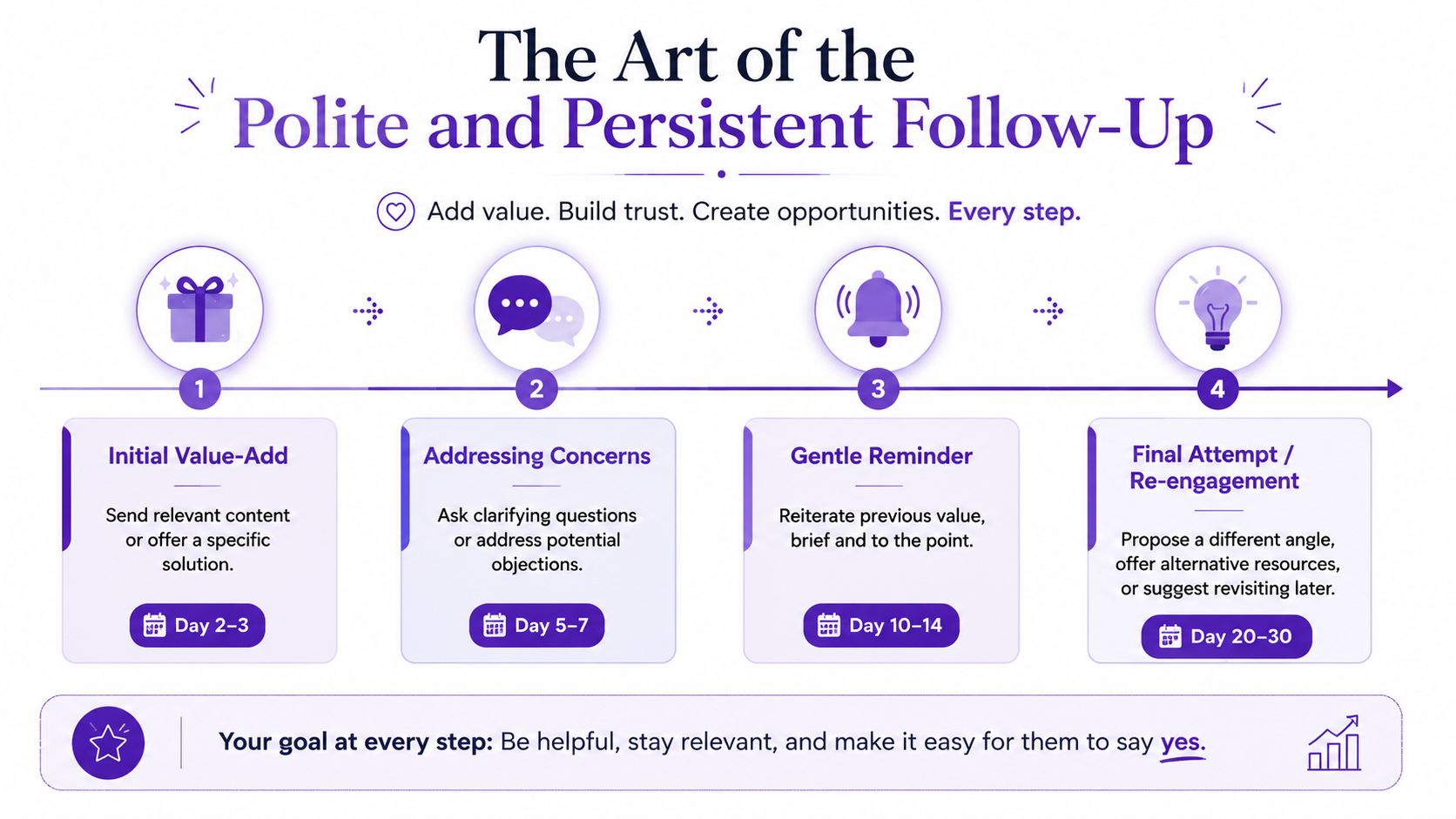
Follow-up should feel like continued relevance, not repeated begging.
Touch two: Add value. Send a sharp observation, useful resource, or brief idea tied to the original signal.
Touch three: Clarify the pain. Ask a question that helps them respond without effort.
Touch four: Reframe the angle. Offer a different use case, stakeholder lens, or practical takeaway.
Final touch: Close the loop cleanly. Give them an easy out and leave the door open.
Here's the rhythm I like over roughly two weeks:
Step | What to send | Tone |
|---|---|---|
First follow-up | New insight or relevant resource | Helpful |
Second follow-up | Short question tied to business context | Curious |
Third follow-up | Brief reminder of the original reason | Direct |
Final follow-up | Polite closeout with optional later revisit | Confident |
“Just checking in” says you want something. A good follow-up shows you noticed something.
Mix channels when it makes sense. A LinkedIn message can become a short email. An unanswered email can earn a quick call if the account matters and the intent was strong. Persistence is professional when it's anchored in relevance.
Measuring What Matters to Book More Meetings
If you only track activity, you'll reward busywork. That's how teams end up celebrating send volume while pipeline starves.
Track outcomes not vanity
Three metrics tell the truth:
Reply rate tells you whether the message earned attention.
Positive reply rate tells you whether the timing and relevance were good.
Meeting booked rate tells you whether your request for an appointment was clear and compelling.
Track those by signal type and by channel. That's where valuable learning happens. If LinkedIn replies are stronger when the prospect commented on a niche topic, lean into that. If pricing-page visitors book from email but not from DMs, stop forcing DMs.
Use a simple feedback loop:
Review the signals behind positive replies.
Compare results by channel.
Rewrite weak openers.
Double down on the combinations that book meetings.
The point isn't perfect attribution. The point is fewer guesses and more meetings.
Appointment Request FAQ
Real outreach gets messy fast. Here are the questions people keep tripping over.
Frequently Asked Questions
Question | Answer |
|---|---|
Should I ask for a meeting in the first message? | If the intent signal is strong, yes. If it's weak, start a conversation first. Don't force a calendar ask when curiosity hasn't formed. |
How long should an appointment request be? | Short. Enough to show relevance, not enough to become homework. Most requests die because the sender tries to write a novel. |
Is email better than LinkedIn? | Neither wins by default. Use the channel that matches where the signal showed up and where the person actually engages. |
What's the biggest mistake in a meeting request? | Making it about you. Buyers don't care that you help companies like theirs. They care why your message matters now. |
Should I personalize every line? | No. Personalize the reason for outreach. Random compliments about podcasts, alma maters, or profile banners are not strategy. |
When should I call instead of message? | When the account is valuable, the problem is clear, and you have a specific reason to reference. Random dialing is still random. |
What if they accept my LinkedIn connection but don't reply? | Treat the connection as permission to continue, not as a win. Follow up with a sharper observation or move to email if you have a valid reason. |
How do I avoid sounding pushy? | Lower the friction. Ask for a brief conversation, a quick opinion, or a simple reaction instead of demanding a full demo. |
Should I keep following up after no response? | Yes, if each touch adds something useful. No, if you're repeating yourself with cleaner formatting. |
What's the best sign someone is ready for an appointment request? | Specific, recent behavior tied to your problem space. Comments, repeat visits, direct questions, and bottom-of-funnel engagement are all stronger than static ICP fit. |
The pattern is simple. Bad sellers ask for meetings because a prospect exists. Good sellers ask because the prospect did something that made the request timely.
If you want that timing handled without manually stalking comments, creators, competitors, and buying signals all day, RoverLead AI is built for exactly that. It turns LinkedIn engagement into high-intent leads matched to your ICP, then gives you the context and opener so your request for an appointment lands when it makes sense.