8 Signal-Based Cold Email Templates for 2026
Most “high-performing” cold email template advice is cosmetic nonsense. Founders keep polishing subject lines, tweaking CTAs, and swapping in clever phrasing, then act surprised when reply rates stay flat. The copy is rarely the actual problem.
Timing is.
Cold email works when it matches a live signal. A prospect comments on a creator's post, researches a competitor, starts discussing a problem publicly, changes roles, or joins a niche conversation. That is the opening. The email should feel like the next logical step in a conversation they already started, not a random interruption from someone with a list.
That is why template libraries disappoint. They train teams to ask, “What should I say?” when the better question is, “Why now?” If you miss that, even a polished email sounds generic. If you get it right, the message feels relevant before the prospect reads the second line.
Use the template as a wrapper, not the strategy. The strategy is the trigger.
The best outbound teams already build around signals from places like LinkedIn, niche communities, job changes, and research behavior. If you want the stack that supports that approach, study these AI prospecting tools for signal-based outreach. Better data beats better adjectives.
A bad cold email template is not usually bad because of the wording. It is bad because it was sent without context. “I noticed you're the VP of Revenue at a growing SaaS company” is not context. It is a mail merge with a job title pasted in. Prospects see that line and know exactly what happened.
This guide gives you eight signal-based plays that make outreach feel earned instead of sprayed.
Table of Contents
1. The Signal-Based Intent Opener
The strongest cold email template doesn't open with who the prospect is. It opens with what they just did.
If someone commented on a LinkedIn post about implementation risk, asked a question under a creator's thread, or interacted with a discussion about pricing, you already have context. Use it. That's far better than pretending their job title is a personalization strategy.
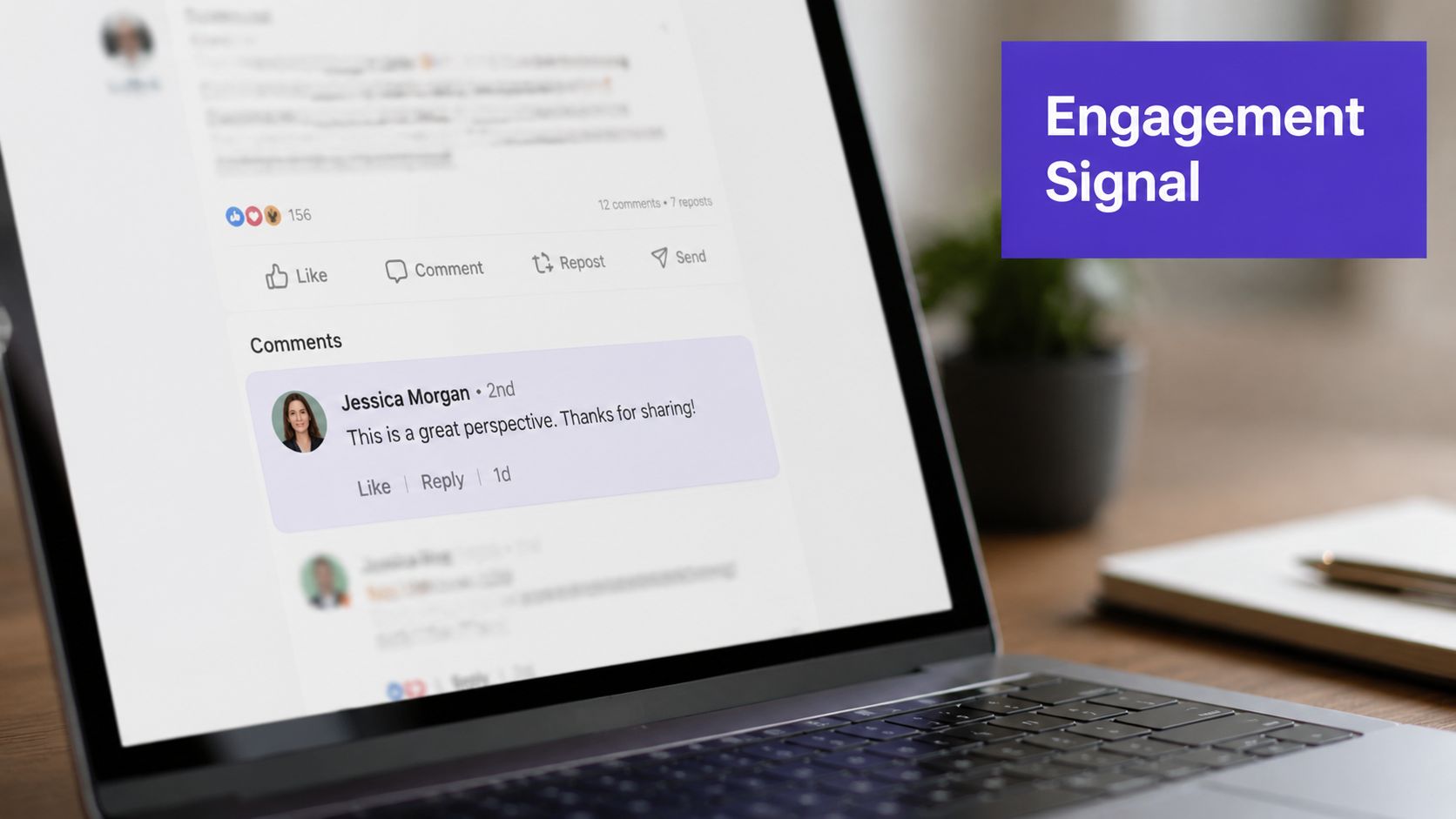
A simple version looks like this:
Hi Sarah, I saw your comment on Alex Boyd's LinkedIn post about rollout timelines for sales tools. You were asking the right question. Most teams don't struggle with vendor selection, they struggle with adoption after the demo. We help RevOps leaders tighten that gap. Worth comparing notes?
That works because it's specific, verifiable, and current. It sounds like you saw the same thing they saw.
Why this one works
Signal-based personalization is where a lot of modern cold email advice still falls behind. Generic templates are saturated. Guidance highlighted by Autobound's cold email templates guide points to a major difference between generic outreach and emails tied to specific, verifiable triggers like funding news, job posts, filings, or social activity. That's the actual shift.
Use three rules:
Name the signal clearly: Mention the post, discussion, or behavior directly.
Connect it to a business issue: Don't stop at “saw your comment.” Explain why that comment matters.
Keep the ask small: Ask to compare notes, trade perspective, or share a relevant resource.
If you're building this into workflow, tools that surface active prospect behavior are more useful than another template library. RoverLead's own thinking on AI prospecting tools fits that shift well because it centers on live engagement instead of static lists.
2. The Competitor Engagement Template
A prospect engaging with competitor content is not asking for a clever template. They are giving you timing.
Treat that signal correctly and your email feels relevant. Miss it and you become another vendor shouting into an active evaluation cycle.
Sales leaders often hesitate here, either ignoring the signal or overplaying it. Both are sloppy. You do not need to announce that you tracked every click. You need to show you understand what happens when a team starts comparing vendors. They want to reduce risk, shorten evaluation time, and avoid a bad implementation decision.
Try this:
Hi Mark, it looks like your team is actively comparing options in this category. The difference we hear most often from teams switching is not feature count. It is how quickly they get value without creating rollout headaches for the team. If a side by side comparison would help, I can send one over.
Use the evaluation window
The point is not to beat the competitor in public. The point is to make the buyer's decision easier.
Keep the message tied to one practical difference. Faster implementation. Cleaner migration. Better support during rollout. Stronger adoption after purchase. Pick one. If you stack five claims into the first email, you sound insecure.
Analysts at Woodpecker note in their guidance on cold email personalization that relevant, context-aware outreach outperforms generic messaging. That is the lesson here. Competitor engagement is a live signal. Use it to enter the conversation at the moment the buyer is already defining evaluation criteria.
Use this structure:
Name the buying context: “Looks like your team is comparing options.”
Anchor on one decision factor: Implementation speed, migration effort, support quality, or time to value.
Offer a useful asset: A comparison sheet, switch plan, ROI model, or checklist.
Helpful wins. Creepy loses.
A real example: a PM reads pricing discussions, review posts, and competitor comparisons over a few days. Your email should lower the work required to evaluate, not remind them that sales software is watching everything they do.
3. The Creator Influencer Network Template
People don't just buy products. They buy through belief systems. If your prospect keeps engaging with a specific creator, consultant, or industry educator, they've already raised their hand around a topic.
Use that.
Most reps handle this badly by name-dropping the creator like a fanboy at a conference. Don't do that. The creator isn't the point. The worldview is the point. If your prospect keeps engaging with content about outbound systems, RevOps hygiene, sales hiring, or attribution, then your email should enter on that theme.
For example:
Hi Nina, noticed you've been engaging with Chris Orlob's sales execution posts. One theme he keeps hitting is consistency beating heroics. That's also where a lot of pipeline teams get stuck. They don't need more activity, they need cleaner signal and better timing. Curious how you're handling that today.
Borrow credibility without sounding needy
This works because it feels peer-level. You're not saying, “We both follow this famous person.” You're saying, “We're both paying attention to the same business problem.”
Open rates vary wildly based on list quality and context. Industry guidance summarized by Cleverly's cold email open rate article notes that hand-researched leads tied to trigger events perform very differently from scraped databases. That's the practical lesson here. Creator-engaged prospects are usually better than cold, static list pulls because there's actual context.
Keep this template tight:
Reference the creator's theme, not just their name
Tie that theme to an operational pain
Ask a thoughtful question instead of pushing a demo
A founder selling sales tech could use this when prospects engage with content about pipeline quality. A consultant selling to RevOps leaders could use it after a prospect comments on a creator thread about forecasting discipline. Same pattern. Different market.
4. The Buying Signal Trigger Template
A single signal is interesting. Multiple signals mean there's probably a project underway.
If someone is showing repeated interest, your cold email template should stop pretending you're making a random introduction. You're not. You're entering an active evaluation. That changes the tone, the ask, and the level of directness.
Lead with that reality.
A message can be as simple as this:
Hi Elena, looks like your team may be in active evaluation mode. Usually that shows up when priorities, tooling, and hiring start moving at the same time. If timing is the issue, I can share what similar teams tend to map first so rollout doesn't drag.
Before the next paragraph, here's the video included for this topic:
Stacked intent changes the email
You need restraint here. Don't list every signal you observed. That's amateur hour. The prospect doesn't need a surveillance transcript. They need evidence that you understand where they are in the buying journey.
One of the better full-funnel benchmarks says average reply rates sit around 3.43% overall, top-performing campaigns exceed 10% reply rates, and 58% of all replies happen on step one while follow-ups still drive 42% of total replies, according to Instantly's cold email benchmark report for 2026. That matters for buying-signal emails because the first message must feel sharply relevant, but the sequence still has to carry weight.
Use this when at least a few distinct signs point in the same direction, such as:
Role expansion plus vendor research
Hiring activity plus category discussion
Demo behavior plus implementation-related social engagement
Practical rule: Reference the pattern, not the evidence locker. “Looks like this initiative is picking up” lands better than itemizing every signal.
Many founders get in their own way. They want the cold email template to do all the heavy lifting. It won't. The trigger does half the work before you type a word.
5. The Problem-Aware Warm Opener
Some prospects haven't shown product intent yet, but they have shown problem intent. That's enough.
If they're posting, commenting, or engaging around a challenge you solve, don't show up pitching features. Show up sounding like someone who understands the problem at operating level. That's the difference between outreach and interruption.
A clean example:
Hi Jordan, saw your discussion about forecast accuracy slipping when pipeline definitions get messy. That's one of those problems that looks like a reporting issue but usually starts with process discipline upstream. How is your team handling that now?
Lead with the problem they already care about
This style works because it doesn't force a sales conversation too early. It creates one by staying close to the pain they're already naming in public.
According to RoverLead's demand generation primer, good pipeline generation starts long before a form fill. That's exactly why this cold email template matters. If a prospect is already discussing a problem, you don't need to manufacture relevance.
The best version has three parts:
Observation: mention the specific issue they engaged with
Insight: add a short point that sharpens the problem
Question: invite their perspective
A realistic use case is a data leader commenting on bad CRM hygiene, a CRO discussing rep ramp inconsistency, or a founder reacting to a post about slow enterprise sales cycles. In each case, your first job is not to pitch. It's to prove you understand the mess.
Good cold email often starts by sounding less certain, not more. Curiosity gets more replies than rehearsed certainty.
6. The Job Change and Role-Expansion Template
Promotions, new roles, and expanded responsibilities are great outreach windows because priorities are still being set. People are deciding what matters, which systems to trust, and where they want quick wins.
That's when a cold email template can feel timely instead of opportunistic, if you write it like a professional and not like a coupon code with a congratulation stapled on top.
Here's a straightforward version:
Hi Priya, congrats on stepping into the VP role. Early in a transition like this, most leaders are pressure-testing the systems they've inherited and looking for a few visible wins. We've helped teams tighten that ramp without forcing a full rebuild. Open to a quick exchange on what's highest on your list?
Catch them while priorities are still forming
The trap here is flattery. Skip the fake enthusiasm. One line of recognition is enough. Then get useful fast.
Another common mistake is stuffing this email with discounts, trials, and “first 30 days” gimmicks. Don't lead with incentives. Lead with relevance. A newly promoted sales leader, RevOps head, or department owner cares about confidence, speed, and avoiding mistakes in public. Your message should respect that.
Use this template when the role shift implies actual operational change:
New manager inheriting process debt
New executive creating standards
Expanded owner now controlling more budget or workflow
This one is especially effective in founder-led sales environments because job changes often create new buying freedom. The person who couldn't touch tooling last quarter may own the decision now. That's not a copywriting problem. That's a timing gift.
7. The Social Proof and Success Story Template
Social proof is overrated when you use it as decoration. It works when it matches a live signal.
If someone is spending time on case studies, review sites, or customer stories, they are already telling you how they want to evaluate vendors. They do not want a broad pitch. They want proof that a team like theirs solved a problem like theirs, without creating new mess in the process.
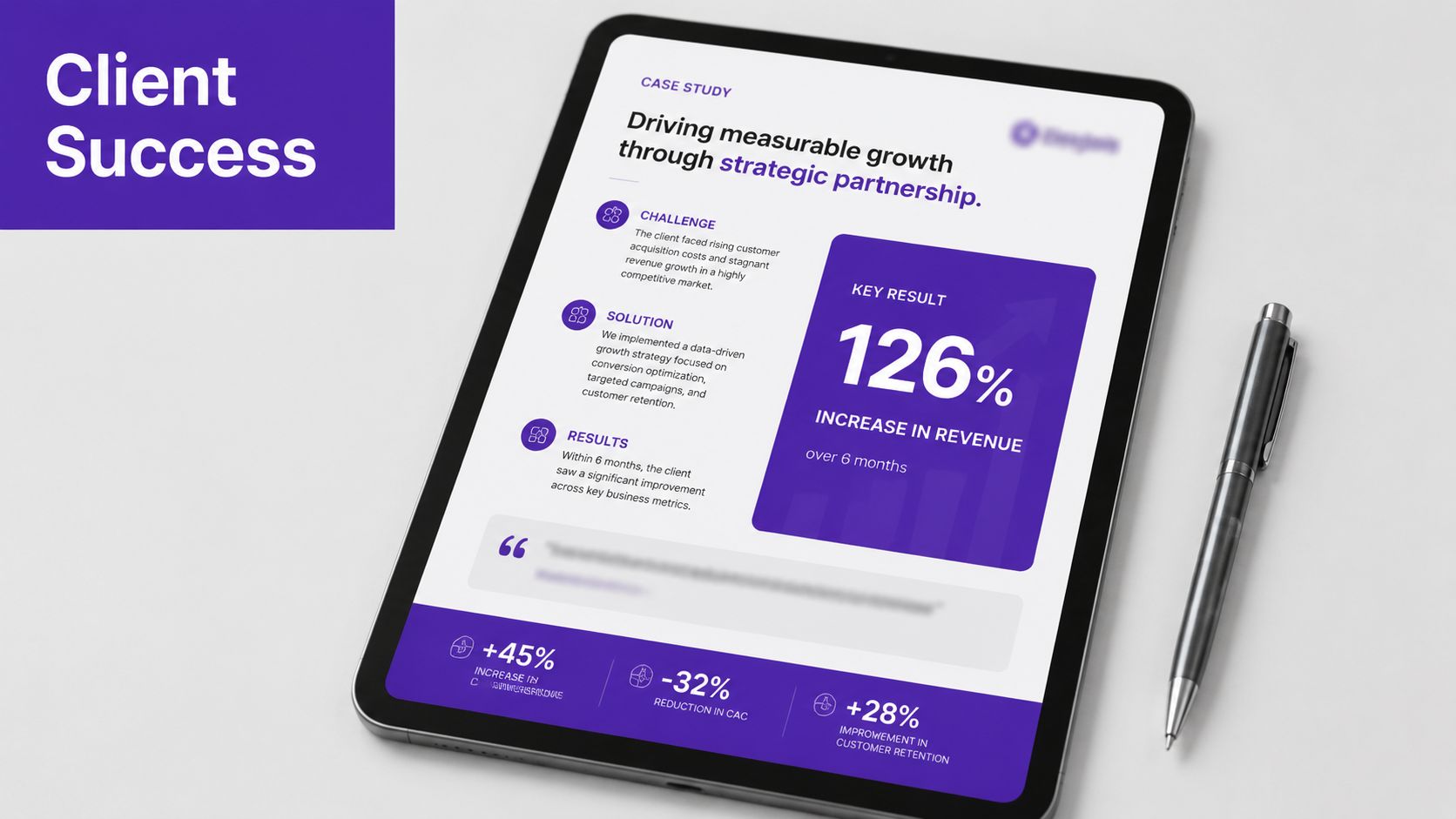
Use the signal first, then the story:
Hi Ben, saw your team has been looking at examples around onboarding consistency. We recently worked with a similar team that tightened handoffs and shortened ramp time without adding extra admin. If helpful, I can send the short version and the rollout notes they used.
The mistake founders make here is reaching for the flashiest logo or biggest win. That is lazy selling. Send the closest match instead. Same function, similar company shape, similar friction. Relevance beats prestige every time.
Follow-up matters here, but only when you add substance. Your first email can offer the relevant story. Your second should share one concrete takeaway from that story, such as the process change, rollout sequence, or internal objection they had to clear. That gives the buyer something to assess, not just another reminder sitting in their inbox.
This works especially well when the success story points to better execution, not just better software. Buyers often use proof content to test whether your team can help them fix workflow issues, adoption problems, or handoff gaps. If that is your sale, frame the email around the operational result and link it back to a stronger sales process optimization approach.
Use this template when prospects show clear interest in:
Case study pages tied to a specific workflow
Peer review discussions about a known pain
Customer stories involving a similar team or rollout
Social proof is not a chest-thumping exercise. It is a way to continue a buying conversation the prospect already started.
8. The Micro-Community and Peer Network Template
Founders misuse community signals all the time. They treat a Slack group, LinkedIn circle, or private operator forum like a scraped list. That kills trust fast.
The better move is simple. Use the signal, not the membership label.
If someone posts a sharp opinion, asks a specific question, or pushes back on bad advice inside a niche peer group, they have started a conversation. Your email should continue that conversation in plain language, with a point of view, and with timing that makes sense.
Use something like this:
Hi Leah, your comment about handoff friction between sales and customer success got to the real issue faster than the rest of the thread. We see that same breakdown when ownership is split but the process is still built around team silos. Curious whether the bigger problem on your side is unclear stage ownership or too many tools doing partial jobs.
Use community context without sounding creepy
Reference the idea they shared. Skip the line about where you found them.
That one choice changes the feel of the email. It reads like a peer response instead of surveillance. It also fits the actual point of this article. The template matters less than the trigger behind it. A useful comment in a small professional community is a stronger trigger than any polished demographic filter.
Generic outreach falls apart here because communities produce nuance. People use those spaces to test ideas, admit friction, and ask sharper questions than they would on a company page. If your email ignores that and drops into a canned pitch, you deserve the delete.
Keep it clean with three rules:
Use their exact idea or question as the opener
Ask a short diagnostic question a peer would ask
Offer a relevant observation, framework, or example instead of a meeting ask
This works well when the signal is specific. A revenue leader challenges bad attribution advice in a private group. An operations manager asks how peers handle a messy handoff between onboarding and account management. A founder posts a thoughtful comment about tool overlap in a niche SaaS forum. Those are not content engagement events. They are buying-context signals.
The mistake is making the email about access. Make it about relevance. If your message feels like a natural continuation of a conversation they already started, the cold email stops feeling cold.
8 Cold Email Templates Compared
Templates do not win on wording. They win on timing.
Use this table the right way. Do not ask which format sounds smartest. Ask which prospect signal gives you a legitimate reason to send it now. That is the difference between an email that feels random and one that feels like a useful follow-up to behavior the buyer already showed.
Template | Implementation (🔄) | Resources (⚡) | Expected outcomes (⭐📊) | Ideal use cases (💡) | Key advantages (⭐) |
|---|---|---|---|---|---|
The Signal-Based Intent Opener | Moderate. You need accurate, timely signal detection and fast send cadence. 🔄 | Low to Moderate. RoverLead signals plus writer or SDR time. ⚡ | Strong open and reply lift when the timing is right. ⭐📊 | LinkedIn-first outreach, high-velocity SDR or BDR teams, active researchers. 💡 | Specific, timely, and easy to read as a natural continuation of existing interest. ⭐ |
The Competitor Engagement Template | Moderate. It needs careful framing and real competitor insight to avoid sounding desperate. 🔄 | Moderate. Signal data plus clear differentiation and a few sharp case examples. ⚡ | Strong responses from prospects already comparing options. ⭐📊 | Competitive displacement campaigns, high-ticket B2B, prospects in active evaluation. 💡 | Reaches buyers with live intent and gives them a credible alternative without pressure. ⭐ |
The Creator/Influencer Network Template | Low to Moderate. The reference has to be real and context-specific. 🔄 | Low. Creator engagement signals and relevant references. ⚡ | Good rapport and stronger credibility through shared context. ⭐📊 | Thought leadership driven sales, B2B SaaS, creator-centered communities. 💡 | Builds familiarity fast through mutual attention, and scales well across similar audiences. ⭐ |
The Buying Signal Trigger Template | High. It depends on multiple signals lining up and disciplined messaging that does not feel invasive. 🔄 | High. A multi-source intent stack, verification, and skilled reps. ⚡ | Very strong reply and meeting rates when several buying signals converge. ⭐📊 | Enterprise deals, buying committees, precise high-velocity targeting. 💡 | Catches the narrow window when intent is real and timing is on your side. ⭐ |
The Problem-Aware Warm Opener | Moderate to High. You need strong problem knowledge and a consultative tone. 🔄 | Moderate. Topic engagement signals plus subject-matter expertise. ⚡ | Better conversations, better qualification, and stronger fit for longer sales cycles. ⭐📊 | Complex B2B sales, relationship-first GTM, skeptical industries. 💡 | Feels less like outreach and more like informed problem solving. ⭐ |
The Job Change & Role-Expansion Template | Low to Moderate. Timing and tone matter, but execution is simple. 🔄 | Low to Moderate. Profile change signals plus role-specific onboarding ideas or benchmarks. ⚡ | High receptivity during the early window when new leaders are setting priorities. ⭐📊 | High-velocity SaaS, products tied to role success, first-mover scenarios. 💡 | Reaches newly accountable buyers while they are still shaping budgets and processes. ⭐ |
The Social Proof & Success Story Template | Low. You need relevant case studies and a clear match to the account. 🔄 | Low to Moderate. Case library, matching logic, and light content support. ⚡ | Strong credibility with prospects already researching solutions. ⭐📊 | Competitive categories, active researchers, content-rich sales teams. 💡 | Uses proof well when the prospect already has context for why it matters. ⭐ |
The Micro-Community & Peer Network Template | Moderate to High. It requires real community participation or verifiable contribution. 🔄 | Moderate. Community monitoring, genuine participation, and specific insights. ⚡ | Strong engagement and trust, with obvious downside if the message feels fake. ⭐📊 | B2B services, niche solutions, founder-led sales, early-stage outreach. 💡 | Creates immediate credibility through shared peer context and precise relevance. ⭐ |
A simple rule helps here. Pick the template that matches the signal, not the persona.
If a prospect changed jobs, use the job-change opener. If they engaged with a competitor, use that signal directly. If they showed broad research intent across several actions, use the buying signal trigger. Founders who ignore this and force one favorite template across every account create random outreach, then blame copy. The copy is not the problem. The timing is.
Stop Copying Templates, Start Tracking Signals
Founders obsess over template copy because it feels controllable. The real variable is timing. A cold email works when the prospect has already done something that makes your message make sense today.
Treating outbound like a writing contest is how you get ignored. Subject lines, formatting, and CTAs matter, but they cannot save a message that shows up without context. Bad timing kills good copy every time.
The right question is simple. What happened that gives you a legitimate reason to reach out now?
That shift changes everything. You stop sorting people by persona and start sorting them by signal. A new job, a comment on a relevant LinkedIn post, repeat engagement with a competitor, a public discussion about a problem you solve, a burst of category research. Those actions create the opening. The template just packages it.
This is the part founders miss. Email does not create interest out of thin air. It turns existing relevance into a conversation. If the prospect already started that conversation through their behavior, your email feels timely. If they did not, your message is just another interruption dressed up with a first name and company token.
That is why signal-based outreach beats generic personalization. Swapping in a company name is not relevance. Referencing a live trigger is relevance. One says, "I scraped your profile." The other says, "I saw what changed, and this is why I am reaching out."
If you are still running outbound yourself, stop blasting broad sequences and calling it experimentation. Send fewer emails. Send them closer to the moment of intent. A narrow list with real triggers will outperform a bigger list built on wishful thinking.
RoverLead AI gets this right because it focuses on the trigger, not just the message. It tracks live LinkedIn intent, surfaces the context behind it, and helps teams write an opener that fits what the prospect already signaled. That is how cold outreach starts to feel warm. You are not inventing a reason to email. You are responding to one.
The best cold email template is the one the prospect barely notices as a template. Timing makes that possible.