LinkedIn Auto Message Strategy: Boost Meetings in 2026

You launched a LinkedIn sequence, merged in the first name, company, and job title, and waited for the calendar to light up. Instead, you got a handful of accepts, a couple of polite brush-offs, and a lot of silence. That's where many organizations are right now with the typical Linkedin auto message playbook.
The problem usually isn't the tool. It's the premise. Most automated outreach still treats timing like an afterthought and volume like a strategy. Buyers don't experience that as relevance. They experience it as another interruption in a crowded inbox.
The better model is simpler and harder. Use automation to spot intent, then start a timely conversation. Not to personalize spam better. To stop sending it in the first place.
Table of Contents
Your LinkedIn Auto Messages Are Failing Not Exploding
The usual advice says your campaign needs better copy, more variables, or one more follow-up. That's comforting, and mostly wrong. If the prospect wasn't ready for the conversation, your polished opener was still an interruption.
Most tools are built to imitate human pace. They're much worse at reacting to human conversation triggers. When a prospect comments on a competitor's post, asks about pricing, or starts engaging around a problem you solve, that's the moment to stop the robotic sequence and respond like a person. Research on this approach shows that pausing automation and engaging in real time around subtle intent signals can produce 2 to 3x higher reply rates.
Most Linkedin auto message failures are timing failures disguised as copy problems.
That's why brute-force outreach keeps disappointing experienced teams. It creates activity, not traction. You can send a message that looks personal and still miss the only thing that matters, whether the buyer has a reason to care right now.
A lot of sellers also confuse connection acceptance with momentum. It isn't. An accepted request just means your note wasn't offensive enough to reject. The conversation starts only when the context is relevant.
Volume looks efficient until it doesn't
Spray-and-pray looks productive in dashboards. Lots of sends. Lots of steps completed. Plenty of false confidence. Then the acceptance rate softens, replies stall, and the account starts looking risky.
The better question isn't, “How many messages can this tool send?” It's, “Can this workflow detect when someone is already leaning into the topic?” That's where automation becomes useful instead of noisy.
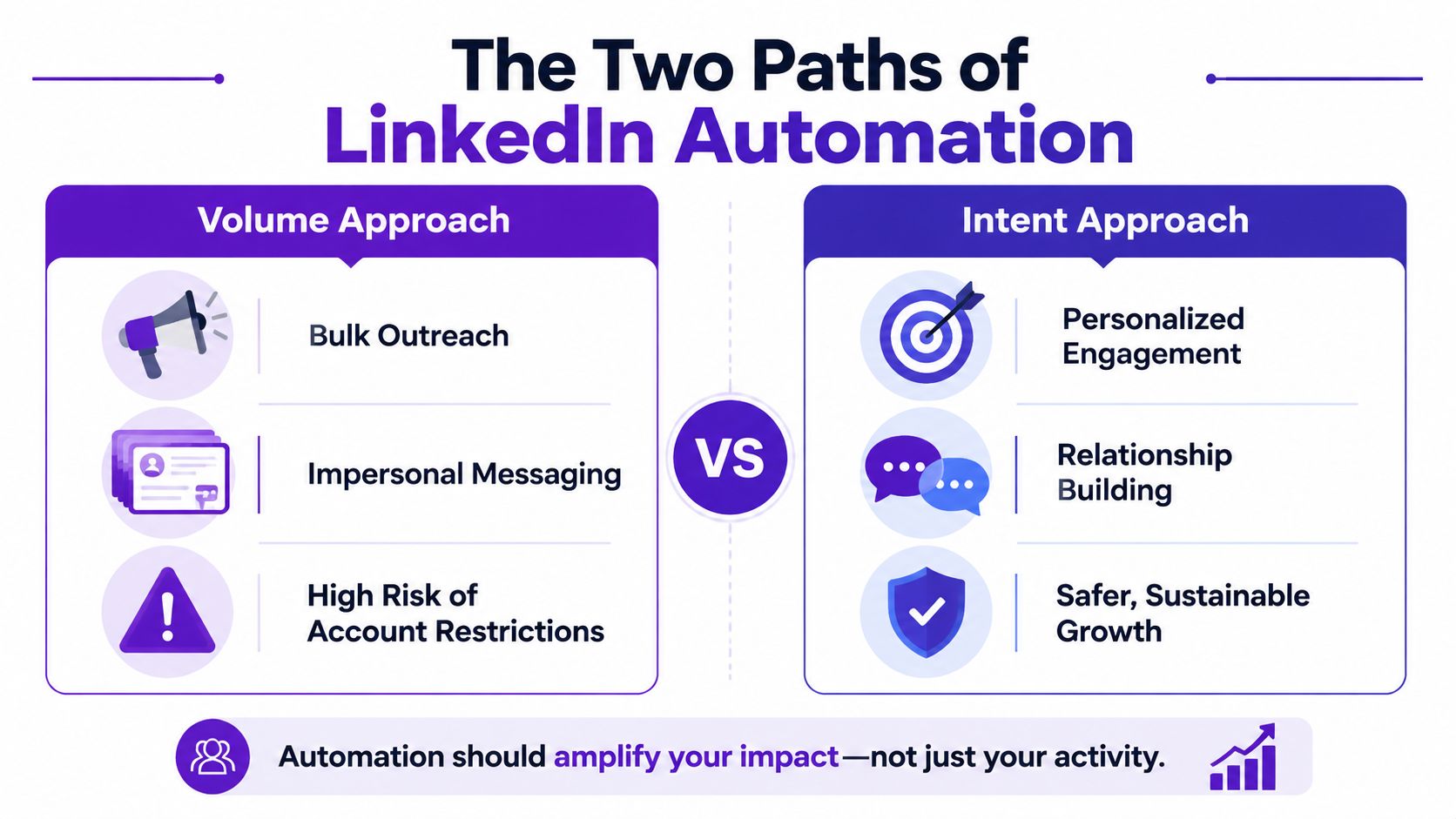
The Two Paths of LinkedIn Automation
Every Linkedin auto message strategy ends up on one of two roads. One chases output. The other chases intent.
Intent changes the job of automation
The old model uses automation as a megaphone. Pull a list from Sales Navigator, load a sequence, rotate through generic steps, and hope a small slice responds.
The newer model uses automation as a listening system. It watches for activity that suggests interest, urgency, or curiosity, then helps you engage while the topic is still fresh.
Attribute | Volume-Based Automation (The Old Way) | Intent-Based Automation (The New Way) |
|---|---|---|
Targeting | Static lists built from firmographics | Prospects identified through live behavior and context |
Timing | Message goes out when the sequence says so | Message goes out when the prospect shows relevant activity |
First touch | Generic personalization tokens | Signal-led opener tied to something they actually did |
Follow-up logic | Fixed cadence regardless of context | Pause, adapt, or continue based on engagement |
SDR workflow | Manage throughput | Manage conversations |
Buyer experience | Interruption | Timely outreach |
Reputation risk | Higher, because repetition and volume pile up | Lower, because messages are fewer and more relevant |
Long-term value | Diminishing returns | More sustainable pipeline building |
A volume system can still produce some replies. Even bad outreach occasionally gets lucky. But luck isn't a strategy, and it definitely isn't scalable.
Practical rule: If your process needs more send volume to stay alive, the targeting and timing are probably weak.
Intent-based outreach also makes better use of the seller. Your reps stop spending hours pushing people into conversations they didn't ask for. Instead, they spend time joining conversations that already have heat.
Building a High-Intent Messaging Sequence
The best sequence doesn't read like a sequence. It reads like someone noticed something relevant and reached out while it still mattered.

Campaigns that combine connection requests with personalized, value-based follow-ups in a multichannel flow can reach a 42% reply rate in 2026 projections, but only when volume increases gradually and delays are randomized to mimic human behavior, according to La Growth Machine's LinkedIn messaging analysis. That should tell you something important. Smart sequencing beats raw output.
Start with the signal not the pitch
A connection request should reference context, not your product. Skip “I'd love to add you to my network.” That line has been dead for years.
Use one of these patterns instead:
Comment-based opener
“Saw your comment on a post about outbound hiring. Thought it was sharp and wanted to connect.”Problem-based opener
“Noticed you've been posting about pipeline quality. I work with teams dealing with the same headache. Worth connecting.”Competitor-context opener
“Saw you engaging with content around revenue ops tooling. That caught my eye. Thought I'd reach out.”
Once they accept, the first message should stay close to the signal. Don't pivot into a pitch deck disguised as a paragraph. Ask a question that fits what they already showed interest in.
For teams building this motion, it helps to study adjacent LinkedIn lead generation tactics that prioritize timing and context over database size.
Follow up with value not guilt
If they connect and don't reply, the next move isn't “just bumping this up.” Nobody has ever felt grateful for that sentence.
Instead, send something tied to the original context:
A short observation about the issue they commented on
A relevant resource without turning the message into a download trap
A clean question that invites a real response
Here's a simple structure that works:
Connection request tied to a visible signal
First message that references the signal and asks one relevant question
Value follow-up that adds insight or a resource
Final nudge that gives them an easy out
A useful walkthrough of sequence mechanics sits below.
Keep the messages short. Keep the tone calm. The whole point is to sound like a person who paid attention, not a workflow with thumbs.
Personalization That Actually Converts
A prospect accepts your connection request. Then they get a message that says, “Thanks for connecting, thought it made sense to reach out.” That rep thinks they personalized the outreach because the prospect's name and company are in the first line. The prospect reads it as one more interruption.
Good personalization starts before the message. It comes from intent.
Profile details help with basic relevance, but they do not create timing. What changes reply rates is knowing why this person might care right now. A comment on a pricing thread, a post about hiring, a reaction to a workflow problem, or a company announcement tied to your use case gives you something stronger than a mail merge token. It gives you a reason to start a conversation.
Mail merge fields do not create relevance
The strongest LinkedIn messages show three things in a few lines:
You noticed a real signal
“Saw your post about rep ramp time.”You understand the business pressure behind it
“That usually shows up when pipeline expectations rise faster than enablement can support.”You ask one question that fits the signal
“Are you trying to solve that through process, hiring, or tooling?”
That works because it respects context. It does not force fake familiarity or overplay research. “Noticed you work at Acme” is not personalization. It is basic observation.
If your team needs better openers, these conversation starters for LinkedIn outreach are a better starting point than another recycled template library.
A personalized message should make the prospect feel understood, not processed.
There is a trade-off here. Reps can always add more references, more compliments, more company trivia. Past a certain point, that hurts. One sharp signal beats five stitched-together details that make the message feel invasive. Shared connections, recent funding, a team expansion, or a relevant post can help, but only if they support the point you are making.
What to monitor after the message goes out
Personalization is only useful if it changes conversation quality. I do not judge these sequences by send volume. I look at whether the right people accept, reply, and move into real dialogue.
A simple review rhythm helps:
Signal to watch | What it usually means |
|---|---|
Acceptance rate softens | Targeting or opener is off |
Replies are low but accepts are fine | First post-accept message is weak |
Negative responses increase | Message feels too salesy or too early |
Positive replies cluster around certain triggers | Use more of those signals |
The pattern matters more than the total. If replies consistently come from prospects who showed clear intent, your automation is doing its job. If the sequence performs only when you increase volume, you are probably feeding a weak message to a bigger list.
That is the difference between cosmetic personalization and a system built to catch buyers when interest is already there.
Choosing the Right Automation Tools
Most tools in this category were built for one job, help you send more. That's not the same as helping you sell better.
What a useful tool actually does
A decent tool should support sequencing, pacing, and stop conditions. A better one should help you prioritize relevance. If the product mainly brags about scraping, bulk messaging, and scale, it's probably tuned for the old game.
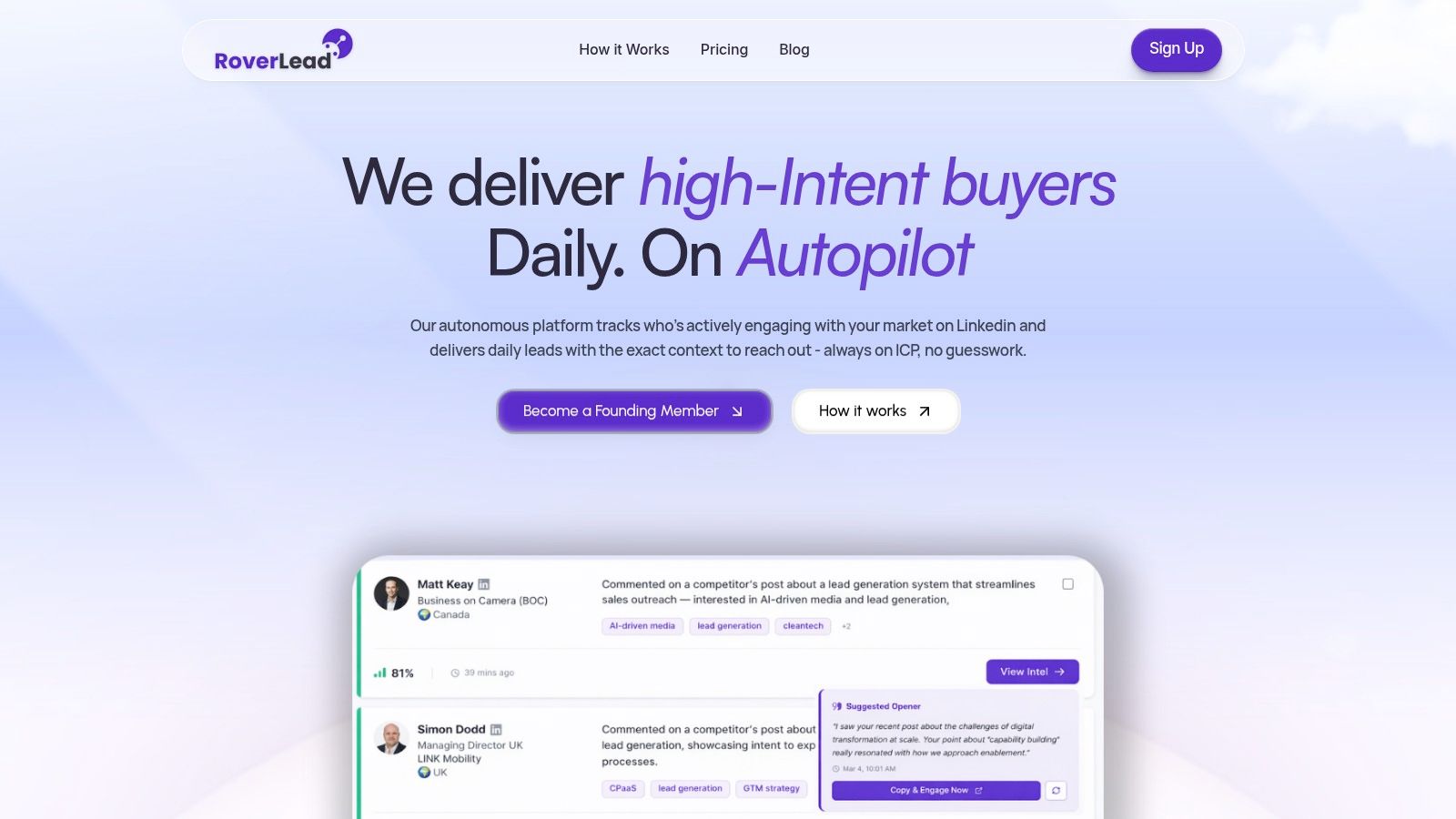
When evaluating options, look for three things:
Signal visibility so the rep knows why this prospect matters now
Workflow controls like stop-on-reply, pauses, and sequence logic
Operational fit with the rest of your process, not just message sending
A broader roundup of sales automation tools for outbound teams can help separate scheduling software from actual prospecting infrastructure.
One more thing. Tool choice is strategic, but it doesn't rescue bad judgment. If your team still measures success by how many people were touched rather than how many relevant conversations started, the fanciest platform in the stack won't save you.
Staying Compliant and Optimizing Performance
A rep launches a new LinkedIn sequence, sees a burst of activity, then the account gets throttled before the month is over. The problem usually is not the copy. It is pacing, repetition, and bad timing.
LinkedIn compliance protects revenue, not just accounts. If your workflow burns a rep profile, you lose access to the very channel you were counting on to start conversations.
Compliance is part of strategy
LinkedIn explicitly prohibits third-party software and browser extensions that scrape, modify, or automate activity on the site, according to this explanation of LinkedIn automation risk. Any linkedin auto message system has to be built around that reality.
Some published numbers about enforcement are projections or vendor estimates, not official thresholds from LinkedIn. Treat them that way. The practical takeaway is still clear. High-volume automation and repetitive behavior raise risk fast, even when the activity is designed to look human.

Conservative pacing matters. Zeliq's guidance on LinkedIn message automation recommends keeping connection requests under 100 per week and automated messages to 1st-degree connections at 30 to 50 per day. PhantomBuster's LinkedIn automation warning also advises adding 5 to 30 second delays between actions to reduce repetitive patterns.
That keeps you safer. It also forces better discipline.
Teams that depend on volume usually treat automation like a louder megaphone. Strong teams use it as a filter. The goal is to hold back generic outreach and trigger messages only when there is a reason to reach out now, such as a profile view, content engagement, job change, or a relevant conversation already happening in the market. That shift matters because compliant automation and effective automation often point in the same direction. Fewer messages, sent at higher-intent moments, create less risk and better conversations.
Track health before you chase scale
Send count is a weak metric. Account health and conversation quality tell you more.
Watch these:
Acceptance rate to spot weak targeting early
Reply rate split by positive and negative tone
Meetings booked so activity does not get mistaken for pipeline
Pattern risk such as repetitive timing, identical copy, or bursts of actions from one account
If acceptance drops, slow the account down and check the trigger logic before you rewrite the sequence.
There is also a volume ceiling on LinkedIn, even if no one can give you one universal number that fits every account. Response quality fades when reps keep pushing after the obvious buyers have already ignored them. Short sequences usually hold up better than long ones. So does stopping outreach when interest is weak and switching to manual follow-up when intent is strong. That is the most effective optimization. Use automation to detect readiness, not to keep nagging people who never asked for the conversation.
Frequently Asked Questions About LinkedIn Auto Messaging
Question | Answer |
|---|---|
Is a Linkedin auto message strategy worth using at all? | Yes, if automation handles timing and workflow while reps handle live conversations. No, if it's just bulk outreach with prettier templates. |
What's the biggest mistake teams make? | They optimize copy before they fix targeting and timing. |
Should I automate connection requests? | You can, but only with conservative pacing and strong relevance. A bad connection request poisons the rest of the sequence. |
How many follow-ups should I send? | A short sequence usually works better than endless nudges. If the context is weak, more follow-ups just multiply the annoyance. |
What should the first message say after someone accepts? | Reference the signal that triggered outreach and ask one relevant question. Don't jump straight into a product pitch. |
Is using first name and company enough personalization? | No. That's mail merge. Real personalization uses behavior, context, and timing. |
What if someone shows intent but hasn't replied yet? | Pause the generic sequence and engage manually around the specific topic they're already discussing. |
How do I know my campaign is going off track? | Acceptance drops, replies dry up, or negative responses increase. Those are usually targeting and timing problems. |
Are all automation tools equally risky? | No. Some are built around bulk activity, others around pacing and stop conditions. But no tool makes reckless outreach safe. |
What's the simplest rule to remember? | Use automation to find the moment. Use a human to have the conversation. |
RoverLead AI helps teams stop guessing who to message next. Instead of pulling static lists and pushing generic sequences, it turns live LinkedIn engagement into a curated feed of high-intent prospects, complete with context and an AI-written opener. If you want a safer, smarter way to turn signals into meetings, take a look at RoverLead AI.