How to Close the Deal: A Modern B2B Sales Playbook

You had a strong demo. The prospect nodded in all the right places. Your champion said, “This looks great.” You sent the proposal. Then the deal slid into that familiar swamp of polite silence, vague timing, and “circling back internally.”
That's where a lot of sales teams panic and start performing bad sales karaoke. They send “just checking in” emails, trot out tired closing lines, and mistake activity for progress. It's not a follow-up problem. It's a process problem.
If you want to close the deal in modern B2B sales, stop treating the close like a dramatic final scene. The effective close happens much earlier, when you spot intent, qualify properly, surface risk before it festers, and secure the next step while interest is still warm. By the time the contract arrives, the decision should feel obvious.
Table of Contents
That Awful Silence Before the Close
A rep I coached once had what looked like a done deal. Great discovery. Solid demo. Clear pain. Budget looked real. Then nothing. Two follow-ups later, he was ready to declare the prospect a coward and move on.
He wasn't wrong about the silence being painful. He was wrong about when the deal started going sideways.
The close didn't fail after the proposal. It failed when he accepted vague interest instead of pinning down a real buying process. He heard “this is a priority” and never asked who else had to sign off. He sent pricing without agreeing on what would happen after the prospect reviewed it. He was waiting for a yes from a buyer who had never committed to a next step.
Practical rule: If a prospect can go silent without breaking any clear agreement, you did not have momentum. You had good vibes.
That's why “close the deal” is the wrong mental model for most B2B sellers. You're not trying to rescue a deal at the end. You're building a chain of small commitments from the first signal to the final signature. Readiness doesn't appear by magic. It's created.
If you're staring at inbox silence, don't just guess whether they're interested. Use behavior. Even simple cues like engagement and message timing help. That's also why tracking whether a prospect read your email is more useful than another hopeful nudge with “bumping this up.”
The New Rules for Closing B2B Deals
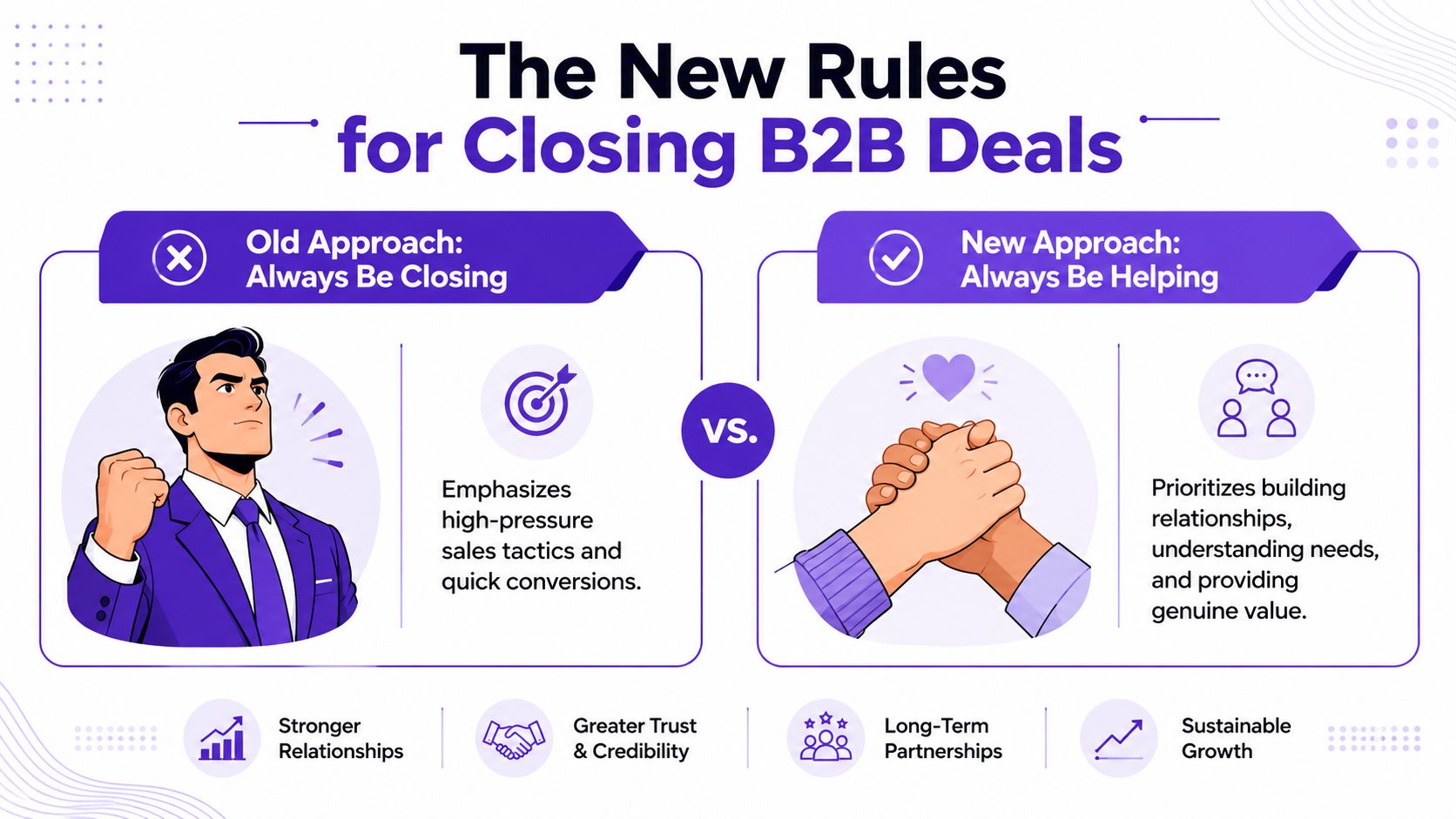
The old mantra was “Always Be Closing.” That line should've retired with bad boiler-room movies.
Modern B2B buyers don't need to be cornered. They need help making a decision inside a messy organization. Practical guidance on how modern teams close B2B deals emphasizes surfacing concerns early, gauging readiness, and locking in a concrete next action because today's buying process is less linear and often involves multiple stakeholders.
Why old closing advice fails
Classic close techniques assume one person can be persuaded in one moment. That's cute. In real B2B sales, your contact often needs internal agreement, budget approval, procurement review, and political cover.
So stop asking, “What line should I use to close?” Ask better questions:
Who else needs confidence: One interested contact is not a buying committee.
What has to happen next: A proposal is not a next step unless everyone agrees on review timing and decision criteria.
What could stall this: Legal, procurement, and leadership review don't count as surprises. They're standard.
A lot of teams need process discipline more than charisma. Tightening sales process optimization for B2B teams usually does more for close rates than teaching reps ten theatrical closing tricks.
Closing Philosophy Old School vs New School
Tactic | Old School (Low Trust) | New School (High Trust) |
|---|---|---|
Assumptive close | Pushes the buyer toward a yes before they're ready | Confirms readiness and proposes a concrete next step |
Scarcity close | Uses pressure and artificial urgency | Uses a transparent timeline tied to the buyer's process |
Objection handling | Treats concerns like resistance to overcome | Treats concerns like missing decision inputs |
Follow-up | Repetitive nudges with no new value | Structured check-ins with a purpose, recap, or decision prompt |
Proposal | Tossed over the fence as a PDF | Built as a shareable tool for internal alignment |
Closing isn't something you do to a prospect. It's something you build with them.
That shift matters. Buyers remember who helped them decide clearly. They also remember who made them feel managed.
Find Your Moment with Intent Signals
Bad closing starts with bad targeting. If your reps begin with a static list and a vague hunch, they're already behind.
The average B2B sales close rate is about 21%, but well-qualified opportunities close at roughly 50% while poorly qualified ones close at just 8%, according to B2B sales closing statistics on qualification and win rates. That gap is the whole game. Qualification isn't admin work. It's your closing strategy.
What intent looks like in the wild
Intent doesn't always announce itself with “please send pricing.” Most of the time it shows up as behavior before the call ever happens.
Look for patterns like these:
Public problem awareness: A target account comments on posts about a pain point you solve.
Competitive curiosity: A prospect engages with a competitor's content, launch, or pricing discussion.
Role-triggered urgency: A new leader joins and starts talking about process gaps, pipeline quality, or tooling changes.
Buying language: Someone asks peers for recommendations, implementation advice, or vendor comparisons.
That's far more useful than “works at a 200-person SaaS company.”
How to qualify before you ever pitch
Here's the practical filter I recommend before any outreach:
Confirm the trigger Don't contact people just because they fit your ICP. Contact them because they did something that suggests active interest or an active problem.
Check proximity to the problem The commenter, poster, or engager should be close enough to the issue that they can influence a buying conversation.
Match the signal to a message If they engaged with content about outbound inefficiency, don't open with a generic product overview. Open with that problem.
Prioritize recent signals Timing matters. Fresh behavior beats stale account lists every time.
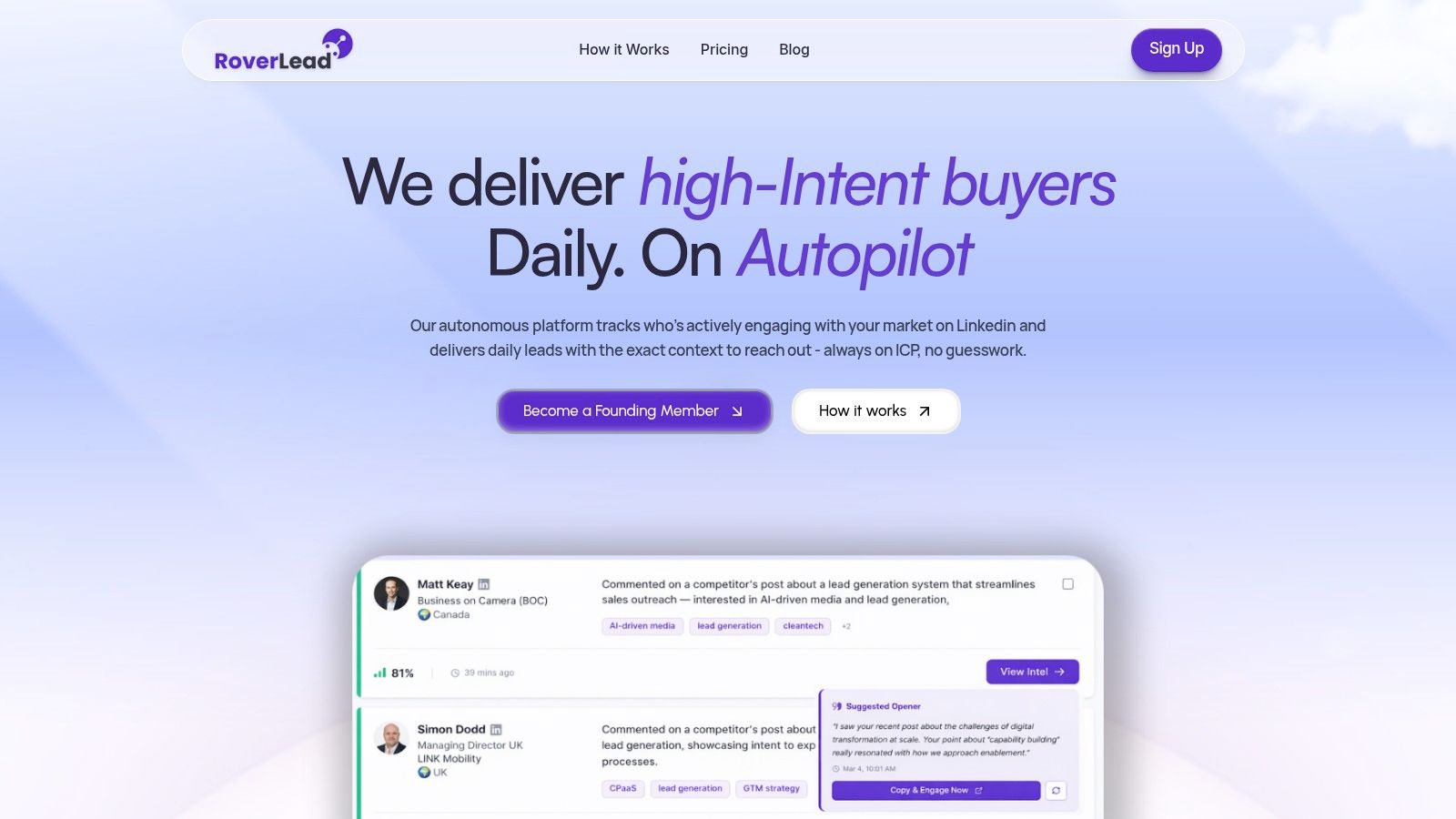
When your team is drowning in manual LinkedIn work, a tool can provide assistance. RoverLead AI tracks LinkedIn engagement signals around your ICP, competitors, keywords, and relevant creators, then surfaces leads with context and an AI-written opener. If you want a broader breakdown of what counts as a buying cue, this guide to high-intent leads in B2B prospecting is worth a look.
Turn Signals Into Conversations That Convert
A good signal is not permission to be lazy. It's permission to be relevant.
Most reps waste intent by opening like robots. “Hi, I came across your profile and wanted to connect.” Nobody on earth has ever felt uniquely understood by that sentence.

Use a relevant opener instead of a cold interruption
If the prospect commented on a post about pipeline quality, say that. If they engaged with a discussion about outbound messaging, say that. Relevance beats cleverness.
Try structures like these:
Signal plus observation: “Saw your comment about outbound reply quality. A lot of teams aren't short on activity, they're short on buyer timing.”
Signal plus useful angle: “Noticed you were discussing demo-to-proposal drop-off. One issue I keep seeing is reps sending proposals before a mutual next step is agreed.”
Signal plus question: “You mentioned evaluating options internally. What usually stalls it at your side, stakeholder alignment or proof of value?”
The first message should earn a reply, not force a meeting.
The best outreach feels like you joined an existing conversation instead of barging into someone's day with a canned pitch.
Ask better questions and shut up
A lot of sellers talk themselves out of deals. They ask a good question, panic at the silence, then answer it for the buyer. Bad move.
Practical guidance on silence, timing, and the right moment to ask makes the point well: over-talking complicates decisions, while well-timed silence after a key question gives the prospect room to think. Often the best close is not another pitch. It's the right question at the right moment.
Useful questions include:
Decision clarity: “What would you need to see to feel comfortable taking this to the next stage?”
Stakeholder mapping: “Who else is likely to care about this for completely different reasons?”
Real friction: “What's the part of this decision that feels hardest right now?”
If you want a quick example of how this sounds in practice, watch this:
And one more thing. Don't offer concessions because the room got quiet. Offer them only when they secure commitment. If you move on price, scope, or terms, ask for something concrete in return, such as a faster review, expanded access to stakeholders, or agreement on decision timing.
Navigate Demos Objections and Proposals
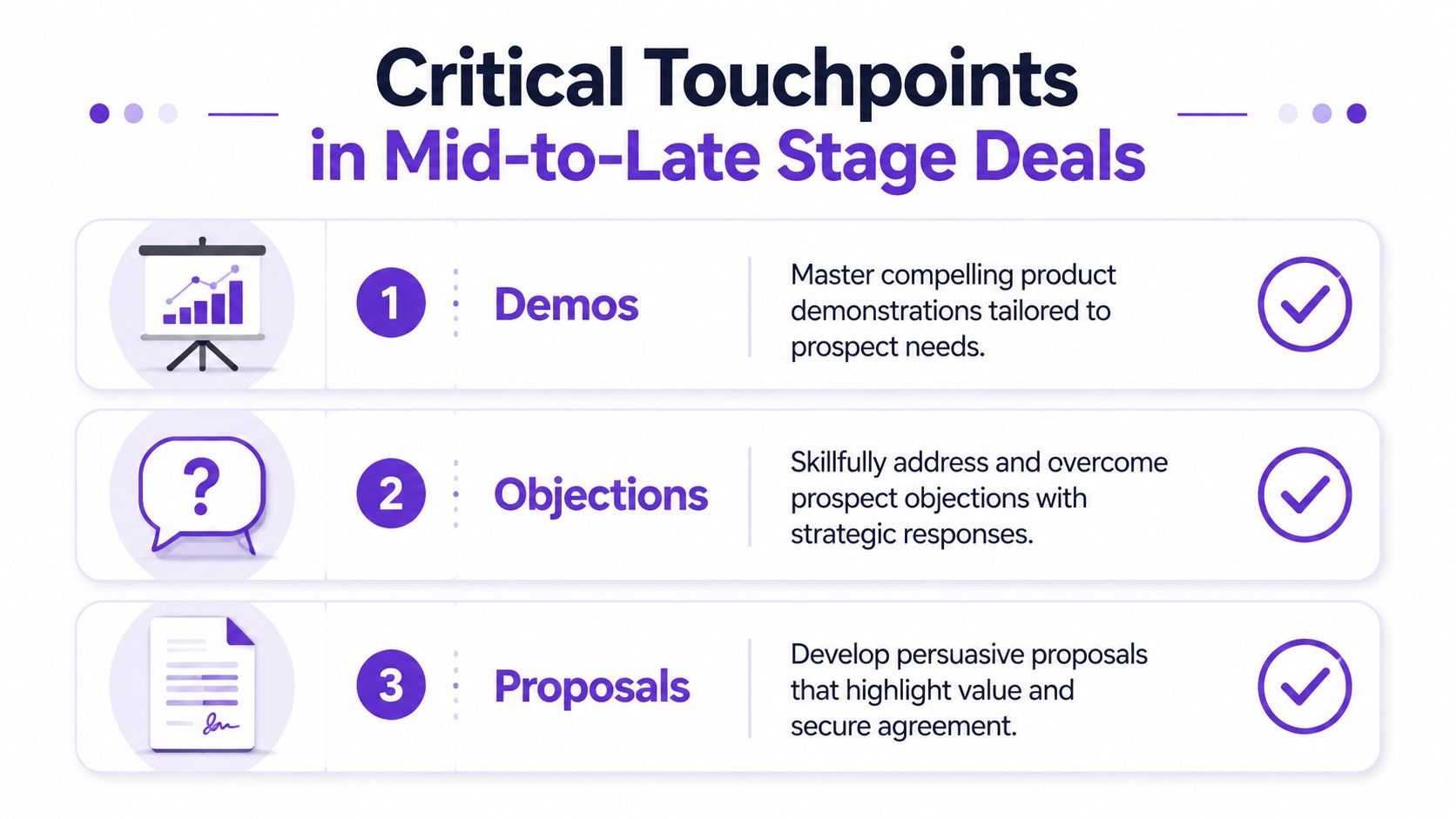
Most late-stage deals don't die from one dramatic disaster. They die from accumulated fog. A demo that wandered. An objection handled like an argument. A proposal that nobody wanted to forward internally.
Run demos that sell the future state
Stop giving feature tours. Give vision demos.
A strong demo does three things in order:
Restates the problem: Show you heard them.
Maps capability to outcome: Connect each relevant feature to a stated business need.
Confirms fit live: Ask if what you showed would solve the issue the way they need it solved.
If your demo includes seven tabs the buyer never asked about, you're not selling. You're showing off.
Handle objections without getting defensive
When someone says, “This is expensive,” don't launch into a monologue about value. First figure out what that objection means. It could mean budget is tight, value is unclear, timing is wrong, or the buyer is nervous about being blamed.
Use a simple version of Feel, Felt, Found:
Feel: “I get why that feels like a big investment.”
Felt: “Other teams have felt the same when they were still comparing internal cost to external spend.”
Found: “What they needed was a clearer view of what happens if the current process stays the same.”
Then ask a question. “Is the concern the total spend, or confidence that the rollout will justify it?”
Good objection handling lowers tension. It doesn't try to win a debate.
Send proposals people can actually approve
A giant proposal document often creates more work for your champion. They now have to translate your sales language into internal business language. Don't dump that on them.
Use a one-page structure:
Section | What to include |
|---|---|
Problem | The specific pain and why it matters now |
Solution | The exact scope that addresses that pain |
Investment | Clear pricing and commercial terms |
Success path | Implementation snapshot and ownership |
Next step | The decision meeting, review date, or approval step |
Before you send it, get agreement on three things: who will review it, when they'll review it, and what decision happens after that review. Otherwise you're not sending a proposal. You're releasing paperwork into the wilderness.
From Signature to Success Handoff
The signature is not the finish line. It's the point where sales proves whether it sold a real fit or just won a transaction.
A sloppy handoff causes avoidable damage fast. The customer repeats themselves, onboarding starts with missing context, and the shiny new relationship begins with friction. That's a brutal way to treat a buyer who just trusted you.
What the handoff must include
Your kickoff handoff should capture:
Why they bought: The core problem, urgency, and expected outcome.
Who matters: Decision-makers, champion, blockers, and daily users.
What was promised: Scope, timing expectations, and any commitments made during the deal.
What could derail adoption: Internal dependencies, training gaps, or approval hurdles.
A true definition of “closed won” should include operational readiness. If the customer can't get to value smoothly, sales didn't finish the job. It merely collected a signature.
The teams that win renewals, referrals, and expansion don't separate closing from customer success. They treat the handoff like the first proof that their sales process deserves trust.
Closing Time FAQ
How do I close the deal when a prospect says they're interested but goes quiet?
Send a message that restates the agreed business issue, names the missing decision point, and asks for one specific next step. Don't send “just checking in.”
Should I keep following up after a great demo and no reply?
Yes, but only if each follow-up adds clarity. Recap the business case, answer a likely concern, or propose a review call.
What's the biggest mistake reps make near the close?
They confuse enthusiasm with commitment. A smiling prospect is not a signed buying process.
When should I ask for the next meeting?
At the end of the current one. Put the next step on the calendar while attention is still live.
How do I know if an objection is real?
Ask a narrowing question. “Is that a hard blocker, or something you'd need more confidence around?”
Should I discount to save a deal?
Only if it buys a concrete concession in return. Random discounting trains buyers to wait you out.
What if procurement slows everything down?
Arm your champion with a short summary of value, scope, and timing. Procurement delays are easier when internal alignment is already tight.
How long should I stay silent after asking a tough question?
Long enough for the buyer to think. If you rush to fill the gap, you steal their decision-making space.
When should I walk away?
Walk when the buyer won't define a process, won't involve the right people, or wants endless work without reciprocal commitment.
Is closing really a separate skill from prospecting?
Not anymore. The quality of the close often depends on whether you started with real intent and real fit in the first place.
If your team is tired of chasing fake interest and trying to rescue deals at the end, it's worth looking at RoverLead AI. It helps sales teams find LinkedIn prospects showing active intent signals, adds context for outreach, and makes it easier to start relevant conversations before the deal goes cold.