10 Best AI Sales Tools to Win More Deals in 2026

Your sales stack is probably creating more noise than revenue.
B2B sales teams keep buying point solutions and calling it strategy. They add a data provider, an engagement tool, a dialer, a call recorder, and a CRM, then wonder why pipeline quality still feels shaky. Reps spend hours chasing weak accounts, managers question forecast accuracy, and buyers get hit with outreach that has no timing, no context, and no real signal behind it.
The fix is not another all-in-one promise. The fix is a signal-based system.
Start with tools that detect real buying intent. Add tools that turn those signals into outreach your team can execute. Then layer in conversation intelligence, coaching, forecasting, and data hygiene so the system keeps improving instead of drifting. AI sales tools work when each tool has a job and the handoff between tools is clean. If the system is messy, AI just helps your team make bad decisions faster.
Adoption is no longer the question. AI is already part of sales. McKinsey's State of AI research shows organizations are using AI across business functions at scale. The revenue gap now comes from execution. Strong teams use AI to prioritize real intent, reduce manual work, and respond faster. Weak teams use it to send more volume into the void.
That is the lens for this guide. These are not just ten tools with feature lists. They are parts of a modern sales system built around signal, execution, and feedback. If you want help designing that stack around your motion, book a call with RoverLead. If you want the blunt version, start with signal first and add software only when it improves action, coverage, or conversion.
Table of Contents
1. RoverLead AI
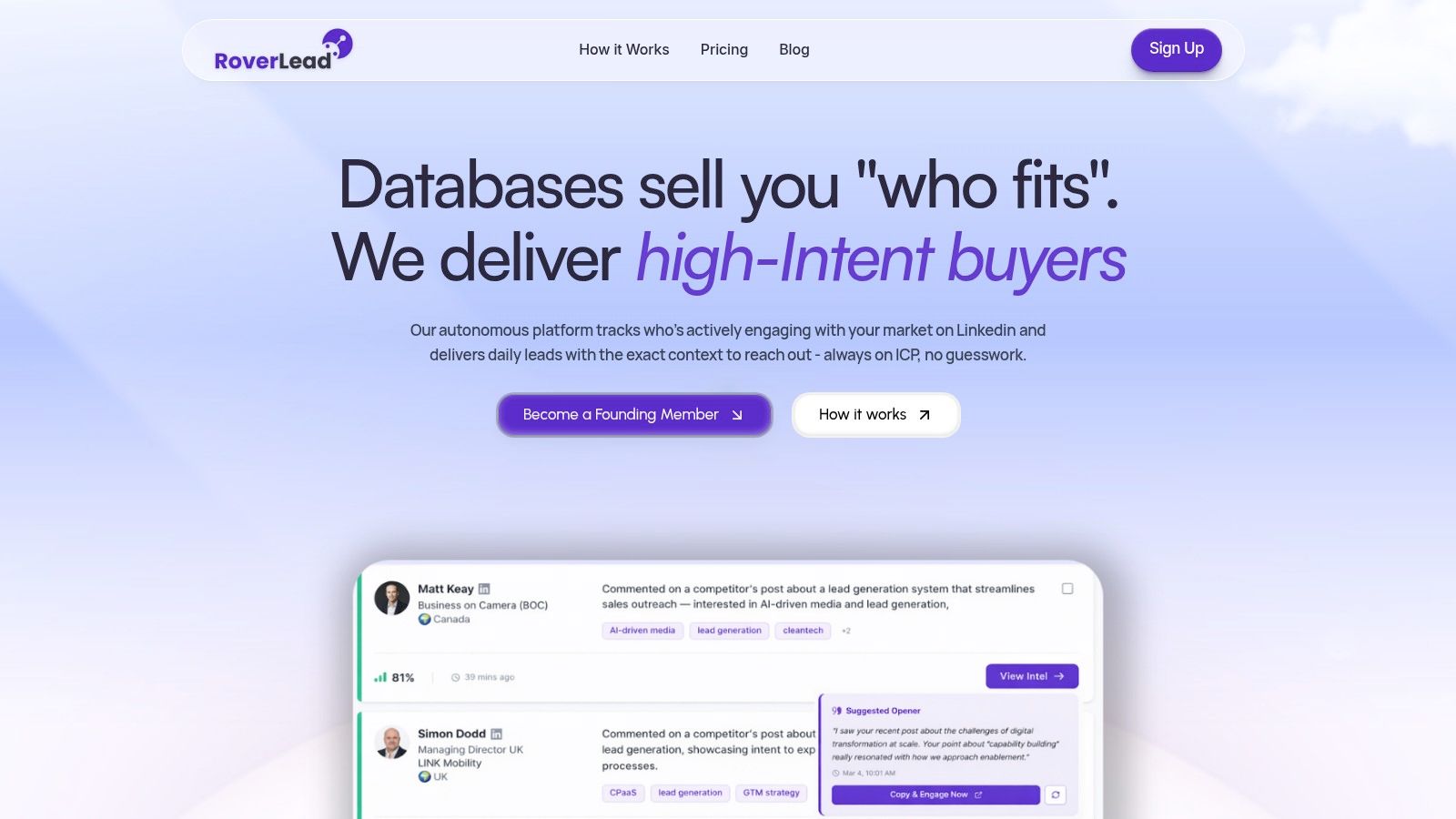
Most AI sales tools still help reps do the wrong work faster. They speed up list building, sequence writing, and task execution before anyone has confirmed real buyer interest. That creates more activity, not more pipeline.
RoverLead AI takes the better approach. It sits at the top of a signal-based sales system and turns LinkedIn engagement into a working prospect feed. Instead of starting with static filters like title, company size, and industry, it tracks who is engaging with relevant creators, competitors, and topics in your market. Your team gets the signal, the context behind it, and a suggested opener tied to that behavior.
That matters because outbound breaks when reps have to guess intent.
Why RoverLead belongs at the top
RoverLead earns the top spot because it fixes the first failure point in the stack. Lead selection. If your reps start the day pulling names from Sales Navigator and only later try to figure out who might care, your process is backwards. RoverLead flips that. It gives reps current, behavior-based opportunities first, then lets them act on those signals.
That makes it a strong fit for teams building a modern outbound system, not just buying another prospecting app. The value is not one more database. The value is cleaner inputs for every tool that comes after it, including messaging, sequencing, and rep prioritization.
RoverLead also solves a practical issue many LinkedIn tools create. Workflow risk. The product is positioned around LinkedIn-compliant prospecting and live intent capture, which is a much better operating model than relying on brittle automation and volume-heavy spraying.
Practical rule: If your reps build lists before they check for intent, fix that before you buy another engagement platform.
Best fit
Use RoverLead if LinkedIn is a serious source of pipeline and you want your team working from live signals instead of stale account lists. It is a good fit for B2B sales leaders, SDR teams, founders, agencies, and growth marketers who need relevant context before outreach starts.
The tradeoff is clear. RoverLead is focused. That is a strength if you want signal quality, and a limitation if you expect one tool to run your entire outbound motion.
Here is the simple read:
Best advantage: Live behavioral matching based on LinkedIn engagement.
Best workflow gain: Daily lead discovery with context and AI-assisted openers.
Main drawback: Public standard pricing is not listed, and access runs through a founding program and waitlist.
If your outbound motion depends on LinkedIn, start with the signal layer first. Then add sequencers and call tools around it. You can schedule a call with RoverLead AI here if you want to see whether it fits your stack.
2. Apollo.io
Apollo.io is the tool a lot of teams buy too early, then blame later for weak pipeline. The problem usually is not Apollo. The problem is using a workflow platform as a substitute for a signal system.
Used correctly, Apollo is a strong execution layer. It gives reps one place to build lists, enrich contacts, run sequences, make calls, and manage day-to-day outbound activity. For SMB and mid-market teams without heavy RevOps support, that consolidation speeds up launch and keeps reps working instead of stitching tools together.
Where Apollo works best
Apollo fits teams that already know who they want to target and need a fast way to turn that targeting into activity. If your motion depends on outbound across email, phone, and LinkedIn, Apollo can carry a lot of operational weight in one system.
That is the genuine value here. Apollo helps you run the motion. It does not solve the harder problem of deciding which accounts show actual buying intent right now.
Apollo's own platform positioning centers on prospecting, engagement, and pipeline execution across a unified sales workflow on the Apollo.io product site. That makes it useful in a modern AI sales stack, but only in the right slot. Put Apollo downstream from your signal sources, not in place of them.
Use Apollo if you want:
One execution hub: Prospecting, sequencing, and calling in a single workspace.
Faster ramp time: Reps learn one interface instead of juggling several disconnected tools.
Practical coverage: A solid fit for SMB and mid-market outbound teams that need to move quickly.
Skip Apollo if your niche lives or dies on data accuracy, or if you already have a mature best-of-breed stack with stronger point solutions. Contact quality can vary by segment, and credit usage needs active management if reps enrich aggressively.
3. ZoomInfo SalesOS + Copilot
A bigger database will not fix a weak sales system. Better prioritization will. That is why ZoomInfo matters.
ZoomInfo SalesOS + Copilot fits companies that need one commercial signal layer across sales, marketing, and RevOps. If you have multiple territories, named-account coverage, SDR teams, and leadership pressure for tighter execution, ZoomInfo gives you the structure to decide which accounts deserve attention now and which ones should wait.
That is the right way to judge this platform. Do not buy it just because it has a lot of contacts. Buy it if you need a system for account selection, routing, enrichment, and rep guidance at scale.
Who should buy it
ZoomInfo works best in enterprise and upper mid-market environments where inconsistency is the central problem. One team uses intent data. Another uses CRM history. A third builds lists manually. Pipeline suffers because nobody trusts the same signals. ZoomInfo helps fix that by putting data, account intelligence, workflow automation, and Copilot prompts into one operating layer.
Copilot is useful because it pushes reps toward action instead of dumping more research on them. That matters. Reps do not need another tab full of firmographics. They need a ranked reason to work an account, a recommended next move, and enough context to personalize outreach without wasting 20 minutes per prospect.
Teams miss pipeline targets because they chase volume instead of buying signals.
Use ZoomInfo if you need:
A standardized account intelligence layer: Better fit for large GTM teams that need shared rules for targeting and coverage.
Signal-based prioritization: Helpful when your motion depends on intent, web activity, technographics, and account changes, not just static lead lists.
Operational control: Strong fit for organizations with RevOps ownership, territory rules, and compliance requirements.
Pass if you are a founder-led team, a lean outbound shop, or any org that still wins through highly manual research on a narrow ICP. In those cases, the platform can become expensive overhead. Before you commit, run the math with an AI sales stack ROI calculator and make sure the gain comes from better prioritization, not just more records.
Direct product link: ZoomInfo
4. Gong Revenue AI OS
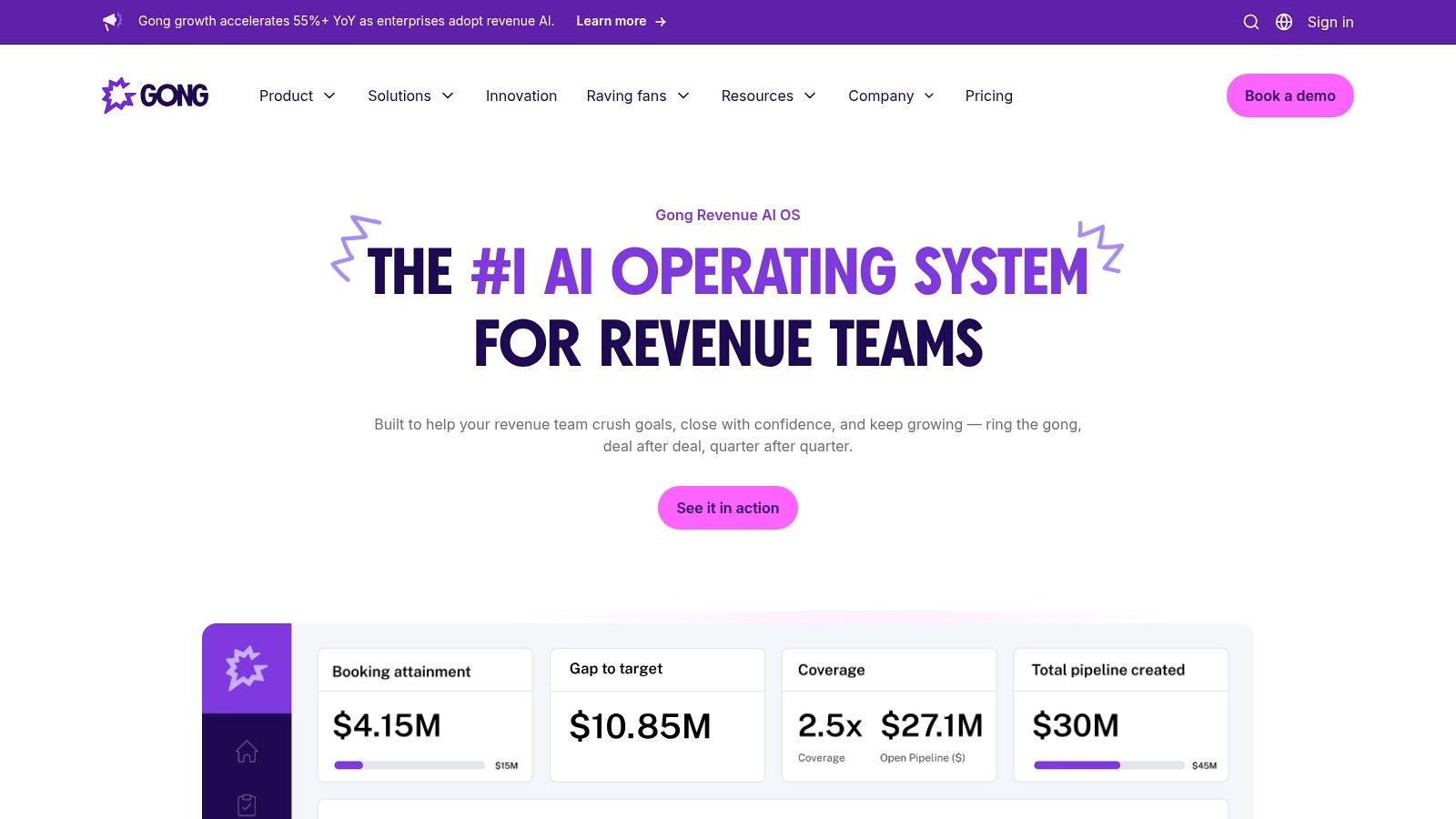
Gong earns its place after the first meeting is booked. If your team already creates pipeline but deals stall, forecasts slip, and managers coach from anecdotes, Gong fixes the operating gap. It turns customer conversations into a usable signal layer for deal review, coaching, and forecast calls.
That matters because most sales teams do not lose revenue from lack of activity. They lose it because the signal inside live deals is fragmented across calls, emails, CRM fields, and rep opinion.
What Gong Solves
Gong gives leaders evidence. You can see whether a champion exists, whether next steps are clear, whether competitors are showing up, and whether a deal has gone quiet before the CRM says it has. That is the right use case. Gong is strongest when you need to improve decision quality inside active pipeline, not add more names at the top.
It also helps separate coaching from guesswork. Managers can review real conversations, spot patterns across top performers, and push reps on deal execution with something stronger than "update Salesforce."
Use Gong when you need:
Call-based coaching: Managers can coach on behavior, discovery quality, objection handling, and follow-up using real evidence.
Deal risk visibility: Teams can inspect momentum, stakeholder engagement, and gaps in the buying process before a quarter-end surprise.
A cleaner revenue system: Gong works best as the intelligence layer that sharpens forecast reviews and converts conversation data into action.
Skip it if your main problem is pipeline creation. Gong will not fix weak targeting, poor list quality, or missing outbound capacity. Buy it when you already have deal flow and need a better system for converting signal into revenue decisions.
If you need to justify the spend, use a simple sales ROI calculator to test whether better qualification, stronger coaching, and tighter execution will pay back the platform cost.
Direct product link: Gong
5. Outreach with Kaia
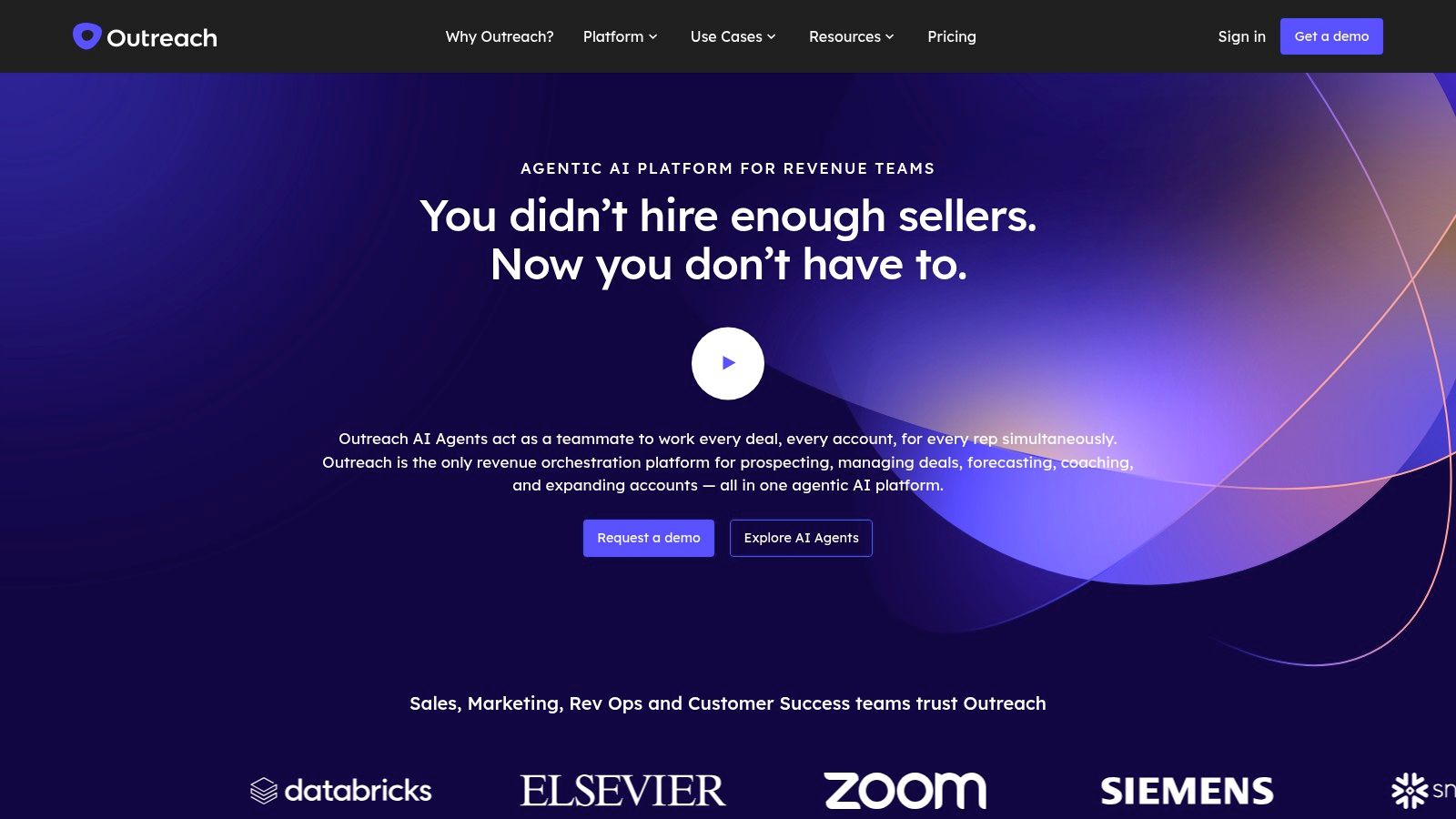
A lot of teams buy AI sales tools to write better emails. That is a weak reason to buy Outreach.
Outreach earns its place when sales execution is the problem. If your reps follow different cadences, managers inspect deals in different ways, and forecast calls depend too much on rep judgment, Outreach gives you a tighter operating system. Kaia adds live call guidance and post-meeting support, but the bigger value is control. It helps teams turn scattered seller activity into a repeatable motion.
That matters in a signal-based sales system. Signals are only useful if they drive the next action. Outreach is strong at taking intent, engagement, task, and conversation signals and pushing them into a structured workflow reps follow.
When Outreach is the right call
Buy Outreach when your revenue team has enough volume and complexity that inconsistency is hurting conversion. It fits larger SDR and AE teams, especially in upper mid-market and enterprise sales, where leadership wants one system for sequencing, inspection, and execution standards.
Kaia is useful because it reduces rep drift during live conversations and follow-up. Newer reps get more support in the moment. Managers get cleaner visibility into whether the sales process is being followed, not just whether activities were logged.
Advisor take: Outreach is a control system first, an AI tool second.
That is why it can be a smart buy or an expensive mistake. If you need a disciplined engagement layer that turns signals into rep behavior, Outreach is a strong choice. If you just want lightweight outbound automation or AI-generated copy, skip it. You will pay for structure your team does not need.
Direct product link: Outreach
6. Salesloft Rhythm + AI
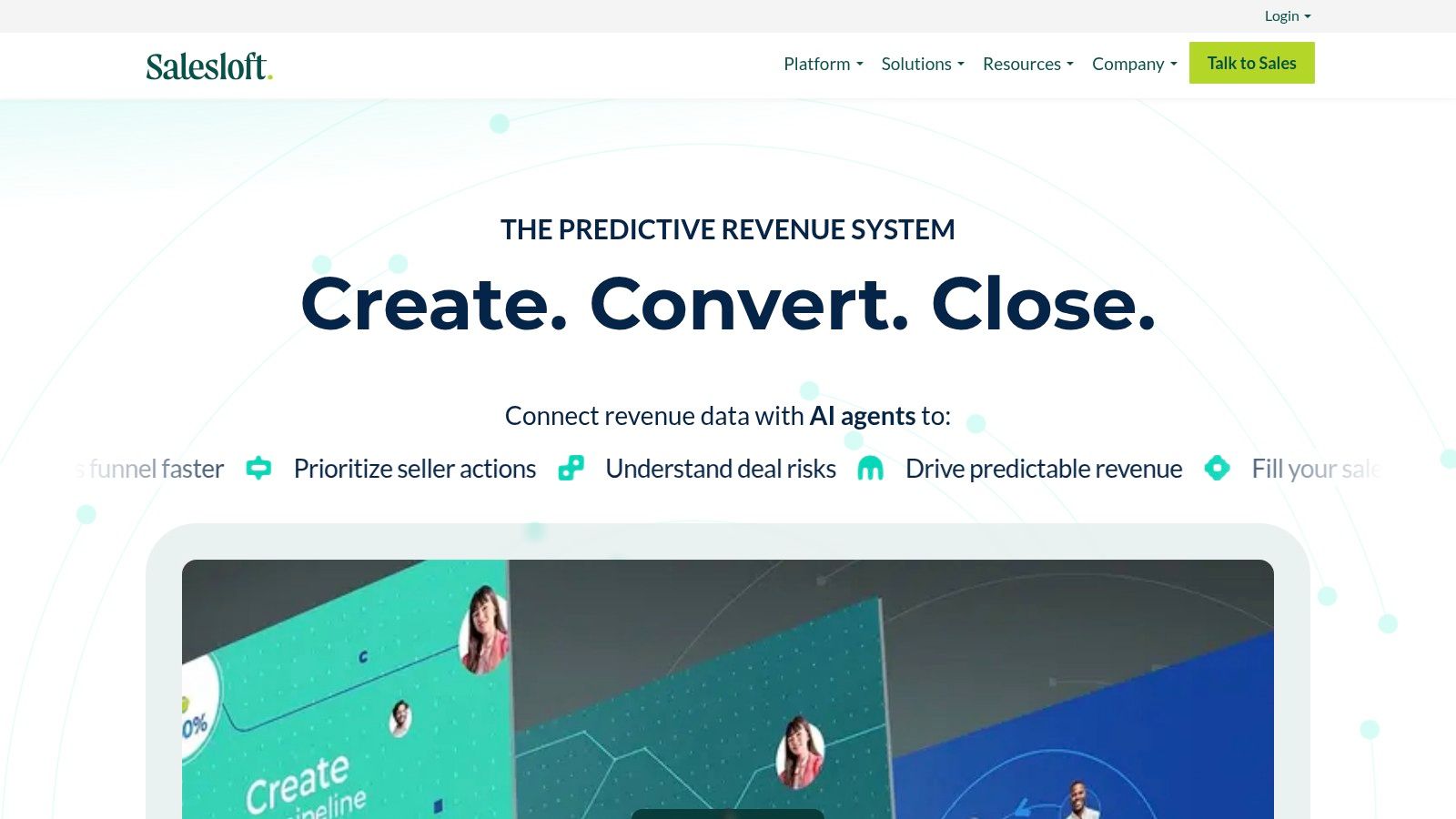
More sales activity does not create more pipeline. It creates more decisions for reps to make, and most reps make those decisions badly when every account, task, and alert looks urgent. Salesloft earns its place by fixing that operational problem.
Rhythm is the part that matters. It turns scattered buyer and rep signals into a ranked workflow, so sellers know which account to touch, what to do next, and where to spend the hour in front of them. That makes Salesloft useful in a signal-based sales system. Signals only matter if they change rep behavior.
What makes Salesloft useful
Salesloft fits teams that already have activity volume, account coverage, and enough system data to support guided execution. If your reps are bouncing between CRM views, inboxes, call tasks, and account lists, Rhythm can impose order without forcing managers to micromanage every move.
Value lies in execution discipline rather than AI copy or flashy call summaries. Salesloft helps reps act on buying signals in the moment instead of leaving them buried in dashboards and alerts.
Advisor take: If your reps cannot tell the difference between a hot account and a noisy one, buy prioritization before you buy more prospecting data.
Choose Salesloft when your problem is seller focus. It is a strong fit for mid-market and enterprise teams that need a decision layer between raw signals and daily rep actions. Skip it if you want a cheap starter platform or a lightweight outbound tool. Salesloft makes sense when you are building a coordinated sales system, not collecting another point solution.
Direct product link: Salesloft
7. Clay
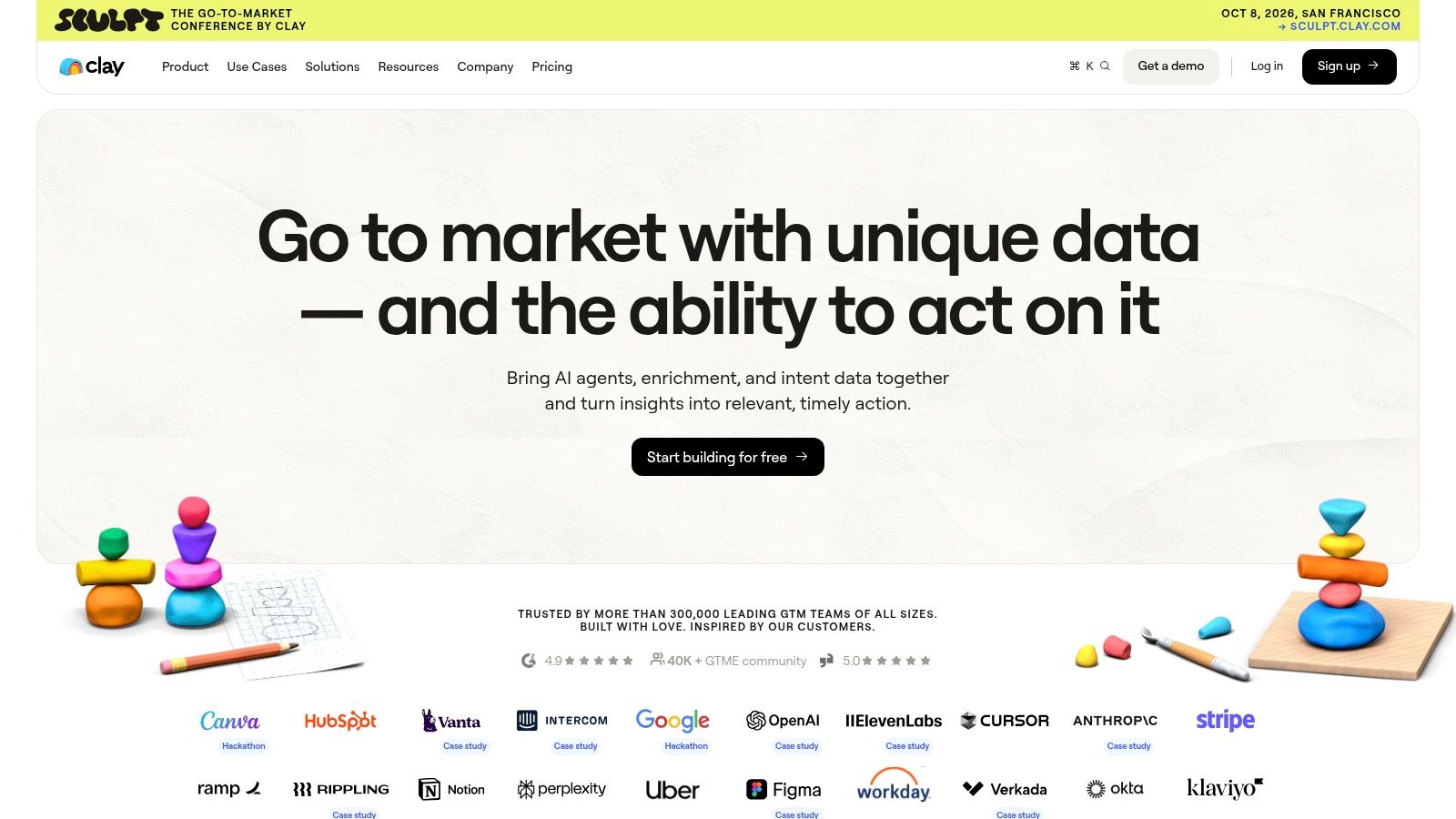
Clay belongs in this list for one reason. It lets you build the data and signal layer that many sales teams wrongly expect an all-in-one platform to handle out of the box.
That flexibility is the appeal and the risk.
Clay works best for teams with strong RevOps support, GTM engineering talent, or outbound leaders who already know how they want their prospecting system to behave. You can combine enrichment waterfalls, custom research, AI prompts, web data, and routing logic into workflows built around your market instead of a vendor's default sequence.
Where Clay earns its place
Clay is a strong fit when your bottleneck is not activity volume. It is signal quality. If reps are working from flat lists, weak account context, or stale contact data, Clay helps you create a cleaner input layer before records ever hit your sequencing tool.
That is the right way to evaluate it. Clay is not just a prospecting tool. It is infrastructure for a signal-based sales system.
Use Clay if you need:
Custom workflow logic: Build prospecting around your ICP, territory rules, triggers, and research criteria.
Multi-source enrichment: Pull from several providers instead of betting your pipeline on one database.
Better outbound inputs: Push cleaner, richer records into outreach platforms so reps start with context, not guesswork.
Skip Clay if your team wants a simple plug-and-play tool. It rewards operators who can design process, monitor quality, and keep workflows clean over time. Teams without that discipline usually create expensive complexity.
Advisor take: Buy Clay when you want to design your own signal engine. Skip it when you just need names, emails, and a basic sequence tool.
Direct product link: Clay
8. Lavender Email Coach + Ora AI Sales Agent
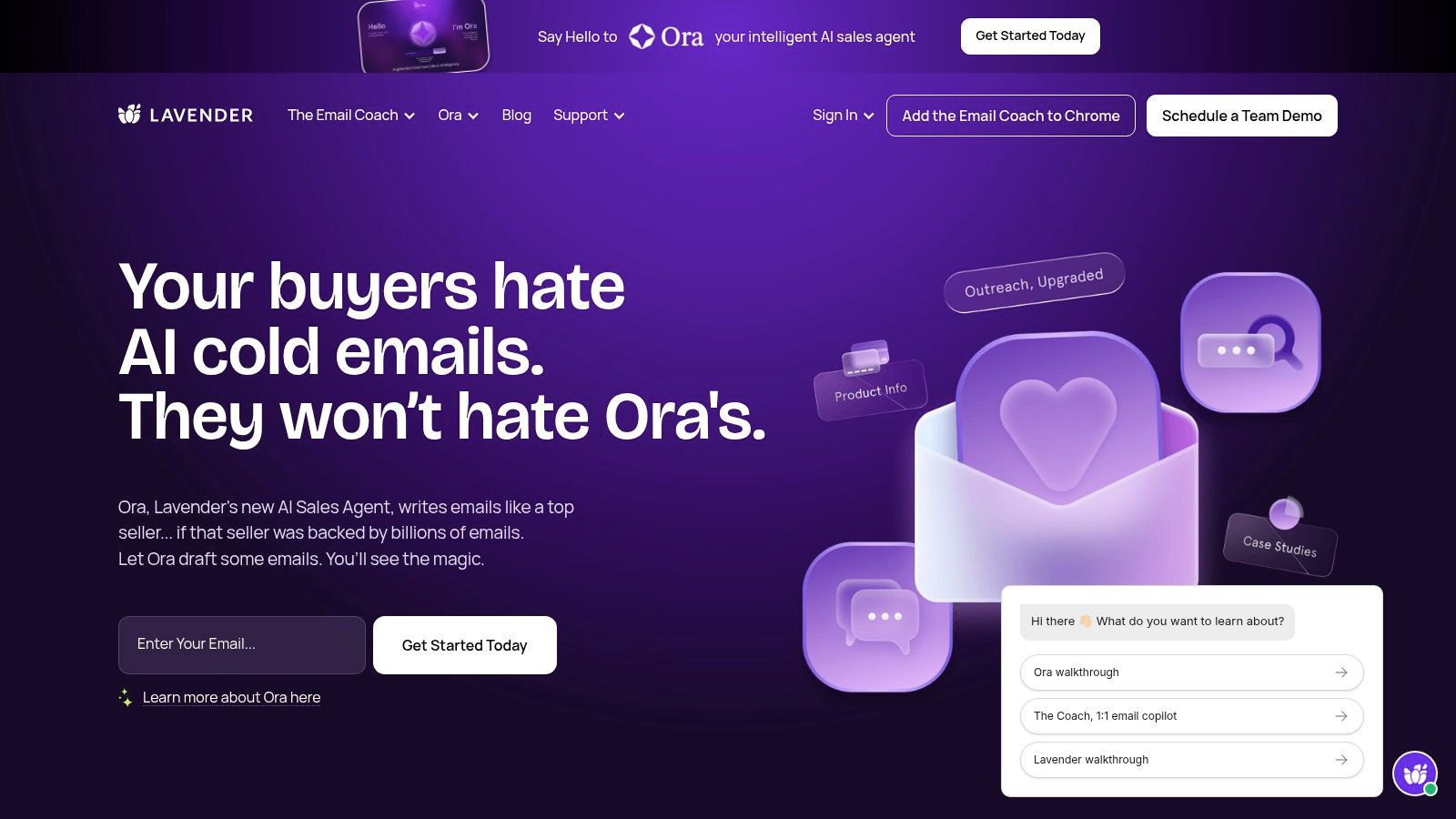
AI does not fix bad outbound by writing more email. It fixes bad outbound by improving rep judgment at the point of send. That is why Lavender earns a place in the stack.
Lavender sits inside the inbox and coaches reps while they write. Ora extends that with AI-assisted draft support. Used correctly, the pair strengthens one layer of your sales system: message quality. They do not replace prospect data, routing logic, sequencing, or call execution. They improve the moment where a rep turns account context into a message worth opening.
That distinction matters. A lot of teams buy AI writing tools expecting pipeline lift, then wonder why results stay flat. The problem is not draft speed alone. It is weak inputs, generic positioning, and no clear signal about what the buyer cares about. Lavender works best after you have already improved targeting and account context. If your team is also reworking how it shows up in buyer research and answer-driven discovery, this answer engine optimization guide for revenue teams is the right next read.
Where Lavender and Ora fit
Use Lavender when reps are already sending enough volume, but email quality is inconsistent. It is especially useful for teams with newer SDRs, mixed writing ability, or managers who need coaching to happen inside daily workflow instead of in quarterly call reviews.
The value is practical:
Real-time writing guidance: Reps get immediate feedback on clarity, length, and structure while drafting.
In-workflow adoption: Coaching happens in the inbox, where reps already work.
Better consistency across the team: Managers can reduce the gap between top performers and everyone else.
Buy Lavender and Ora if your bottleneck is message execution.
Skip them if your real problem sits upstream. If reps are working from weak lists, poor enrichment, or low-intent accounts, better copy will not save the motion. Fix the signal layer first, then use Lavender to help reps write sharper emails against that context.
Direct product link: Lavender
9. Regie.ai AI Sales Engagement Platform
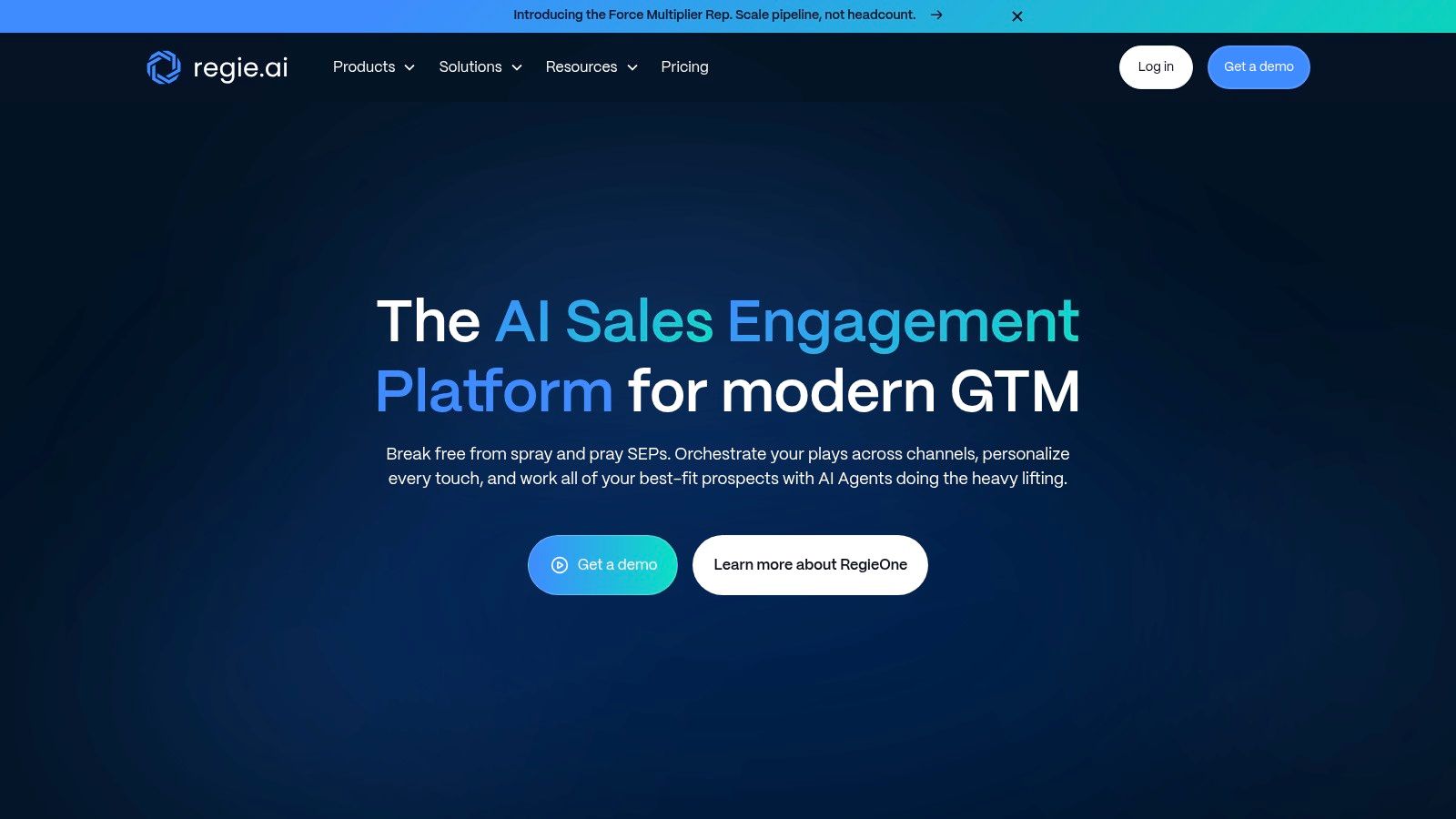
Regie.ai stands out because it treats sales engagement as a coordinated system, not a sequence builder with AI copy layered on top. That distinction matters. If your team is juggling separate tools for data, dialing, sequencing, and workflow automation, you are not running a signal-based motion. You are stitching together tasks and hoping reps make the right calls.
Regie is built for teams that want one engine to turn account signals into action across channels. It combines enrichment, multichannel sequencing, AI dialing, and workflow orchestration in a single operating model. The upside is clear. Fewer handoffs, fewer disconnected tools, and less rep time wasted deciding what to do next.
Who should consider Regie
Buy Regie if your outbound motion is suffering from tool sprawl and inconsistent execution. It fits best when leadership wants tighter control over prospecting standards and a clearer path from signal to outreach.
That is the primary use case here.
Regie is less about helping reps write faster and more about helping the team run a more disciplined system. If you already believe modern outbound should react to buyer signals instead of fixed sequence logic, Regie will make sense. If your team still lacks good account selection, intent inputs, or clear messaging, adding orchestration will not fix the foundation.
There is one strategic point buyers should not miss. Outreach tools only cover the engagement layer. They do not solve how buyers find you, research you, or validate your credibility before replying. If your team is also rebuilding that part of the revenue system, this guide to answer engine optimization is worth reading alongside your platform evaluation.
Direct product link: Regie.ai
10. Cognism
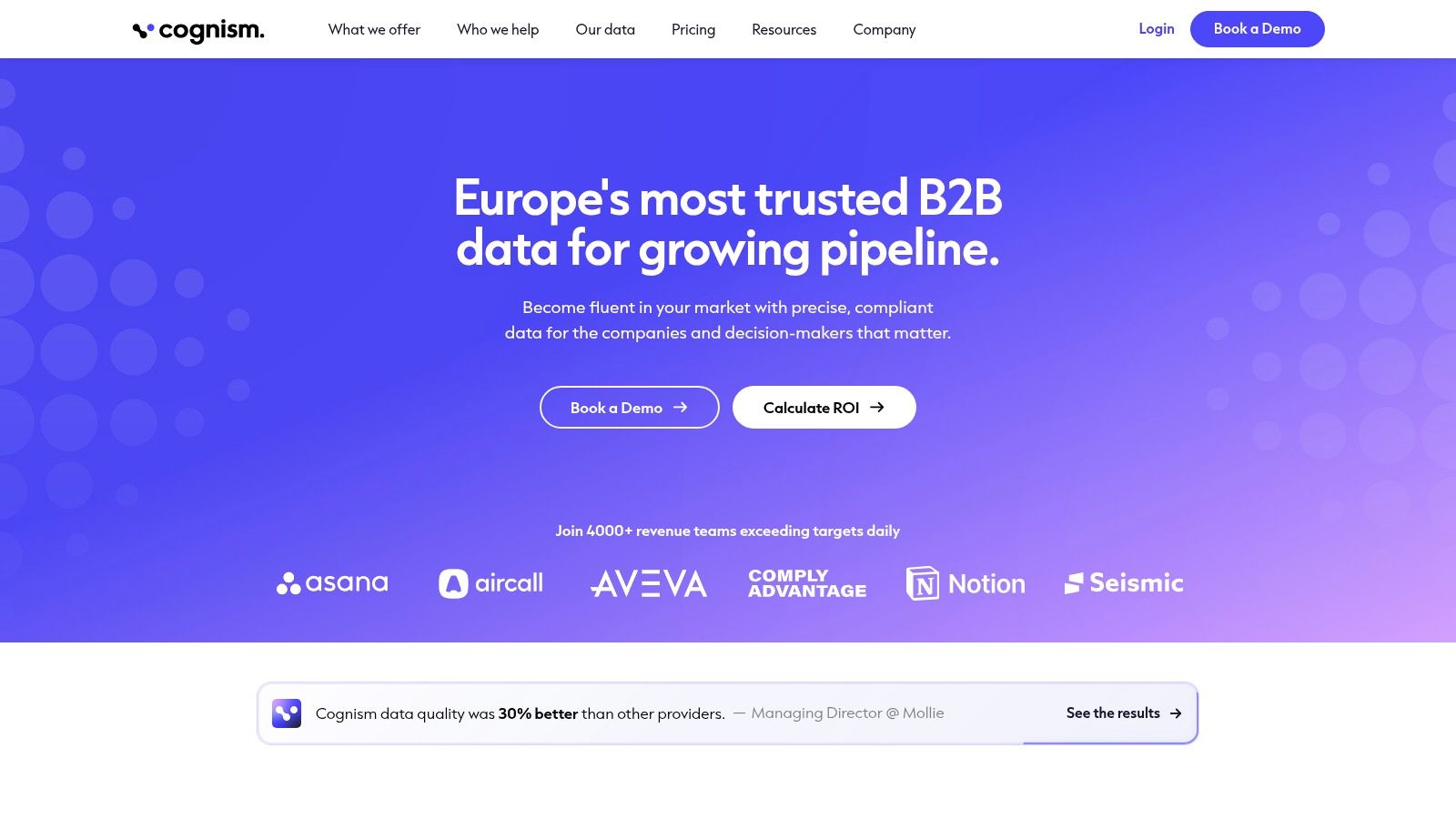
Cognism matters for one reason many teams ignore until it hurts pipeline. Bad international data creates wasted rep effort, compliance risk, and weak conversion across new markets.
If your sales system depends on global coverage, especially in the UK and Europe, Cognism deserves a serious look. Its value is not flashy AI copy or rep coaching. Its value is giving your team a cleaner, safer data layer to build on.
That distinction matters.
A signal-based sales system only works when the underlying records are accurate enough to route the right accounts, reach the right people, and keep outreach inside the rules of the markets you sell into. Many US-first platforms work well for domestic outbound, then become a liability when leadership pushes into EMEA and expects the same playbook to hold up.
Where Cognism stands out
Choose Cognism if you need contact data built for international go-to-market execution, with stronger confidence around compliance and EMEA coverage. It fits teams expanding beyond the US, standardizing global prospecting, or cleaning up a stack that was built around American data vendors.
The recommendation is simple. If international growth is part of your plan, fix the data foundation before you add more automation. AI will only help your team move faster. It will not fix weak records, missing numbers, or risky outreach practices.
Cognism is often more about risk control than cost savings. For many global teams, that is the right trade.
Direct product link: Cognism
Top 10 AI Sales Tools: Core Features Comparison
Platform / Core features | Quality ★ | Value / Price 💰 | Target 👥 | Unique / Why ✨ |
|---|---|---|---|---|
RoverLead AI 🏆, Autonomous LinkedIn Signal Agents; daily intent feed; AI-written openers; 5‑min setup | ★★★★★ | 💰 Founding cohort (locked lifetime rate), apply/waitlist | 👥 B2B sales leaders, SDR/BDR teams, solo founders, GTM marketers | ✨ Behavior-first intent (comments/engagement), contextual post + AI opener, replaces manual Sales Navigator |
Apollo.io, Large B2B DB + AI Assistant, multichannel sequencing, chrome prospecting | ★★★★☆ | 💰 Freemium → paid tiers; usage/credit limits | 👥 SMB / mid-market outbound teams | ✨ One‑roof outbound: DB + sequencing + AI drafting |
ZoomInfo SalesOS + Copilot, Enterprise company/contact graph + intent + Copilot insights | ★★★★★ | 💰 Quote-based (enterprise) | 👥 Large US teams, enterprise GTM | ✨ Massive coverage + governed intent signals and enterprise security |
Gong Revenue AI OS, Call transcription, deal health, coaching, pipeline insights | ★★★★★ | 💰 Quote-based, premium | 👥 AEs, sales managers, revenue ops | ✨ Best-in-class conversation & deal intelligence for coaching and forecast accuracy |
Outreach (with Kaia), Sales engagement, forecasting, Kaia real‑time coaching | ★★★★☆ | 💰 Sales-led pricing; modular enterprise packs | 👥 Enterprise / structured outbound teams | ✨ Real-time call coaching + mature engagement/workflow stack |
Salesloft (Rhythm + AI), Engagement + Rhythm prioritizer, CRM sync, coaching | ★★★★☆ | 💰 Sales-led quotes; add-on modules | 👥 Mid-market to enterprise GTM teams | ✨ AI-guided daily actions to cut noise and focus reps |
Clay, GTM engineering canvas, Claygent research agent, enrichment waterfalls | ★★★★ | 💰 Usage/seat tiers; marketplace discounts | 👥 Growth engineers, data-driven GTM teams, agencies | ✨ Highly flexible orchestration for custom signal-based prospecting |
Lavender (Email Coach + Ora), Inbox coaching, scoring, AI email drafting | ★★★☆ | 💰 Subscription (fast time-to-value) | 👥 SDRs/AEs focused on email follow-up | ✨ Real-time email personalization & scoring inside Gmail/Outlook |
Regie.ai, AI prospecting agents, enrichment, multichannel sequencing + dialer | ★★★★ | 💰 Tiered packages; seat minimums | 👥 Teams standardizing on AI-orchestrated SEP | ✨ Combines AI prospecting, messaging and dialer to reduce tool sprawl |
Cognism, GDPR-first B2B data, mobile numbers, EU/UK compliance | ★★★★ | 💰 Quote-based (enterprise / compliance-focused) | 👥 Companies selling EMEA or needing strict governance | ✨ Strong mobile coverage + compliance posture (GDPR/SOC2) |
Stop Buying Tools. Start Building a System.
Most AI sales stacks fail for a boring reason. They were bought one pain point at a time, without any plan for how signal, execution, and inspection should work together.
That creates a mess fast. One tool finds accounts. Another writes emails. Another records calls. Another scores deals. Reps still waste time on weak prospects, managers still question forecast quality, and RevOps inherits a pile of disconnected workflows.
The fix is to design your stack like a revenue system.
Start with signal. You need a clear way to detect which accounts are worth attention now, not just which ones match your ICP on paper. If the first input is weak, everything after it gets worse. Messaging sounds personalized but misses the actual buying trigger. Sequences create activity without intent. Forecasting turns into cleanup work on top of bad pipeline.
Then connect that signal to execution. Apollo, Outreach, Salesloft, and Regie belong in this layer. Their job is not to create demand from nothing. Their job is to help reps act on the right accounts with the right timing and follow-through.
Next comes intelligence and control. Gong helps teams inspect deal risk, call quality, and rep behavior. ZoomInfo and Cognism improve account coverage and contact depth. Clay helps advanced teams build custom workflows around real buying signals instead of settling for a vendor's default sequence. Lavender improves email quality when rep-written follow-up is still the constraint.
This is the shift leaders need to make. Stop evaluating AI sales tools as standalone productivity apps. Evaluate them by the job they perform inside a signal-based system.
Use a simple test:
Signal: Which tool tells you who is showing intent right now?
Action: Which tool helps reps respond fast, in the right channel, with relevant context?
Inspection: Which tool shows whether that activity produced real pipeline movement?
Governance: Which tool owns the data, workflow rules, and handoffs across the stack?
If a tool does not clearly fit one of those jobs, it probably adds noise.
Adoption usually breaks for the same reason. Leaders buy broad AI platforms before they fix the workflow that is costing revenue. Start with the bottleneck. If reps are spending hours building lists, fix signal and sourcing first. If replies are coming in but follow-up is sloppy, fix execution. If deals are slipping late, fix inspection and coaching.
My recommendation is straightforward. Build from the front of the funnel backward. Start with an intent layer that improves who enters the system in the first place. For LinkedIn-led outbound, RoverLead is the strongest starting point in this group because it improves pipeline quality before a rep sends a single message.
That is the fundamental value of AI in sales. Fewer random touches. Better account selection. Tighter handoffs. Cleaner forecasts. A stack that behaves like a system, not a shopping cart.
FAQ
What are ai sales tools
AI sales tools are software products that automate or improve parts of the sales workflow such as prospecting, prioritization, outreach, call analysis, forecasting, and CRM hygiene. The useful ones reduce manual work and improve decision quality. The useless ones just generate more activity.
Which ai sales tools should a small team buy first
Start with the bottleneck, not the category. If your team wastes time finding prospects, buy a signal or data tool first. If the team already has plenty of leads but weak follow-through, buy an execution or coaching tool first.
Do ai sales tools replace SDRs or AEs
No. They replace repetitive work, weak prioritization, and bad admin habits. Reps still need to qualify nuance, run discovery, build trust, and negotiate.
What's the difference between intent tools and database tools
A database tool tells you who fits your ICP on paper. An intent tool tells you who is showing buying behavior right now. You need both eventually, but intent should drive action first.
Are all-in-one ai sales tools better than point solutions
Not automatically. All-in-one tools reduce sprawl and can improve adoption. Point solutions usually win when a specific workflow, like LinkedIn signal capture or conversation intelligence, matters more than convenience.
How should sales leaders measure ROI from ai sales tools
Track workflow-level outcomes. Look at reply quality, meeting creation, lead-to-opportunity movement, deal velocity, and rep time saved on manual work. If a tool can't tie to a clear bottleneck, don't buy it.
Which tool is best for LinkedIn prospecting
RoverLead is the strongest option in this list for LinkedIn-led prospecting because it focuses on live engagement signals and contextual outreach rather than static list pulls.
Which tool is best for conversation intelligence
Gong is the strongest recommendation here for conversation intelligence, manager coaching, and deal inspection. It's built for understanding what happened in the call and what that means for pipeline quality.
Which tool is best for EU and UK prospecting compliance
Cognism is the best fit in this list when compliance posture and international coverage matter, especially for EMEA sales motions.
What's a practical starter stack for a modern sales team
A good starter system looks like this: RoverLead for intent, Apollo or Outreach for execution, Gong for call intelligence, and Cognism or ZoomInfo for broader data coverage depending on geography and company size. Advanced teams can add Clay when they want custom workflow control.
If your team is still prospecting from static lists, you're leaving revenue on the table. RoverLead AI helps you find buyers based on real LinkedIn behavior, not guesses, then gives your reps contextual openers they can use immediately. That's the fastest way to turn AI from a talking point into pipeline.